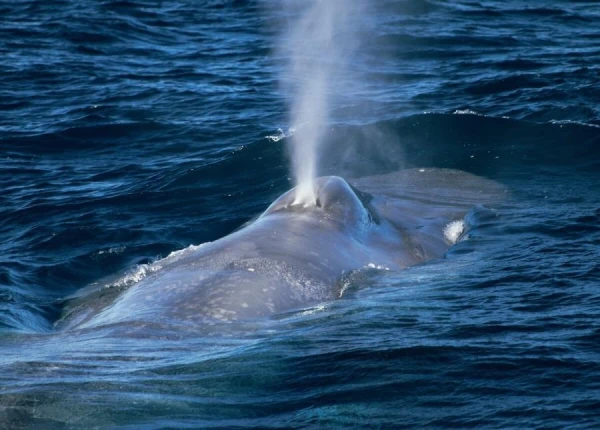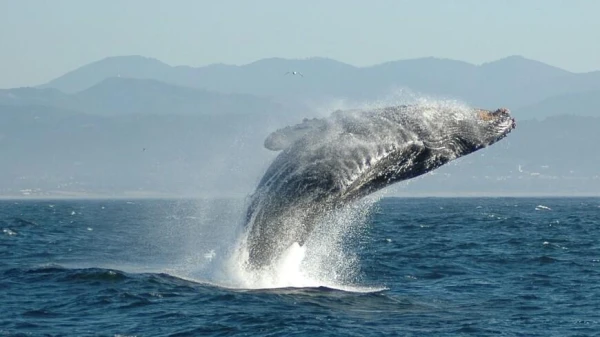
The ancestors of baleen whales increased their sizes as a result of the Ice Age, adapting to new feeding conditions.
Scientists have long debated why whales have reached such large sizes. According to one theory, they became large simply because it was possible: the aquatic environment supports their weight and facilitates movement, allowing whales to find sufficient food, even if it consists only of small marine crustaceans.
According to another version, the increase in the size of cetaceans occurred in response to threats from large predators that once inhabited the oceans: to avoid encounters with giant ancient sharks, it was necessary to become as large as possible. However, it is worth noting that not all species of cetaceans reached gigantic sizes.
In 2010, Graham Slater from the University of Chicago proposed that cetaceans became as we know them quite early in the process of evolution: the ancestors of modern dolphins appeared about 30 million years ago, which, like their modern descendants, were relatively small, as well as the ancestors of “medium-sized” carnivorous toothed whales and the ancestors of baleen whales, which fed on plankton and quickly reached impressive sizes.
Nevertheless, Graham Slater and his colleagues, Jeremy Goldbogen from Stanford and Nicholas Pyenson from the National Museum of Natural History, in their article in Proceedings of the Royal Society B, argue that the situation was somewhat different. A few years ago, it was established that the body mass of cetaceans correlates well with the size of the zygomatic bone.
By comparing the skulls of several dozen extinct and modern species, the researchers concluded that, after splitting into several groups, whales initially did not grow as actively, and for quite a long time even the largest species did not exceed 10 meters in length. Only about 4.5 million years ago did a sharp jump occur, and baleen whales significantly increased their sizes. What caused this? The authors of the study suggest that it was due to the Ice Age: advancing glaciers regularly melted and carried a multitude of nutrients into the ocean, which served as food for small crustaceans and other small animals.
Baleen whales, as mentioned earlier, feed by filtering various small organisms from the water. In this context, a large mouth plays a key role: the larger it is, the more efficient the food filtration process. In other words, when feeding on plankton, being large is preferable to being small. At the same time, plankton is distributed unevenly across the ocean—there are zones, a kind of plankton “fields,” where it is abundant, and moreover, due to climate changes, its quantity varied at different times of the year.
Whales have to swim a lot from one “field” to another, and it is easier to do this if they are large. Thus, it can be argued that baleen whales became large due to food—species that had more modest sizes could not adapt to the new feeding conditions and went extinct.