
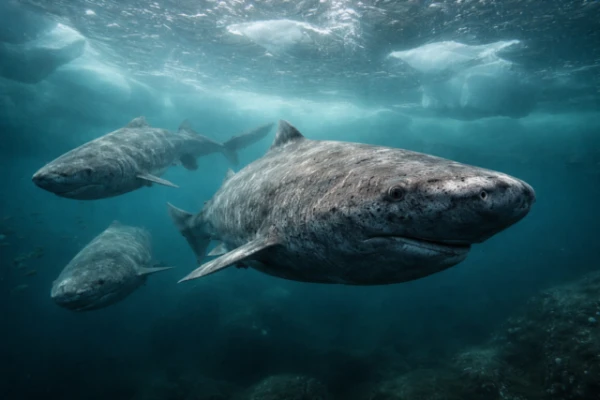
Scientists have discovered an astonishing paradox in the bodies of Greenland polar sharks — some of the longest-living vertebrates on Earth.
These deep-sea predators, whose age can reach 400–500 years, almost universally suffer from a serious heart condition. In the overwhelming majority of individuals, autopsy reveals inflammation of the heart muscle — myocarditis, caused by infection with parasitic roundworms.
Despite this chronic and, at first glance, debilitating condition, the sharks continue to grow normally, hunt, and live to record ages for vertebrates.
Researchers believe that the key lies in their extremely slow metabolism and cold habitat, which minimize the strain on the heart. Additionally, there is a hypothesis about the existence of unique cellular adaptations that allow the organism to function even with a damaged vital organ.
Studying this phenomenon may provide insights into the resilience of living systems to chronic diseases and the mechanisms of extreme longevity.













Leave a comment