
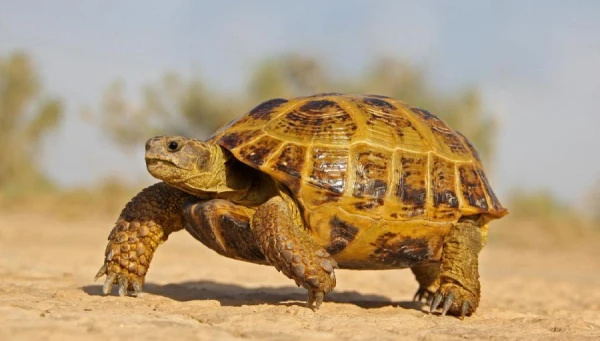
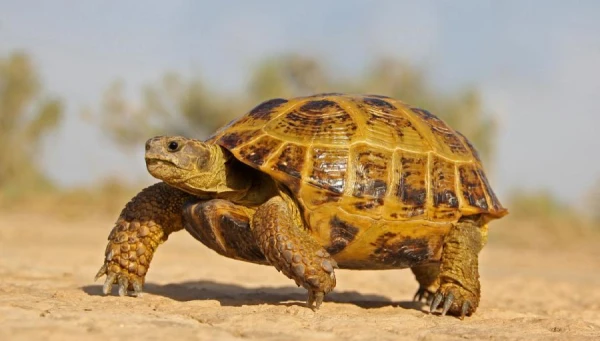
A turtle named Jonathan is considered the oldest living turtle. Its age is estimated to be 190 years! However, Jonathan is not the only long-liver among its kind. News reports often feature the deaths of turtles that have reached the age of 200 and even 300 years. Nevertheless, determining the exact age of a specific animal can be quite challenging. Scientific studies have long confirmed that these creatures are capable of living very long lives. But what is the secret of their longevity?
The secret of turtles' longevity is believed to lie in their metabolism. In 1908, physiologist Max Rubner proposed the rate of living theory, which states that there is a connection between metabolism and lifespan: the faster the metabolism, the shorter the life.
However, scientists interpret this theory differently. The relationship between metabolism and longevity is still not fully understood, and some researchers suggest that free radicals—unstable molecules capable of damaging cells—are produced during metabolism. The more energy the body expends, the more free radicals are generated. Based on this theory, turtles live longer because their slow metabolism burns less energy, which in turn leads to less cellular damage.
Additionally, the longevity of these animals is related to their lifestyle. Firstly, turtles have a powerful defense mechanism—their shell. Secondly, they inhabit geographically isolated areas where predators are virtually absent, reducing stress levels. Thus, turtles do not need to rush to reproduce to ensure the survival of their species. In fact, they conserve their biological resources, which contributes to a slower aging process.











Leave a comment