
The discoveries encompass an astonishing diversity of life forms.
Researchers at the American Museum of Natural History described over 70 new species of living beings last year — from tiny insects to feathered dinosaurs. The discoveries encompass an astonishing diversity of life forms: dinosaurs, mammals, fish, reptiles, insects, arachnids, marine invertebrates, and even one previously unknown mineral.
Some of the findings resulted from recent field expeditions, but many species were literally discovered on museum shelves — among specimens that had been stored for decades, awaiting new technologies and fresh scientific perspectives. "These discoveries remind us how much more there is to learn about life on our planet," noted the museum's senior vice president, Cheryl Hayashi.
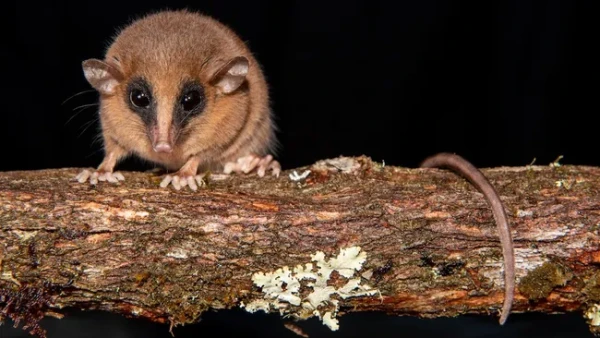
Among the most curious finds is the tiny mouse opossum Marmosa chachapoya with an extraordinarily long nose and tail. It was discovered in the Río Abiseo National Park in a remote corner of the Peruvian Andes, where the pre-Columbian Chachapoya people once lived, after whom the new species is named. Few mouse opossums are found at such heights.
A true sensation was two species of fruit flies from the Philippines, where the males have transformed mouthparts into solid "jaws" — a rare feature for flies. Scientists believe these structures help hold the female during courtship. Remarkably, the specimens were collected back in the 1930s but were only studied now.
Paleontologists also made significant contributions. On the Scottish Isle of Skye, a Jurassic reptile Breugnathair elgolensis was found, featuring hooked teeth like a python and a body resembling a gecko — one of the oldest relatively complete fossil lizards shedding light on the origins of snakes and lizards. In China, two feathered dinosaurs approximately 125 million years old were described. One of them, Huadanosaurus sinensis, was preserved along with the skeletons of two mammals in its abdominal cavity — the remains of its last meal.
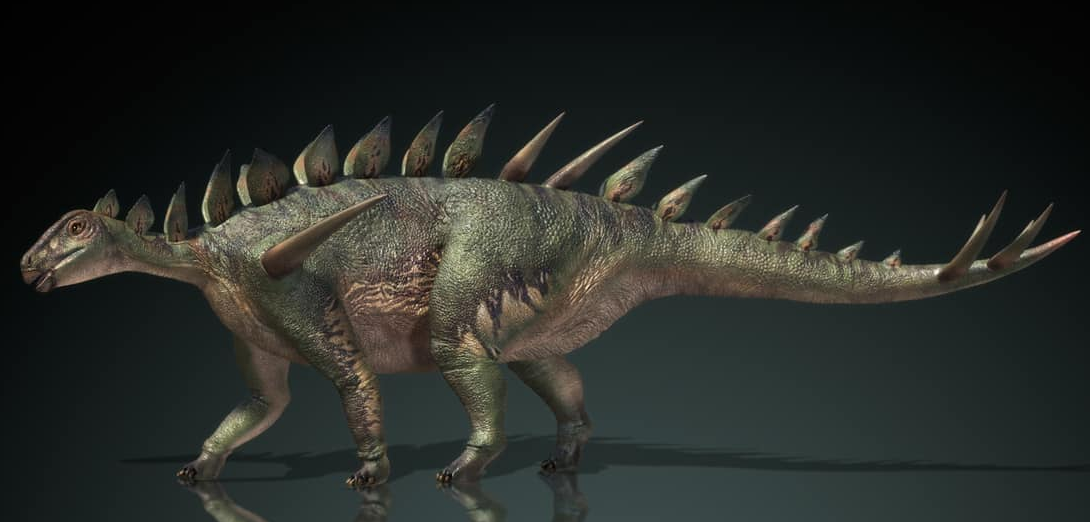
The second, Sinosauropteryx lingyuanensis, was discovered over ten years ago and was initially misidentified as a primitive "bird."
Another paleontological find is the squirrel-sized animal Camurocondylus lufengensis, which lived in the Early Jurassic period in what is now China between 174 and 201 million years ago. The study of this species revealed that the evolution of the jaws of modern mammals was more complex than previously thought.
The marine world also presented surprises. Scientists described a new genus and species of sea anemone Endolobactis simoesii with fringed projections on its lobes — this discovery brought the number of known anemone species in the Atlantic waters of Mexico to 24. A fossil sea lily Anticosticrinus natiscotecensis with a unique pattern of plates on its body was found on Anticosti Island in Quebec. Sea lilies are an ancient group of animals related to starfish and sea urchins, still existing today.
Among fish, special attention is drawn to the cichlid Paretroplus risengi from northwest Madagascar (in the photo),
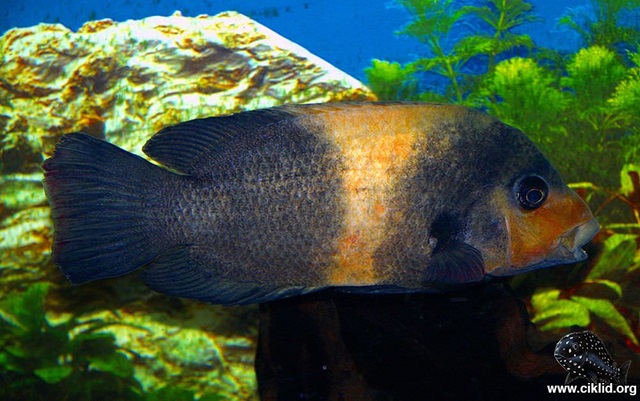
which was discovered over 20 years ago when the lead author of the study was still a graduate student. The species is distinguished by its unique breeding coloration. Two new species of suckermouth catfish — Chiloglanis kinsuka and Chiloglanis wagenia — were found in the Congo River. These closely related species are well adapted to life in river rapids and are separated by a distance of nearly 1600 kilometers.
From the Republic of Congo, a large-eyed fish Labeo niariensis was described, which had long been confused with other species — it was collected between 2010 and 2013. In Vietnam, a loach Supradiscus varidiscus was discovered, which had lain on a museum shelf for 25 years after collection — this is the first representative of the genus found in this country.
The majority of new species were insects — 47 descriptions, predominantly bees. Among them is the "plush" bee Habropoda pierwolae from Vietnam, the cuckoo bee Xiphodioxys haladai with long spines on its back resembling swords, the digging bee Anthophora brunneipecten from Chile with a small comb on its face for collecting pollen, and the fossil bumblebee Bombus messegus from the crater lake Enspel in Germany, still carrying pollen. Four species of small "juice" flies were discovered in Dominican amber aged 17 million years — they got trapped when the tree resin was still soft. Modern representatives of this family feed on the sap of wounded trees.
The find revealed an unexpected connection between the Caribbean basin and North America, whereas such connections are usually traced with Central and South America.
Arachnids were also included: the scorpion Hemiscorpius jiroftensis from Iran, whose venom is of interest to pharmacists (in the photo),
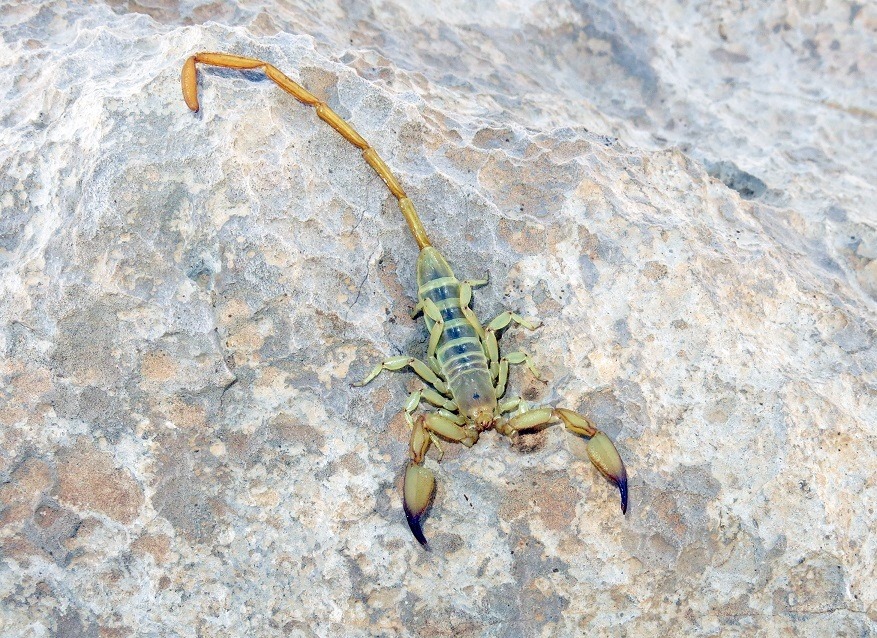
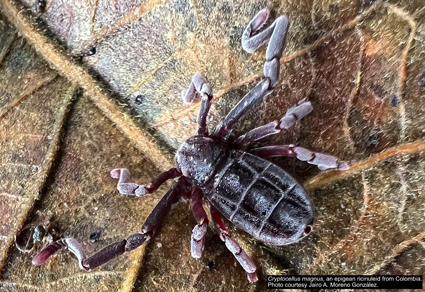
the giant whip spider Mastigoproctus spinifemoratus from Mexico, found in the collection of the California Academy of Sciences, the short-tailed whip spider Jipai longevus from the Venezuelan Amazon, and the blind cave spider Cryptocellus armasi from Venezuela (in the photo).
And the pollen wasp Metaparagia cuttacutta — the tenth species of this genus — was described by a scientist who got stuck in Australia for eight months during the COVID-19 pandemic.
Among the findings was a new mineral — lucasite-(La), discovered in volcanic rock in Russia. The International Mineralogical Association officially approved it this year, and the type specimen is now stored in the museum's permanent collection.










Leave a comment