
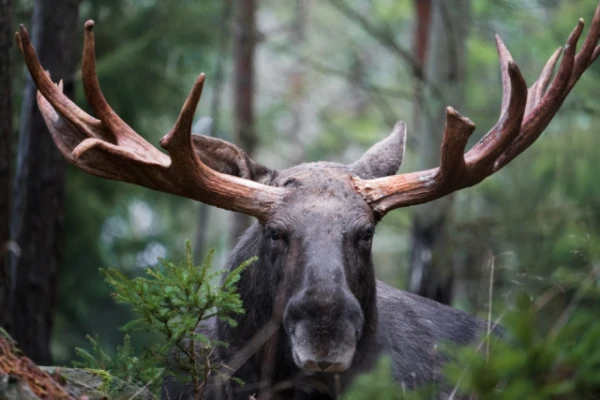
Moose are known for their massive antlers, which can span up to 1.5 meters. However, every year they shed them, and there are good reasons for this.
While antlers are growing, they are covered with a fibrous skin rich in blood vessels and nerves. During this period, they are particularly sensitive. By the end of summer, the bone hardens, the skin dries out, and begins to peel. To speed up this process, moose rub their antlers against trees.
Every year, new antlers grow larger and stronger, and their shape and size allow for the determination of the animal's age. One-year-old moose have only small bumps, two-year-olds have thin antlers resembling spikes, and as they age, more and more branches appear.
Antlers also signal the health and nutrition of the moose. In older individuals, they are not as sprawling. According to zoologist V. Volkov, large, branched antlers attract females and indicate good genetics in males. Additionally, during the mating season, males use them in battles for the right to mate — usually, the one with the more impressive antlers wins.
However, in winter, antlers become an unnecessary burden. Their weight can reach up to 30 kg, and during the cold season, a moose needs to conserve energy to forage for food and maintain warmth. Unlike deer, moose do not use their antlers for defense — they fend off predators with their powerful hooves. With one kick, a moose can kill an adult wolf. Therefore, shedding antlers is not only a natural process but also an important survival mechanism.










Leave a comment