
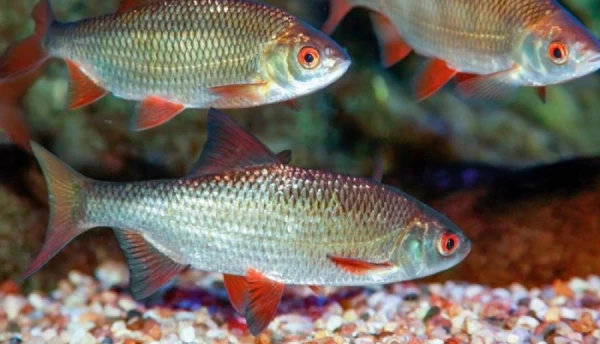
Many are curious about how fish maintain life during the cold winter months when some bodies of water completely freeze over. Where do these creatures go? Are they capable of surviving in such extreme conditions?
Fish are cold-blooded organisms, which means that their body temperature can vary widely depending on the temperature of the surrounding environment. However, in some regions of the world's oceans, water temperatures can drop to –2 °C, and yet fish do not turn into ice chunks. This is due to the presence of special proteins in their blood that function as antifreeze.
These proteins are called glycoproteins, and their existence in fish blood was discovered only in the mid-20th century. Glycoproteins are capable of slowing down the growth of ice crystals in the liquid. They bind to crystals in the fish's blood, preventing them from growing larger. Interestingly, recent studies have shown that glycoproteins can affect water molecules at a distance, preventing them from joining together into a crystalline lattice. This is why fish cannot physically freeze.
However, in winter, due to a significant drop in temperature, a fish's body enters a state of 'rest,' slowing down its metabolism. Typically, fish dive to the bottom, where the water does not freeze completely.













Leave a comment