
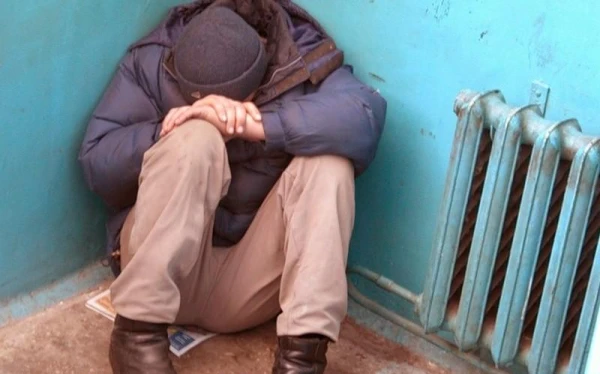
How will the lives of homeless individuals change if they are paid $750 monthly? Opponents of this idea argue that such funds will be spent on alcohol and drugs. However, new research demonstrates otherwise.
In 2022, a group of researchers from the University of Southern California, in collaboration with the nonprofit organization Miracle Messages from San Francisco, decided to study the impact of basic income and social support on the lives of homeless individuals in the U.S. over the course of a year.
The researchers selected about 100 random homeless individuals in Los Angeles County and some areas of San Francisco and began providing them with $750 a month with no conditions attached.
What are the results?
It turned out that the homeless participants spent the majority of the funds received on food (36.6% of the total budget). This was followed by housing expenses (almost 20%), transportation (12.7%), and clothing (6.2%). The remaining 13.6% of the budget was allocated to other unclassified expenses.
According to the researchers, only 2% of the monthly payments were spent on drugs, alcohol, and cigarettes, with a significant portion of this amount being spent specifically on cigarettes.
However, the main conclusions of the experiment are that homeless individuals receiving payments were able to improve their lives and escape homelessness. The researchers noted that six months after the payments began, the number of participants reporting homelessness decreased by two and a half times.
This is not the first study confirming that providing basic income to people with low or no income can lead to positive changes. A pilot program in Denver (USA), in which about 800 homeless individuals received monthly payments ranging from $50 to $1,000, showed that many participants were able to pay off debts, find housing, and get jobs.
Another study conducted in Stockton, California, provided some residents with $500 a month for two years (many of whom were low-income). After a year, the unemployment rate among these individuals decreased, while it increased in the control group. Moreover, participants receiving basic income became healthier both physically and mentally.
















Leave a comment