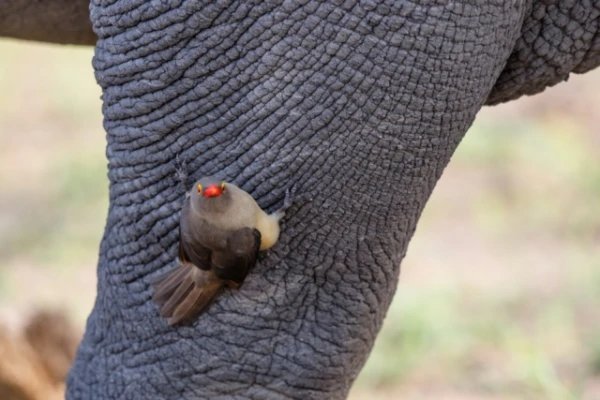
The unique relationship between rhinoceroses and small birds known as oxpeckers has proven to be much deeper and more complex than a simple mutually beneficial exchange of "food for cleaning."
For a long time, it was believed that this was a classic mutualism: birds eat parasites off the skin of animals, obtaining food and freeing the host from ticks. However, later studies showed that oxpeckers not only do not reduce the number of parasites but can also cause harm — pecking at wounds on the bodies of rhinoceroses and slowing their healing to drink blood.
A turning point was a 2020 study that revealed a key benefit for rhinoceroses, especially for the nearly blind black rhinoceroses. Oxpeckers serve as a living early warning system for them: the birds emit alarm calls when a person or predator approaches, allowing rhinoceroses to detect threats on average four times earlier — from a distance of about 61 meters instead of 15.
Thus, this relationship balances on the edge of parasitism and symbiosis, where the harm from pecked wounds turns out to be an acceptable price for the service of a "watchman" in conditions where humans have nearly exterminated this species.