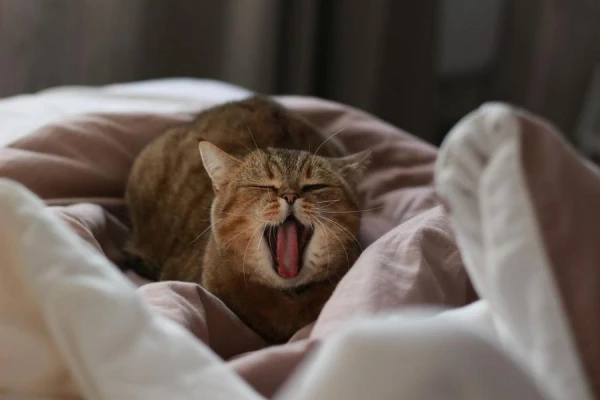
The coexistence of humans and cats has been going on for about 9,500 years! How well do we know our furry companions? We have gathered facts about cats that will surprise even the most devoted lovers of these predators.
Although many of us have lived with cats for a long time and seem to know enough about them, scientists have been studying these furry creatures for even longer. 1.
1. Cats Prefer to Eat in Small Portions
The ancestors of modern cats, unlike dogs, hunted small prey. This explains why our cats usually eat in small portions but several times throughout the day. That’s why our pets often ask for food and sometimes leave their meals unfinished.
2. Hunting is Not Just a Necessity for Cats
Cats hunt even when they are not hungry. Research conducted by the University of Georgia as part of the KittyCam project showed that captured prey is eaten only 28% of the time. The rest of the victims are either left behind or proudly brought to their owners. This fact highlights how bloodthirsty our “furry friends” can be.
3. Why Do Cats Have Such Big Eyes?
Large eyes relative to their body have evolved in cats for hunting in low-light conditions. However, this size makes it difficult to quickly refocus from near objects to far ones and vice versa. John Bradshaw, the author of the book *Cat Sense*, notes that cats' vision adapts to their environment: street cats tend to be farsighted, while most house cats are nearsighted. This explains the structure of cats' eyes.
4. Cats are Farsighted Creatures
Although large eyes allow cats to see at a distance, they have difficulty with nearby objects. This means that cats cannot clearly distinguish small items up close. They can sense them with their whiskers but cannot see them. As mentioned earlier, many house cats, on the contrary, become nearsighted.
5. Cats Have an Excellent Sense of Smell
Predators have an excellent sense of smell—you certainly know this about cats. According to a study conducted in 2010 by the University of New South Wales (Australia), wild cats could detect the scent of “perfume” with a mouse odor even six days after a sample with that “scent” was placed in their environment.
6. Cats Have a Special Organ for Detecting Smells
The vomeronasal organ (an additional part of the olfactory system) helps cats pick up even slight chemical signals about their surroundings, including information about the proximity and “status” of other cats. This organ plays an important role in the sexual activity of cats—through it, they recognize the scent of sex hormones and prepare for mating.
7. Cats Do Not Perceive Sweet Taste
Cats have a poor ability to distinguish food flavors. A study in 2006 found that cats are among the few mammals that lack taste receptors for sweetness.