
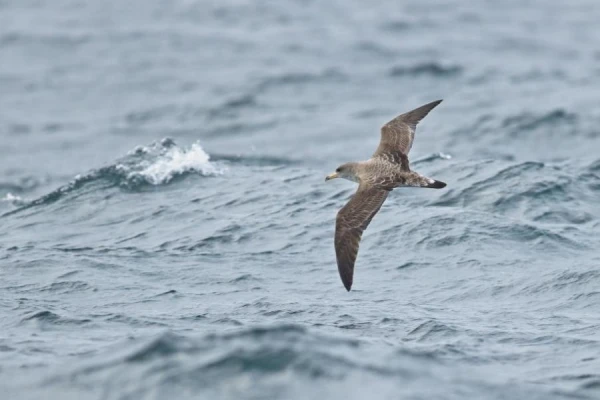
The question "Do birds sleep while flying?" may seem absurd: after all, birds need to flap their wings and monitor their direction to fly. How can they possibly sleep! It's like asking an athlete if they can fall asleep while running. Clearly, to rest, birds need to land, and we often observe pigeons, sparrows, crows, and ducks sleeping in trees, on wires, or simply on the ground.
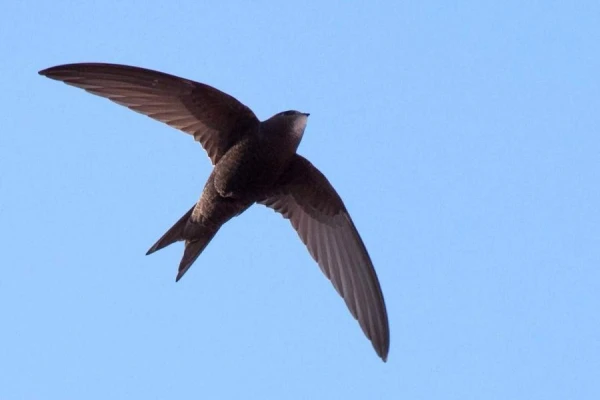
However, there are feathered creatures that undertake long migrations and feel more comfortable in the air than on the ground. Such birds include, for example, swifts. Migrating species of swifts cover thousands of kilometers. On the ground, they can only be seen during the egg incubation period, as their short legs do not allow them to move on land.
Several years ago, scientists from the Swiss Ornithological Institute, aiming to better understand the behavior of these birds during migrations, attached special sensors to several white-bellied swifts that recorded their movements. These devices were light and compact enough not to hinder the birds. The studies showed that during wintering, swifts do not land at all. For more than two hundred days, they fly continuously over West Africa and are unlikely to spend all that time without sleep.
Another example of long flight is the great frigatebirds. Their life is closely linked to the sea and the coast, yet they cannot swim or dive. Frigatebirds catch fish from the surface of the water, following predators that drive schools of fish and currents that bring food from the depths.
In the summer of this year, an article was published in the journal "Science" claiming that frigatebirds can remain airborne without landing for up to two months. They expend little energy by using rising air currents, ascending to heights of up to 4 km and slowly descending over several hours. They likely manage to doze off while soaring, but definitive conclusions require recording brain activity signals in a flying bird.
It seems that such an experiment is impossible to conduct, but researchers from the Max Planck Society's Ornithological Institute and the University of Zurich developed a device that records the electrical rhythms of a frigatebird's brain, the position of its head, its flight style (whether the bird is gliding or flapping its wings), as well as its speed and direction of movement. The device was made small enough to be worn on the bird's head without causing discomfort. Fifteen adult females from the Galapagos Islands were selected for the experiment, which had just begun to feed their chicks. Over several days, the birds fed over the ocean, covering a total of about 3000 km, and then returned to shore, where they were recaptured and the tracking device with recorded data was removed.
What did the data show? As is known, sleep consists of two main phases, differing not only in electrical brain activity but also in overall physiology: slow sleep, which is divided into several stages, and rapid sleep, or REM phase (from the English "rapid eye movements"). In the rapid phase of sleep, unlike the slow phase, the eyes begin to move under the eyelids, breathing and heart rate change, and brain rhythms appear as if the brain is awake. An article published in "Nature Communications" in August of this year reports that during the day, frigatebirds do not sleep, but with the onset of night, slow sleep rhythms appear in their brains. The "sleepy" rhythms in the birds primarily occurred in one hemisphere, but sometimes both hemispheres "fell asleep" simultaneously.
Unilateral sleep, where the hemispheres alternate periods of wakefulness and sleep, is not uncommon. Some aquatic mammals (seals, dolphins, manatees) and some birds sleep this way. The awake part of the brain helps to swim if it is an aquatic animal or to monitor the surrounding environment. For example, in a flock of birds, individuals on the edge keep one eye open while sleeping to notice an approaching predator in time (it is clear that the awake hemisphere is associated with the open eye). A similar unilateral sleep is observed in humans (see "Science and Life" No. 8, 2016, article "Sleeping in a New Place") — it activates when we have to sleep in unfamiliar conditions. However, unlike animals, the hemispheres of the human brain do not take turns "on duty", meaning the awake hemisphere does not stop functioning until morning.
Over the ocean, frigatebirds are not afraid of predators, but they need to maintain the correct flight direction. Spiraling upward on rising air currents, they keep the eye that is looking toward the turn open. Accordingly, the responsibilities of the hemispheres are distributed: which one is currently sleeping and which one is not. Slow sleep in frigatebirds is rarely followed by rapid sleep, which lasts only a few seconds.
Rapid sleep in mammals and birds differs. In animals, it lasts from several to dozens of minutes and is accompanied by complete muscle relaxation. In birds, rapid sleep is significantly shorter, and they somehow maintain tone in some muscles. For example, despite rapid sleep, birds can continue to stand on one leg. Frigatebirds, during rapid sleep, although they lower their heads, do not deviate from their course. As a result, frigatebirds sleep in the air for only 42 minutes a day, whereas on land they can sleep for up to 20 hours. The periods of "land sleep" in frigatebirds are longer, and the sleep itself becomes deeper than in the air — likely due to chronic sleep deprivation during flights. It is possible that other birds that spend several days in the air sleep in a similar manner — a little at a time, shutting down hemispheres individually.













Leave a comment