
The traditional game of dogs and their owners involves throwing a stick, ball, or any other object so that the pet can run after it, grab it, and bring it back. The owner throws, of course, and the dog runs.
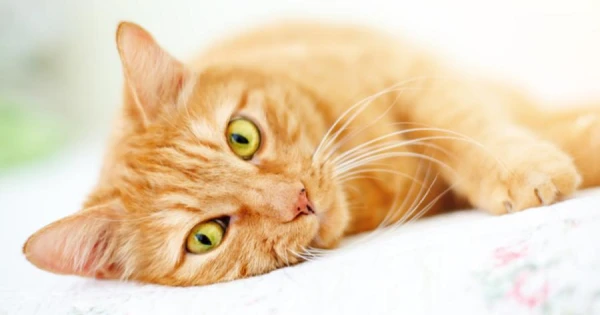
Although this game is considered exclusively a dog game, cats also participate in it. They do not just chase a ball or a toy mouse across the floor, but actually grab it and bring it to a person, as if hinting for them to throw it again. Perhaps this kind of activity among cats is not as common as it is among dogs, but there are cats that eagerly take part in it. For example, Elizabeth Renner's cat from Northumbria University suggested playing this way, prompting her to think about how exactly cats master this game. Together with colleagues from the University of Sussex, she conducted a survey among cat owners about the game of fetch: whether they trained their pets, how often they played it, what items they preferred for throwing, and so on.
More than nine hundred people participated in the study, whose cats play (or played) the dog game. In over 94% of cases, the cats were not trained for this game, suggesting that such behavior is instinctive. Most cats start playing in this style while still kittens or within their first year of life. In later age, many cats also develop a desire to chase thrown balls and toys, and only a few discover this fun after the age of seven.
Cats play longer and more often when they take the initiative themselves by bringing a toy to their owner. If a person throws an item before the cat gets bored, one can be sure that the pet will indicate to the owner that the game should continue. Cats set their own rules. Some bring the toy directly to the person so that they do not have to get up, others leave it halfway, and some throw it further away, as if it becomes increasingly difficult for them to carry it. Some cats prefer to play only in a specific room, while others only with a particular person.
As for the items, 38.4% of cats prefer having toys thrown to them, 25.3% prefer spherical objects such as crumpled paper or foil. Next come hair ties, straws, bottle caps, pencils, and so on. Of course, size matters. There are very picky cats that will only play with one specific item, such as cotton swabs. All this data, along with much more, is detailed in an article in the journal Scientific Reports, which presents figures, tables, and graphs, and we hope that the Ig Nobel Committee will not overlook this fascinating publication.
The results of the study open new horizons for further research. For example, some specialists believe that it should not be definitively stated that cats master such a game without any training. Perhaps we, unknowingly, encourage cats to take appropriate actions, such as dropping and picking up crumpled paper, rubber bands, and so on. Careful and prolonged observations of both owners and cats are necessary here. The question also arises as to whether the cat entertains itself with the game or uses it as a means of communication with the person (while also entertaining itself). Finally, it is interesting to find out what percentage of cats is generally inclined to such games and what this depends on. Researchers have found that among purebred cats, Siamese, Bengal, and Ragdoll cats most often play the dog game; however, breed is not the only factor in playfulness. Overall, there is still much work to be done.













Leave a comment