Mice have joined orcas, dolphins, and several primates! These rodents are capable of passing the mirror test, which confirms their developed ability for self-recognition.
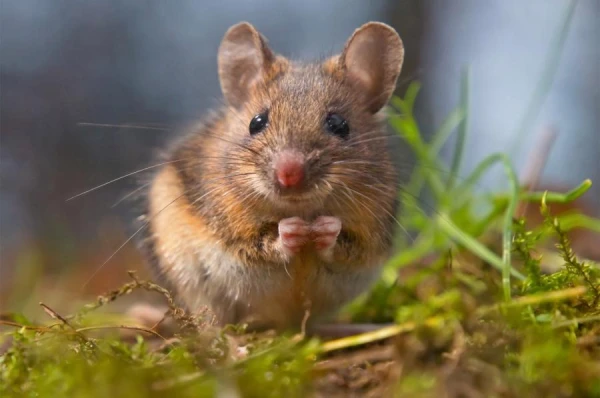
Researchers from the University of Texas Southwestern Medical Center (UTSMC) conducted a neural analysis and their own observations to determine whether the common house mouse C57BL/6 (Mus musculus) can notice changes in its appearance — a spot of contrasting white ink on its forehead — when looking at itself in a mirror.
The authors of the study found that mice did indeed notice changes in their appearance and began actively scratching their heads after examining themselves in the mirror. While this is not direct evidence of self-awareness, it raises interesting questions about cognitive abilities and awareness in animals.
“To create episodic memory, for example, about events in our daily lives, the brain forms and retains information about where, what, when, and who, and a crucial component is information about oneself or one’s status,” noted neurobiologist and senior author of the study Takashi Kitamura. “Researchers typically study how the brain encodes or recognizes others, but the aspect of self-understanding remains unclear.”
What is the Mirror Test
The mirror self-recognition test (MSR) was partially proposed by Charles Darwin but was officially developed in 1970 by American psychologist Gordon Gallup Jr. to assess visual self-awareness in non-human animals.
The essence was that if an animal shows interest in a mark on its body — paint or sticker — while standing in front of a mirror and examining that spot, it indicates a high level of cognitive self-awareness and consciousness.
However, this method is not without justified criticism. It is limited to species that primarily rely on visual signals. For example, dogs recognize their own scent but do not pass the MSR test. It also depends on how motivated the animal is to explore the mark applied to it.
Interestingly, in the new study, not all mice exhibited the behavior necessary to successfully pass the test. The rodents that began scratching their heads, apparently to remove the white spot, were those who had already undergone other tests and were accustomed to mirrors.
Mice also completely ignored the spot if the ink matched the color of their fur, indicating to researchers that this recognition was still based on sight rather than the tactile sensation of the spot. When the spot was small (0.2 cm²) and different from the fur color, the mice also did not notice it.
Something Interesting
Nevertheless, as part of the new study, the scientists decided to delve deeper into the topic. They discovered a subset of neurons in the hippocampus that are involved in creating and storing a visual image of oneself, which activated when the mice “recognized” themselves in the mirror. When the authors activated these neurons, the mice stopped displaying grooming behavior in front of the mirror.
Interestingly, another subset of these neurons also activated when the animal observed a twin mouse with a similar coloration and appearance.
The team also found that socially isolated mice and black-furred mice raised among white-furred rodents did not exhibit physical or neural self-recognition during the MSR test. The researchers suggest that for animals to possess “self-awareness,” they need to socialize among mice similar to themselves for these neural circuits to develop.