
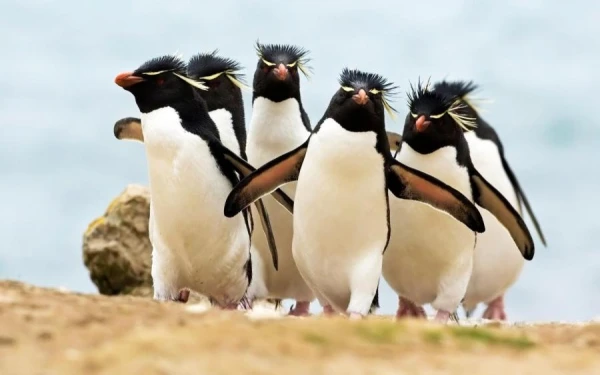
Research on penguins living in Antarctica has shown that they nap for about 11 hours a day without entering deep sleep. They fall asleep more than 10,000 times a day!
Imagine if we only slept for four seconds at a time — it would be real torture! However, for penguins, this is not a problem, as they doze off numerous times throughout the day.
Researchers studying King George Island in Antarctica found that Arctic penguins nap more than 10,000 times a day. This allows them to constantly monitor their nests and protect their eggs and chicks from predators. In total, these birds can nap for up to 11 hours a day without entering deep sleep.
Sleep is observed in animals everywhere, but it makes them vulnerable to predators, as they lose the ability to react quickly to changes in their environment.
Researchers had already studied penguins in the 1980s when they captured them, placed them in shelters, and observed them. At that time, scientists noted a fragmented sleep, which they called “sleepiness,” lasting only a few seconds. The latest research found that this fragmented sleep persists throughout the day, indicating that penguins do not enter deeper sleep.
In the new study, penguins were observed in their natural habitat using electroencephalogram (EEG) monitoring and continuous video recording. Brain activity associated with sleep and eye closure indicated microsleep. The researchers also noticed a slight increase in sleep depth around noon, when the risk of predator attacks is likely minimal.
Studies have shown that some animal species sleep very little, and this does not affect their performance during wakefulness. For example, savanna elephants sleep on average only two hours a day, often while standing, as one study showed. Sometimes they go without sleep for up to 48 hours.
In some species, there are differences between the sexes: male fruit flies require more than 10 hours of sleep a day, while females manage well with just four.
Great frigatebirds can remain in flight for months during ocean migrations. During this time, they may sleep less than an hour a day while continuing to navigate and hunt. Upon returning to their nests, they “stock up” on sleep, napping for nearly 13 hours a day.












Leave a comment