
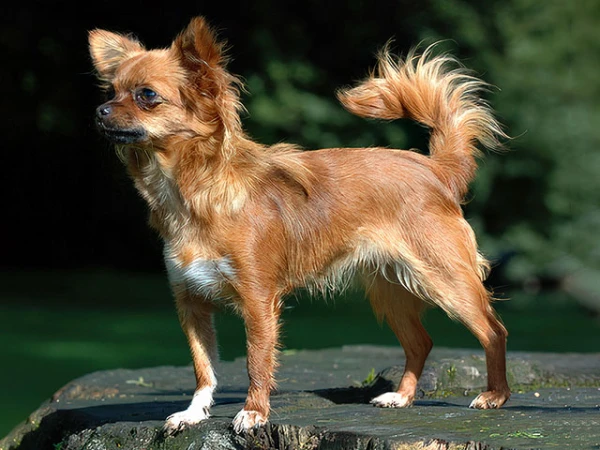
Over 20,000 years, dogs have not shed their predatory heritage.
A new study by specialists from the American Museum of Natural History and the Smithsonian National Museum of Natural History shows that most modern dogs retain small but noticeable traces of wolf DNA that emerged after domestication. These genetic fragments, although limited, have influenced traits such as body size, olfactory ability, and certain behavioral characteristics. The work, published in the Proceedings of the National Academy of Sciences, also suggests that this wolf contribution may have aided in the successful adaptation of dogs to various human-created environments. Researchers detected traces of wolf genetics across a wide range of breeds—from large shepherds to small chihuahuas.
Dogs descend from an extinct population of gray wolves that were domesticated by humans in the late Pleistocene, around 20,000 years ago. Although modern dogs and wolves still overlap in their ranges and can produce fertile offspring, such occurrences are rare. With the exception of a few examples of intentional breeding, researchers found little evidence of genetic exchange between dogs and wolves after domestication led to the formation of a separate gene pool.
The team of scientists analyzed over 2,700 published genomes from the National Center for Biotechnology Information and the European Nucleotide Archive, covering wolves, purebred dogs, village dogs, and other canids from the late Pleistocene to the present. The study revealed that nearly two-thirds of purebred dogs retain traces of wolf ancestry in their nuclear genomes, resulting from hybridization approximately 1,000 generations ago. Signs of wolf lineage were also found in all studied village dogs. Village dogs are free-ranging animals that live near or within human settlements.
Czechoslovakian and Saarloos wolfdogs, which were created through intentional breeding with wolves, exhibited the highest percentage of wolf genetic material—ranging from 23 to 40 percent. Among common breeds, the most pronounced wolf trace was found in the large Anglo-French tricolor hound—4.7–5.7 percent, followed by the Shiloh shepherd—2.7 percent. The high percentage of wolf ancestry in the Shiloh shepherd corresponds to its breeding history with mastiffs and other recent hybrids to create more resilient working dogs in the US. At the same time, the high level of wolf DNA in the large Anglo-French tricolor hound, a popular hunting breed in France, remains unexplained. The Tamaskan breed, developed in the UK in the 1980s by selecting huskies, malamutes, and other dogs for a wolf-like appearance, contains about 3.7 percent wolf genetics.
The study identified several patterns. Large breeds and dogs traditionally bred for specific work—such as Arctic sled dogs and hunting dogs—typically have a higher percentage of wolf genetics. Terriers, companion dogs, and hounds generally show the lowest proportion of wolf ancestors. While some large guard breeds exhibit significant wolf ancestry, breeds like the Neapolitan mastiff, bullmastiff, and Saint Bernard have virtually none. Traces of wolf DNA are also found in breeds of all sizes that fall outside these general trends, including chihuahuas, which have about 0.2% wolf ancestry.










Leave a comment