
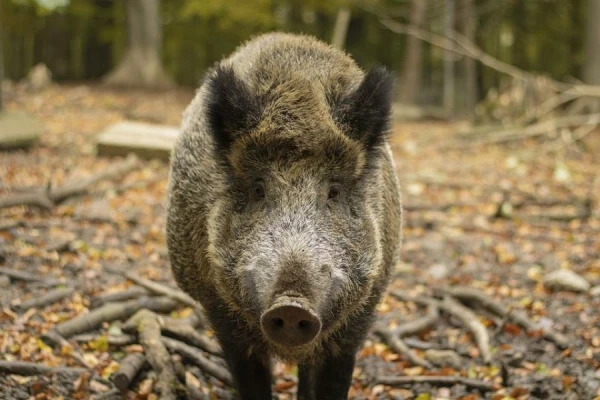
Hybrid wild boars spread swine fever, destroy crops, and threaten local wildlife.
The Farmers' Response
Wildlife researchers from the University of Saskatchewan (Canada) have warned their American neighbors about an impending threat — an invasion of wild "super pigs." According to experts, the rapidly increasing population of this aggressive species will soon begin to cross the border, primarily flooding into the states of Montana and Minnesota. Residents of Canada have already experienced all the difficulties of coexisting with this hybrid, the emergence of which is a result of human activity.
This year, scientists have recorded more than 62,000 sightings of these animals in Canadian territory. One such sighting occurred directly on the border with Minnesota.
The problem in Canada has existed since the late 1980s to early 1990s, when Eurasian wild boars were imported from Europe to North America. Most of them were intended for livestock farming, while others were for hunting enthusiasts. At that time, local authorities supported farms that were breeding this breed. Thus, a new hybrid emerged — a cross between "European wild boars" and domestic pigs, characterized by high fertility and large size. However, in 2001, the market collapsed. According to experts, some farmers "took revenge" or simply, out of despair, cut down fences and released the animals into the wild. Many did not expect that the ungulates would survive the winter in the wild, not being "native Canadians."
Nevertheless, the wild boars' survival and reproductive abilities played their role: the feral individuals not only survived but also adapted to the harsh Canadian winters, learning to breed at any time of the year. Even in winter, they live in snowy shelters that locals call "pigloos" (a combination of the words "igloo" and the English word pig). These hybrid pigs reach impressive sizes, with adults weighing between 55 and 113 kilograms.
Fertile and Uncontrollable
According to Canadian specialists, super pigs have become the most destructive invasive species in the country and possibly in the world. They devastate agriculture, damage local wildlife and the ecosystem as a whole, and spread diseases — including African swine fever, which is deadly for domestic and wild animals. This disease does not pose a threat to humans.
To date, feral pigs are most actively reproducing in the Canadian provinces of Alberta, Saskatchewan, and Manitoba. In Alberta, according to scientists, efforts are being made to somewhat control and reduce the reproductive rates of the population. There, a sow gives birth to "only" six piglets twice a year. Despite the fact that more than 65% of the population can die each year, it continues to grow.
Thus, leading Canadian specialists predict an imminent invasion of wild pigs into American territories. This will not come as a surprise: authorities in Montana are already aware of the threat and have banned the transportation and breeding of these animals in the state. However, if the wild individuals cross the border on their own, the question remains open — how to deal with it. Northern neighbors advise being "truly aggressive and using all available means" to address the problem.










Leave a comment