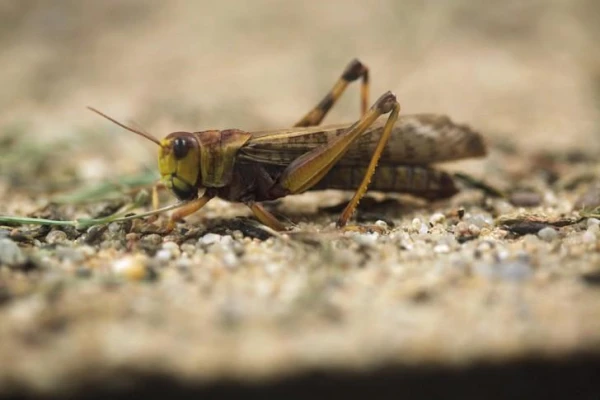
Yes, but it is not like the abilities of a chameleon.
The body of a locust is covered with a chitinous cuticle, which is a dead tissue that lacks cells capable of changing color.
Locusts are insects with incomplete metamorphosis: a larva hatches from an egg and resembles the adult form. It goes through several molts, and after each one, the whitish coverings begin to acquire color only after a few hours.
Moreover, depending on the population density, the larvae can develop into solitary or gregarious forms, which differ in coloration as well. Finally, the color of the locust's coverings may change during the autumn die-off of the insect — likely due to the breakdown of pigments or the influence of fungi.