
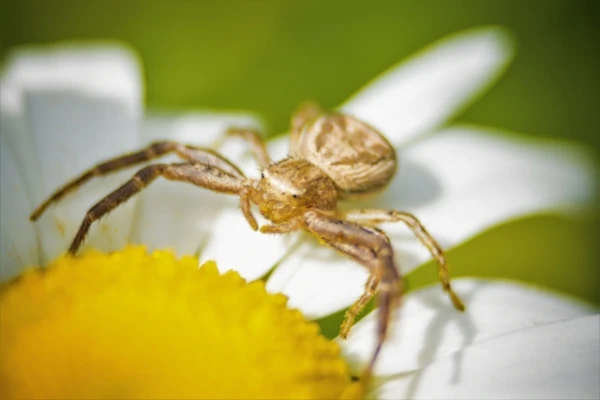
Most people envision spiders as solitary predators; however, some species live in groups, share food, and actively interact. A new study has allowed researchers to look into their brains to understand how social life reflects on their structure.
Scientists compared social and solitary species using complex staining methods and micro-computed tomography, as the brains of spiders are hidden deep within their bodies and are difficult to study.
Although the overall brain size of social spiders did not exceed that of solitary ones, their internal structures differed. For instance, social hunters have more developed areas responsible for memory and thinking, which helps them recognize their kin and cooperate. Social crab spiders have enlarged visual areas, which are important for life in dark family nests.
Interestingly, social hunters have fewer venom glands, as the division of prey reduces the need for venom, which is energetically "expensive" for the organism.
The structure of spider societies changes with the seasons, and the observed states resembling sleep indicate complex cognitive processes.
Scientists emphasize that intelligence is expressed not so much in brain size as in the number and connections of neurons. In the future, they plan to study the number of nerve cells to gain a deeper understanding of the mental abilities of spiders and other small animals.













Leave a comment