What fertilizers and in what quantity should be applied?
Agronomist and gardener Alexander KHOROBROVETS shares his experience:
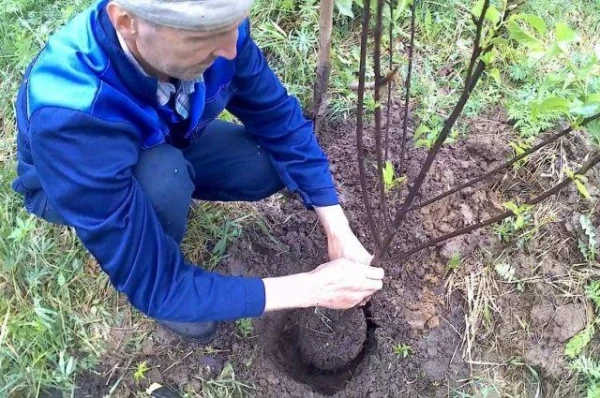
- For planting cherries and plums, prepare holes that are 60-80 cm wide and 50-60 cm deep. Set aside the top fertile layer of soil to one side and the lower layer to the other. Then add 10-15 kg of manure (1-2 buckets), peat or compost, about 1 kg of granular superphosphate (which is two half-liter jars), two-thirds of a glass of potassium chloride (or 1 kg of wood ash) and mix thoroughly with the previously set aside topsoil. Fill the hole two-thirds full, place the seedling, cover the roots with soil without fertilizers, and fill the hole to the top with the nutrient mixture.
Gently tamp the soil around the trunk. Use the soil from the bottom of the hole to form a mound around the planting hole. Immediately after planting, water the seedling well (1-2 buckets per root zone) and mulch with peat or sawdust. Do not add lime or nitrogen fertilizers to the planting hole, as their contact with the roots can cause burns.
In the fifth year, the cherry and plum trees will begin to bear fruit. From this point on, annually apply organic and mineral fertilizers at the rate of 1 m²: manure or compost — 10 kg, urea — 15-20 g, granular superphosphate — 20-30 g, potassium chloride — 10-15 g or 200 g of wood ash. Always apply nitrogen fertilizers in the spring, and phosphorus-potassium and organic ones at the same time if they were not added in the fall (in September-October). During the active fruiting period (from the 8th-10th year), increase the dose of organic and mineral fertilizers by one-third.