
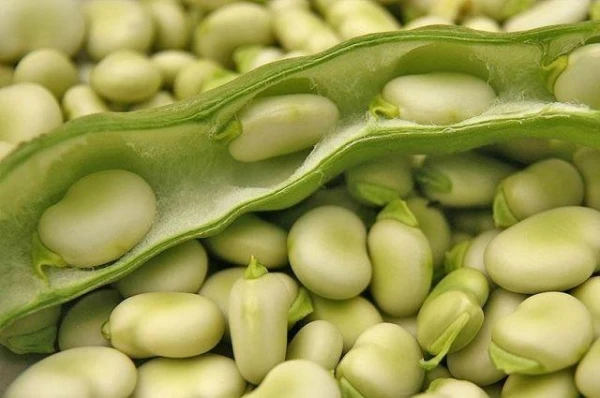
Leguminous plants are cold-resistant and moisture-loving; they thrive in various soil types, except for sandy, marshy, and acidic soils.
Seeds begin to germinate at temperatures of 3-4°C, and seedlings and mature plants can withstand frosts down to -4°C. The optimal temperature for their growth is 17-20°C.
It is recommended to sow seeds in early spring, and sowing in winter is also possible. Sowing is done in rows with a spacing of 50-60 cm, and using a two-row tape method, where the distance between the tapes is 60 cm, and between the rows is 20-30 cm. The distance between plants in a row should be 10-15 cm, and the planting depth should be 6-8 cm. In garden plots, beans can be planted in rows with potatoes or cucumbers.
The harvest of green beans is carried out in 3-4 stages with intervals of 8-10 days.
In terms of nutritional value, beans surpass many other vegetable crops. Dried seeds contain protein, while immature seeds contain vitamins C, B1, B2, nicotinic acid, and amino acids, which are well absorbed by the body.
Young immature seeds are consumed boiled (they are toxic when raw) with oil and mustard. At the waxy and full ripeness stages, beans are used for making soups, side dishes, and vinaigrettes, as well as for canning.












Leave a comment