On March 21, Orthodox churches honor Lazar Murmansky, who lived in the 2nd century. In the folk calendar, this day is called Verbonositsa or Spring Solstice. This is how our ancestors marked the Day of the Spring Equinox, which has been celebrated since ancient times. In honor of the holiday associated with the arrival of true spring, people danced in circles, told fortunes for luck, happiness, and love.
Lazar Murmansky
The life of Lazar, considered the first autobiographical work in Rus', was written by him. He received the nickname Murmansky, Muromsky, or Olonetsky due to the island located in modern-day Karelia. After a dream in which he was visited by the saint from Novgorod and the bishop from Caesarea, he decided to travel to these lands and establish a monastery there.
Thus, Lazar found himself on an uninhabited island, named Murmansky. He settled in a hut, but the solitude he dreamed of was not achieved. Local tribes began to threaten him with violence. One day, they attempted to burn the hut, which housed an icon of the Holy Mother of God. The fire destroyed everything except for the face of the Mother of God. Lazar was told from above that the unfaithful would become faithful, and that a church in honor of the Dormition of the Holy Mother of God should be built on this site.
Knowing of Lazar's gift to heal the sick, the leader of the local tribe approached him for help in curing his blind son. The saint restored the child's sight. The news of the healing miracle quickly spread far beyond Rus'. People came to Lazar from everywhere, even from Byzantium, and helped build the church dedicated to the Dormition of the Holy Mother of God of the Caves.
According to legends, Lazar, by that time no longer called anything but Murmansky, lived for 105 years. He passed away quietly, surrounded by devoted parishioners, and was buried near the Dormition Church.
Folk Calendar: Verbonositsa
The spring solstice, or simply the Solstice, was dedicated to the event that later became known as the Day of the Spring Equinox. It was celebrated on March 20 or 21, when the dark and light times of the day were equal.
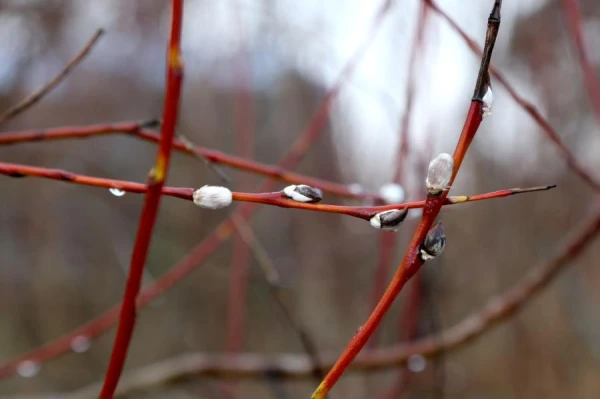
The holiday Verbonositsa got its name because, at this time, buds began to bloom on the willow, which was considered a magical tree. This folk holiday was regarded as the beginning of the new year. To ensure it was successful and truly happy, it was welcomed with noise and joy. Girls and boys danced in circles, sang songs, and jumped over bonfires.
Typically, at this time, birds that had wintered in the southern lands returned home. They were to be greeted according to all the rules. Men made feeders so that the hungry birds could replenish their strength.
Women, on the eve of Verbonositsa, engaged in baking. They prepared delicious dishes to please their families and kneaded dough in the evening, from which they baked bird-shaped cookies. Before distributing this pastry to children, relatives, and the poor, it was blessed in the church.
Sometimes berries, pieces of onion, and small harmless objects were hidden in the dough. Then, they tried to guess what awaited the holders of the surprises in the near future. If a ring was found in the pastry — it meant a wedding, if an earring — a successful acquaintance, if a coin — money.
Children eagerly awaited the tasty gifts. As soon as the bird-shaped cookies were in their hands, they tossed them into the air. The kids who managed to catch the birds rejoiced wholeheartedly, knowing that according to beliefs, good luck awaited them.
Verbonositsa: What to Do
In ancient times, such questions did not arise, as traditions existed. Our ancestors knew that the true heroes of Verbonositsa were the larks, which were considered messengers of Paradise.
There was a custom among the ancestors to give a loaf baked in the shape of a lark to the one who first saw the heavenly birds. There were also other customs associated with the holiday. For example, during this time, people would tell fortunes about love and tried to remember dreams, which on the night of Verbonositsa were considered prophetic.
In villages, bonfires were lit, over which livestock was driven. According to belief, after such a ritual, animals were not afraid of any diseases. On Verbonositsa, willow branches were brought into the house, with which the floors were swept, believing that this could sweep away everything related to misfortunes, illnesses, quarrels, and other troubles.
Verbonositsa: Folk Signs
Most of the signs associated with Verbonositsa concern the weather. Wise elders believed that if a frost unexpectedly struck at this time, it would linger for a long time. If birds start building nests from the southern side, summer will be rainy and cold.
If clouds do not float but “rush” across the sky, real warmth will soon come. If a loud rooster's crow is heard in the morning — it means good weather. If birds fly in flocks — it predicts an excellent harvest.
Verbonositsa: What Not to Do
The prohibitions of the day are mainly related to the willow, which was both loved and feared. Elders, knowing of its magical properties, forbade planting trees on Verbonositsa. They would say: “Whoever plants a willow prepares a shovel for themselves.” This meant that a person was destined to die as soon as a shovel could be made from the tree. On Verbonositsa, it was also forbidden to:
Go to bed early. It was believed that on the day when the dark and light times of day are equal, one should try to fall asleep as late as possible to not miss out on luck, money, happiness, and love.
Quarrel, gossip, or speak ill — it leads to misfortunes and illnesses.
Lend money. They will be returned reluctantly, and during this time, poverty will settle in the house.
Make plans, start new ventures — they will not come to fruition and will take a lot of energy.
Spend the day in solitude. This state may linger for a long time, leading to melancholy and nervous illnesses.