
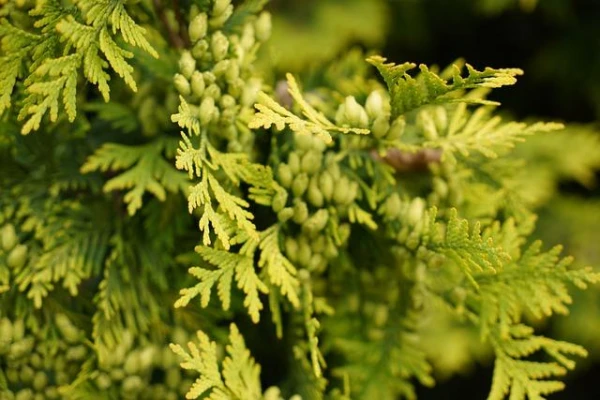
When summer residents return to their plots, they may find coniferous trees with yellowing crowns. Such plants are often referred to as "rusty" or "burned". Let’s consider what this means and how to help the plants.
Why do coniferous plants get burned?
In spring, the sun can be particularly bright, and coniferous trees are prone to burns if timely measures are not taken. On clear days, the plants awaken, and active photosynthesis and vegetation begin.
However, there is still a lot of snow around, and the ground remains frozen, which causes the roots of the trees to be in an icy environment. In such conditions, the plants experience a lack of moisture and begin to dry out under the influence of sunlight, which leads to their "burning".
There are several measures that can help protect conifers from sunburn in the spring.
Watering the Soil
To protect conifers from sunburn in spring, do not wait for the snow to melt on its own. Remove the snow from around the tree and water the soil with warm water. This will help the plant avoid dehydration and prevent the needles from burning. Additionally, the soil clump will thaw faster due to the water, allowing the plant to receive moisture from the soil.
How to water properly? It is recommended to do this in the morning to avoid frost at night, which can lead to the freezing of water and no benefit. For a small thuja 2–2.5 meters tall, about 10 liters of water will be needed (this can be a large watering can or bucket).
Shading or Covering
It is advisable to cover or shade young plants to prevent sunburn in conifers. Mature plants are more resistant to burns, and covering them due to their large size is not always possible. Some coniferous trees are particularly sensitive to sunburn and require protection from bright rays.
However, it is not advisable to use spunbond, as the plant will suffer from heat and dehydration underneath it. The covering should be made of breathable material: this can be facade mesh, burlap, or even an old sheet, so that the conifers do not rot.
When using shading, a curtain is installed on one side of the plant, which creates shade and protects the conifers from overheating in the sun.
What to do if burns have already appeared?
If a large part of the plant's crown has been affected, it is likely that it cannot be saved. However, the measures listed below can help conifers that have not been severely damaged.
Watering
One of the simplest ways to revive coniferous plants in spring from burns is abundant watering. Regularly moistening the thuja or juniper with water will help the plant gradually recover.
Cleaning
Another effective way to combat burns is to remove damaged needles. This is important, as they look unsightly and can become a habitat for fungi or pests. Remove only the needles, without touching the branch, as it may be alive and start to grow new needles.
Fertilizing
As soon as the soil thaws, be sure to conduct root fertilization for conifers if they have burned. Growth regulators can be used in combination with mineral fertilizers or the plants can be fed with liquid nitrogen-containing fertilizers for conifers.












Leave a comment