On February 5, Orthodox churches honor the holy martyrs Clement and his disciple Agafangel, who lived in the 3rd century. In the folk calendar, this day is called Agafyev or Agafiy Polukhlebnik. Our ancestors dedicated it to household concerns, and to attract good luck, they baked chicken pies and treated travelers.
On February 5, Orthodox Christians pay tribute to two holy martyrs — Clement and Agafangel, who lived in the 3rd century. In the conditions of paganism, they actively preached Christianity, baptized people, and healed the sick.
For their beliefs, Clement and his devoted disciple Agafangel faced persecution. By order of the ruler, his servants captured Christians and subjected them to brutal torture. Both saints left this world with a prayer on their lips.
Folk Calendar: Agafyev Day
The holiday dedicated to the holy martyrs had different names in the folk tradition depending on the region. In some places, it was called Agafyev Day, in others — Agafiy Polukhlebnik, Day of Agafiy, or simply Agafiy.
In ancient times, Agafyev Day was considered a time to check food supplies. This work began the day before, on Timothy's Day, and continued on Agafyev Day.
Our ancestors at this time cleaned their storages, sorted grains and cereals, and checked how vegetables were stored. “Agafonnik in the storages does not straighten his back, keeps count of healthy grain,” the elders would say.
Spring was still far away, and supplies usually ran out quickly. Therefore, from Agafyev Day, a strict regime of economy was introduced, except for church and family holidays.
What to Do on Agafyev Day
On Agafyev Day, people would definitely visit the church and pray to their angels. They asked for care over children, relatives, strengthening of health and faith, as well as help in choosing life paths.
Our ancestors believed that on Agafyev Day, saints followed angels on earth. Therefore, all strangers met on this day were treated with food and offered bread with salt.
On Agafyev Day, attention was also paid to orphans, which was a tribute to the great martyr Clement, who lost his parents early. On this day, care was taken of travelers and the poor, inviting them into homes, feeding them, and giving them some money.
If someone had unnecessary items, they were also given to guests. It was believed that this would ensure the protection of saints Clement and Agafangel, who would not leave families in trouble.
On Agafyev Day, a thorough cleaning of the house was carried out, paying special attention to the corners. This helped to get rid of negativity after the Holy Days, when evil spirits tried to penetrate the home.
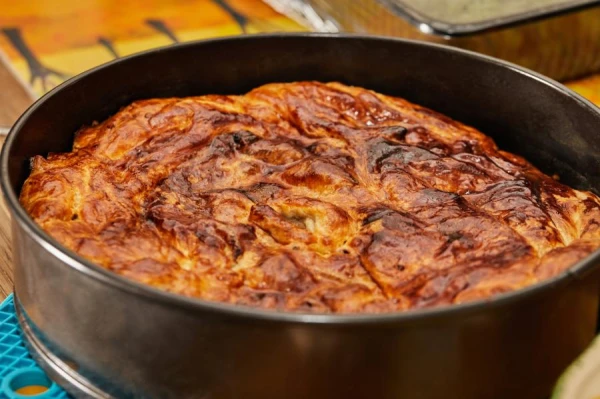
On this day, special pies with chicken filling were baked, which since the 16th century have been called “kurniki.” Each hostess had her unique recipe for the filling, passed down from mother or mother-in-law.
Pies with chicken meat symbolized health, happiness, and prosperity. Every family member was required to try a piece of such a pie. Crumbs were never thrown away; they were given to domestic birds.
Agafyev Day: Folk Signs
Agafyev Day has its signs. The elders knew: if it snows on Agafyev Day, the summer will be bountiful. “Deep snow — good bread,” they would say. If the sun shone brightly, it foretold an early spring. Frost and bright sun on Agafyev Day foretold a hot August.
To find out what weather to expect in the coming days, people would go to the forest to observe the squirrels. If they were happily jumping from hole to hole, it foretold a thaw. If squirrels did not appear, it indicated approaching cold.
On Agafyev Day, people also listened to the tits. If the birds were loudly chirping in the morning, it meant frost was coming. The birds sensed its approach first. Additionally, they observed the cats: if they lay on their backs, it meant there would be no frost in the coming days.
What Not to Do on Agafyev Day
On Agafyev Day, it was strictly forbidden to pick up money and items dropped by someone else. With them, one could “pick up” someone else's troubles and problems. During this time, it was also not recommended to:
Argue, swear — leads to loss of money.
Dance — leads to a quarrel with a loved one.
Be greedy, refuse alms — leads to serious illness.
Folk signs that have come down to us from the depths of centuries are full of superstitions and paganism. Following them is, of course, not necessary. That would be absurd. But knowing how people lived in the past, why they acted in one way or another, what they feared and what they rejoiced in, is certainly not superfluous.