
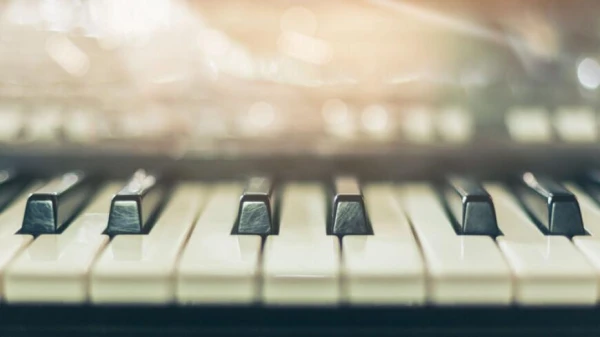
A new study conducted by scientists at the University of Exeter showed that engaging in music throughout life contributes to improved brain health in old age. Playing the piano, in particular, proved to be especially beneficial, researchers noted. Music is associated with improved memory and the ability to solve complex tasks. Continuing to make music can lead to even more impressive results.
Music therapy indeed has healing properties, said candidate of psychological sciences and psychoanalyst Alexey Melekhin.
The essence of music therapy lies in the fact that certain sounds, rhythms, and instruments evoke specific emotions and require the activation of various skills. Instruments have their own acoustic and rhythmic characteristics that require interaction, which, in turn, activates cognitive reserves and capabilities. It is no secret that different musical instruments can influence a person's emotional state.
Research has shown that playing musical instruments, even at the most basic levels, as a form of leisure rather than professional training, helps reduce the risks of geriatric depression, diminishes feelings of loneliness, and lowers moderate cognitive impairments and the risks of severe forms of dementia, including vascular dementia. Indeed, playing musical instruments serves as a form of cognitive stimulation.
By mastering a musical instrument, a person engages in playful exploratory activity, which positively affects neurogenesis and neuroplasticity of the brain. Neurogenesis is the process of forming new cells in the brain, which continues throughout life. Neuroplasticity, especially after the age of 60, may change, but under the influence of enriching factors such as playing a musical instrument or listening to live music, there is a positive impact on mental health and cognitive state.
Studies have shown that playing wind or keyboard instruments positively affects cardiovascular health and helps minimize headaches and tension.
Music contributes to the improvement of cognitive potential, which is why music therapy is actively implemented in rehabilitation programs for elderly people suffering from depression and dementia. Such activities help restore damaged areas of the brain.
Playing musical instruments not only develops new cognitive skills but also represents a new experience for the brain. The nervous system reorganizes, forming new functional connections. Moreover, playing an instrument or listening to music can evoke cathartic reactions: some people cry, some experience loss, while others feel joy and remember pleasant moments. Music therapy has a positive effect on both the physical and mental state of a person.













Leave a comment