
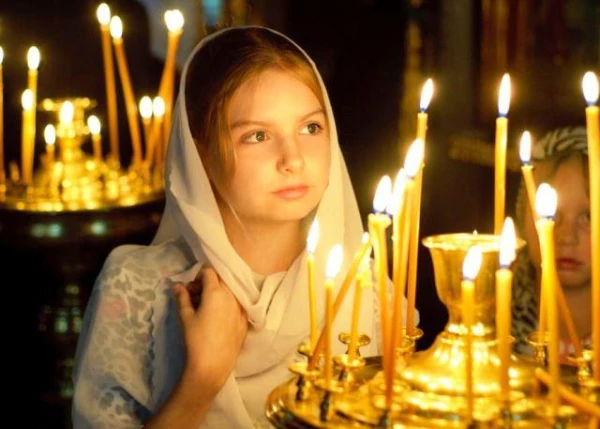
On December 4, Orthodox Christians celebrate one of the twelve key feasts in the history of the church — the Entry into the Temple of the Most Holy Theotokos. This event, dedicated to the Virgin Mary, illuminates her life from birth to marriage. In the folk calendar, this day is known as the Entry. In the past, fairs preceding the Nativity of Christ began at this time.
On December 4, believers celebrate a holiday that dates back to ancient times when the Virgin Mary, who became the mother of Jesus Christ, first came to the temple.
History of the Feast of the Entry into the Temple of the Most Holy Theotokos
Mary's parents, Joachim and Anna, could not have children for a long time. In those days, the absence of children in a family was considered a disgrace and condemned by society. The couple prayed every day, asking God to grant them a child.
Despairing, Joachim went to the wilderness to pour out his emotions. Left alone, Anna suffered and cried. When her faith and hope for a miracle had run out, an angel appeared to her and announced that she would soon have a child with her husband.
Happy parents promised that their child would serve God. Soon a beautiful girl was born, whom they named Mary. She grew up in the family until she was three years old, and when she turned three, her parents took her to the temple in Jerusalem.
On the way, little Mary, her parents, and close relatives who came to see her off spent three days. During all this time, they prayed, holding lit candles in their hands. Mary, walking beside her parents, did not once complain of fatigue.
When they arrived at the temple, the girl confidently ascended the first of fifteen steps and easily overcame them, surprising the archpriest Zacharias, the father of John the Baptist, and the clergy. The archbishop already knew that the girl from a poor family was destined for a special mission.
Archpriest Zacharias took Mary to the altar, where ordinary mortals could not enter, and showed her where she would read prayers. Joachim and Anna returned to Nazareth, while Mary remained in the temple, which became her second home. She spent 12 years there, studying sciences, reading God's commandments, and learning crafts.
When Mary turned 15, which coincided with the age when pious Israeli women married, the clergy began to think about her future. The girl replied that she did not intend to marry, as she had vowed to remain a virgin.
Then Archpriest Zacharias asked his elderly relative Joseph to take guardianship over Mary. To comply with the law, Joseph betrothed the Most Holy Virgin, actually becoming the guardian of her virginity.
When the Feast of the Entry into the Temple of the Most Holy Theotokos Began to Be Celebrated
The mention of the feast, which is one of the twelve major feasts in Orthodoxy, is associated with the reign of Queen Helena, who built a temple in honor of the Entry into the Temple of the Most Holy Theotokos. Saint Gregory of Nyssa spoke about this important event for Christians in the 4th century.
In the 8th century, the feast of the Entry into the Temple of the Most Holy Theotokos appeared in church calendars and liturgical literature. According to tradition, sermons on this day were delivered by saints Germanus and Tarasius, Patriarchs of Constantinople.
From the 9th century, the feast became widely known in the Christian East. The date of the celebration, which has been preserved to this day, is December 4 (November 21 in the old style).
How the Feast of the Entry into the Temple of the Most Holy Theotokos is Celebrated
On December 4 and the day before, it is important to visit the temple. The festive service includes a small vespers, an all-night vigil (with a litany), and a liturgy. The order of this service is almost identical to that of other major Marian services, such as the Nativity of the Most Holy Theotokos and the Dormition of the Virgin Mary.
During the service, special hymns are sung. The clergy on this day are dressed in white and/or blue garments. Traditionally, on the day of the Entry into the Temple of the Most Holy Theotokos, children are brought to the church for their first confession, starting from the age of seven.
In their sermons, priests emphasize the importance of introducing children to the faith. In the past, after visiting the church, believers would give gifts to their godchildren, usually toys and sweets.
Entry into the Temple of the Most Holy Theotokos: Traditions
In ancient times, this major feast, associated with the beginning of winter, was considered one of the most beloved. In Russia, it was simply called the Entry. “The Entry has come — winter has arrived.”
Preparations for the feast of the Entry began in advance. The day before, they would start laying out sledding paths, which were tested by the time of the holiday. During this time, active life began, and people prepared for the Nativity of Christ.
In towns and villages, Entry fairs were held. Peasants brought seasonal goods made by hand: felt boots, mittens, warm clothing, shawls, bedding, tablecloths, wooden dishes, souvenirs — during this time, everything sold out quickly. With the money earned, they bought food for the holiday, which was supposed to be celebrated widely and joyfully.
Entry into the Temple of the Most Holy Theotokos: What Can Be Done
The celebration of the Entry into the Temple of the Most Holy Theotokos took place with joy. Despite the fact that the event coincides with the Nativity Fast, which requires certain dietary restrictions, hostesses served many dishes made from lean dough, vegetables, berries, fruits, and honey. According to the statute, fish and a little red wine are allowed on this day. Our ancestors believed that this promised prosperity and tranquility in the home.
In ancient times, on this day, people tried to look different from weekdays, especially regarding clothing: white and blue colors predominated, traditionally associated with the image of the Virgin Mary.
During this time, outdoor games were organized. Of course, the initiators were girls and boys, but adults also did not deny themselves the pleasure of sledding, playing snowballs, or making funny snowmen and competing to see who could make the best one.
Entry into the Temple of the Most Holy Theotokos: Folk Signs
Observant people knew: if on December 4 there is frost and snow outside, winter will be cold and snowy, and summer will be dry and hot. If by the Entry winter has already taken its rights, a good harvest can be expected next year. If the weather is “gloomy,” summer will be generous with vegetables and mushrooms.
Entry into the Temple of the Most Holy Theotokos: What Should Not Be Done
The Entry into the Temple of the Most Holy Theotokos is a special holiday that requires purity of thoughts and good intentions. On this day, it is strictly forbidden to quarrel, curse, gossip, and make up tales about people. It is also not allowed:
To be anxious, hurry, do something in a rush and on the go. All this can lead to failures and tears.
To clean the house. Along with the trash, one can send away money, luck, and family well-being.
To engage in handicrafts. Illnesses may begin to pursue after this.
To lend money. This can lead to financial difficulties that will be hard to overcome. Moreover, the money lent may not return to the owner.
On the Entry, our ancestors were afraid to raise their voices not only at people but also at animals, believing that this could cause their illnesses.






Leave a comment