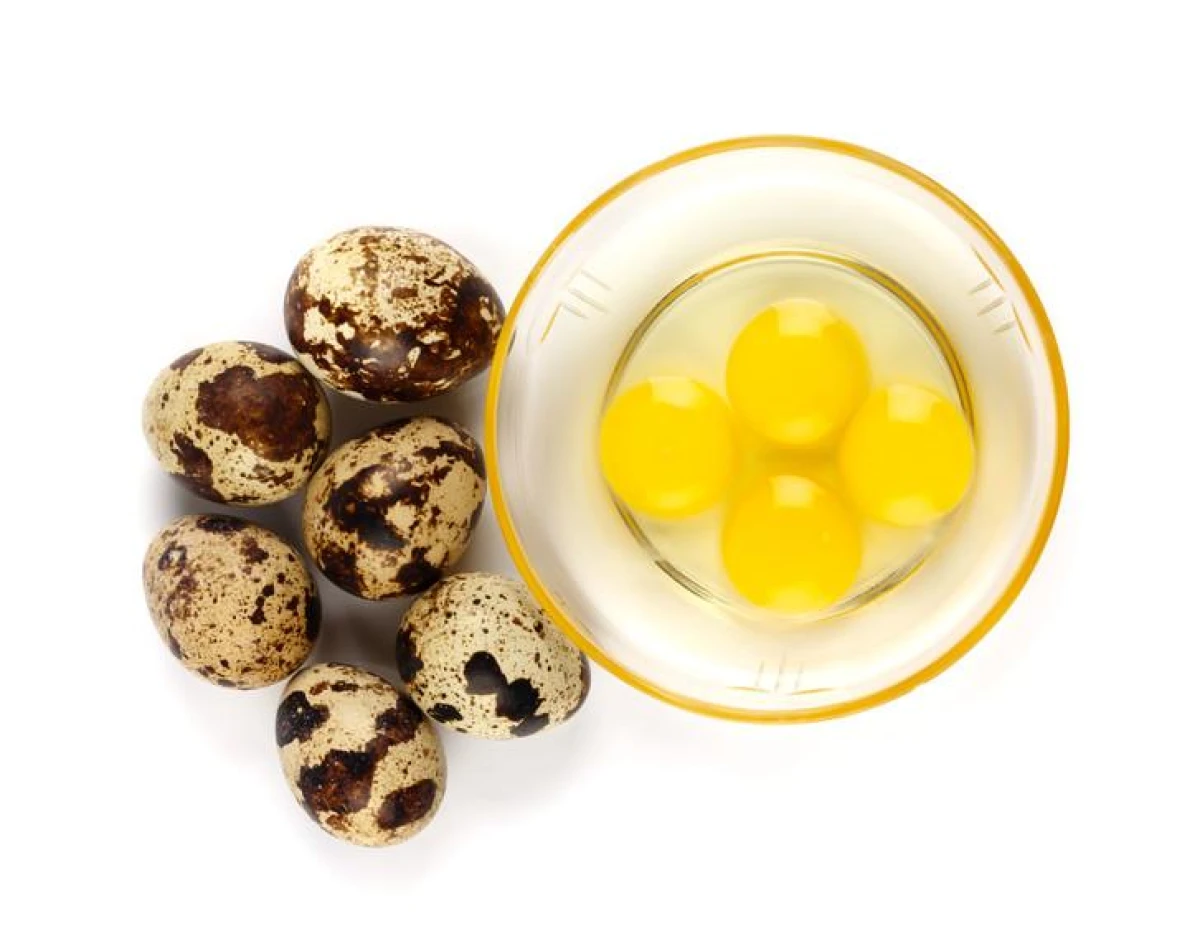
Quail eggs have a reputation as a healthy product, almost a superfood. Is this really the case?
Small speckled quail eggs are considered a delicacy and are more expensive than chicken eggs. There is an opinion that these cute little eggs with fragile shells are a real treasure trove of nutrients. They contain proteins, vitamins, minerals, and fats — in general, almost everything necessary for the body. However, like any egg, regardless of who laid it: a pterodactyl or an emu ostrich.
Quail eggs have their own characteristics that do not make them a superfood. Compared to chicken eggs, they contain significantly more iron, zinc, vitamins A, B2, and B12. In terms of calories, they are comparable, but quail eggs have more fats and cholesterol. However, this is not necessarily a downside — fats can be beneficial, and cholesterol is no longer considered the main enemy of health (that title now belongs to sugar). Additionally, egg yolks are high in lecithin, which helps lower levels of 'bad' cholesterol in the body. Thus, eggs can neutralize potential harm to the heart and blood vessels.
It is believed that healthy individuals can consume 2–3 chicken eggs a day, which is equivalent to 3–4 quail eggs. If cholesterol levels are high, it is better to discuss your intake with a doctor. Allergic individuals should also remember that they may react to quail eggs, especially if they have an allergy to chicken protein.
Can You Drink Raw Quail Eggs
There is a common belief that quail eggs cannot transmit salmonellosis, as quails supposedly do not suffer from this infection. However, this is a myth.
The body temperature of a healthy quail, like that of a chicken, is 41–42 °C. Salmonella dies at temperatures of at least 60 °C. Yes, quails usually do not suffer from salmonellosis, but they can be carriers. Additionally, these birds are susceptible to pullorum disease, which is also caused by salmonella, albeit of a different serotype, capable of causing health problems in humans.
Thus, raw or undercooked quail eggs can pose a risk of infection. In some countries, such as the United States, they are considered a 'potentially hazardous food,' just like chicken eggs. As a safe alternative, pasteurized eggs are sold in Western supermarkets — they are heated for several minutes at a temperature of 60 °C to kill harmful bacteria. Under these conditions, salmonella dies, and the protein does not coagulate, and pasteurized eggs are virtually indistinguishable in appearance and taste from regular ones. They are great for tiramisu and eggnog, which are often not prepared due to concerns about infection. However, quail eggs are rarely pasteurized.
Superfood from the Stall
In summary: quail eggs do not possess super properties, but like any other eggs, they are a valuable source of essential nutrients. The high iron content is beneficial for iron-deficiency anemia, and vitamin A is important for vision. One should not hope that these speckled little eggs will make your life long and healthy. Superfoods do not exist in nature; the overall style of eating is important. In this regard, quail eggs can diversify your menu and provide benefits.
By the way, in many countries around the world, they are everyday food. In Korea and Vietnam, boiled quail eggs can be bought as a snack with beer. In South America, they are traditionally added to hot dogs and hamburgers, in Japan — to bento and sushi. In the Philippines, a popular street food is kwek-kwek — quail eggs in batter. Delicious and nothing special!
How to Buy and Store Quail Eggs
Like any eggs, quail eggs should be whole and fresh. At temperatures from 0 to +8 °C, they can be stored for about 30 days. If you find a cracked egg, use it immediately after cooking — microbes can enter through the cracks, and the product will spoil quickly.