The retail chain 'LIDL-LATVIJA' calls on everyone to sort household waste. And, importantly, to sort it correctly!
For some time, I had the opportunity to visit a landfill for household waste. And honestly, I was shocked by how much we send underground. A little later, it dawned on me that discussions about pollution of the planet, including the place where we live, are not just slogans of eco-activists, but a frightening reality that will echo back to us and future generations in ways we cannot yet imagine. After that, I could no longer bring myself to throw a plastic container from sour cream or yogurt into the general waste: rinsing it out and putting it in the 'correct' container became almost second nature.
However, you can’t take every resident on a tour of the landfill, and the argument 'sorting waste can save on garbage collection' unfortunately does not always work, especially in apartment buildings. Many people still believe that sorting waste is too troublesome, and keeping four separate containers in an apartment—for plastic with paper and cans, for glass, for food waste, and a 'general' one—is very inconvenient...
But if this is difficult for a small household, how do large enterprises, which deal daily with huge amounts of cardboard, plastic, and other materials, manage to cope with the necessity of disposing of all this?
It turns out they do, and very successfully. For instance, the retail chain 'Lidl Latvija' sent about 90% (!) of its waste for recycling in the 2024 financial year. Data for 2025 is still being clarified, but it is already known that the volume of non-recyclable waste continues to decrease. And this is not the limit: the team has set a goal to ensure that by 2030, up to 95% of all waste from the enterprise is sent for recycling, with only 5%—unfortunately, the unavoidable—going to general waste for subsequent burial.
How is the enterprise moving towards this goal and what steps are being taken? We asked Antra Birzule, the head of the corporate social responsibility department at 'Lidl Latvija':
- Any endeavor begins with understanding what and, importantly, why you are doing it. Of course, 'Lidl Latvija' is primarily a retail enterprise, but for us, other aspects that are not directly related to business are extremely important: charity, care for nature and its preservation, as well as a sensible, rational attitude towards resources. In short, everything that encompasses the concept of 'social responsibility.' And we do everything in our power to ensure that our products are not only of high quality at an affordable price but also that their consumption brings maximum benefit, and the disposal of leftovers does not harm the environment. We are constantly working in this direction and actively engaging with partners—suppliers, local governments, non-profit organizations, etc.
Not Waste, But a Resource.
- I will start with waste sorting. Indeed, we, like other retail chains, generate a huge amount of materials daily that, if simply thrown away, would cause great harm to nature. At the same time, if these wastes are sorted correctly and sent for recycling, they become a colossal resource! Take plastic, for example: producing one kilogram requires just under two kilograms of oil. But how much oil can be saved (which is especially relevant today) if we carefully collect and send for recycling everything that has ALREADY been produced from plastic?
That’s why we approach sorting in our stores and warehouses very responsibly, carefully sorting and placing waste into specially designated containers: clear film from packaging goes into one, colored plastic into another, pre-compressed cardboard into a third, and so on. All of this is later sent for recycling.
Furthermore, we strive to ensure that as many of our products as possible are sold in packaging suitable for secondary recycling. For example, over 70% of our household chemicals and hygiene products are sold in such environmentally friendly packaging (not to mention food packaging). Our promotional brochures, by the way, are also made from recycled materials, which can later be sent for recycling again. Of course, we cannot be responsible for how customers dispose of the packaging from yogurts, sour cream, cottage cheese, etc., purchased at 'Lidl Latvija' at home. The only thing we can do is encourage: please, sort your waste! Don’t throw a plastic container into the 'general' container: just clean it of food residues, and you can confidently send it to the special one. And the same goes for other dry packaging: paper, cardboard, and plastic. It’s not difficult, and the benefits will be enormous!
Not the Right Food? No Problem!
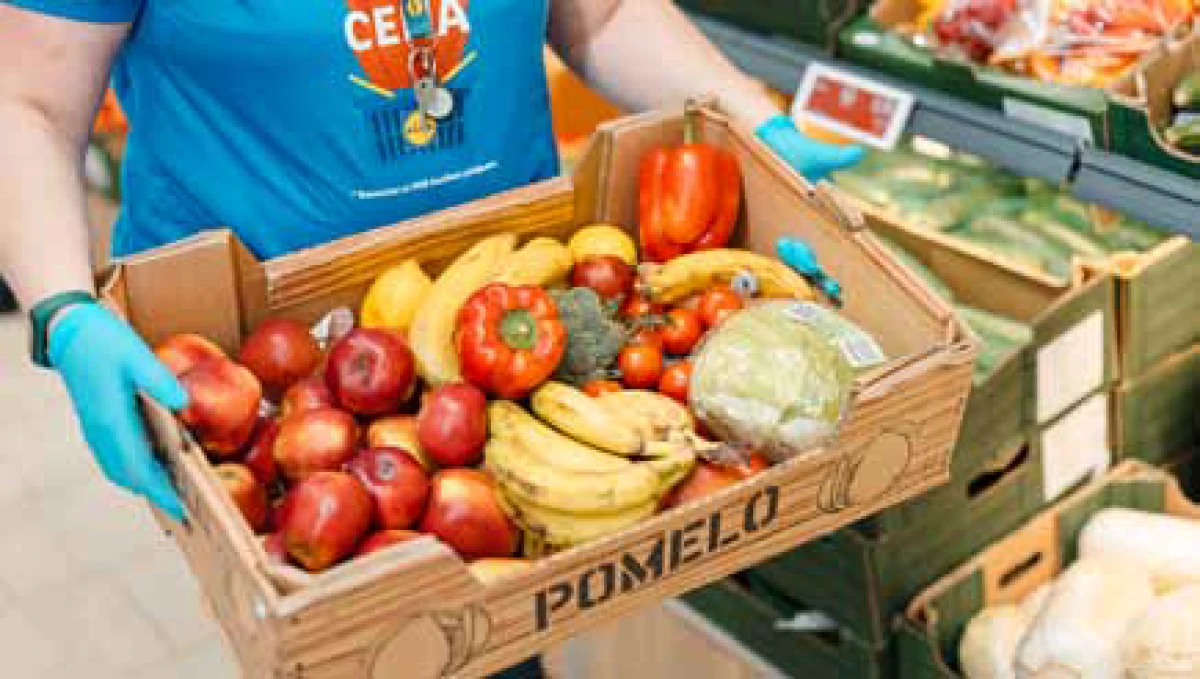
As is known, 'Lidl' stores always strive to offer their customers the freshest and highest quality fruits and vegetables. Therefore, several times a day, employees conduct 'freshness checks,' removing from the shelves those fruits and vegetables that no longer meet high standards. Despite some purely external defects, they are still good; our workers form special sets from them at a reduced price and pack them in biodegradable bags, which, by the way, are made from recycled materials. These 'three kilograms for two euros' sets are in high demand: they literally fly off the shelves as soon as they appear in the sales area!
Also, many unsold products that remain of good quality and safe even after their expiration date (grains, pasta, sugar, etc.) are handed over to partners—charitable organizations that then distribute these products among those in need. Last year, tens of tons of products were transferred this way.
We also actively participate in the deposit packaging return system, ensuring that our reverse vending machines operate smoothly and are convenient for customers. As I mentioned earlier, primary plastic is produced from oil; accordingly, the more packaging goes for recycling, the less new resources are required. Therefore, we encourage returning deposit packaging: besides the purely financial aspect, it significantly reduces the negative impact on the environment.
Saving Trees!
- It is no secret that wood is widely used in modern retail. Wooden boxes, wooden pallets, etc.—'Lidl Latvija' has also found a way to manage all this rationally and beneficially for nature. Thus, used and no longer needed boxes from fruits and vegetables are given free of charge to local fruit and vegetable producers. The benefit is twofold: Latvian farmers receive the wooden packaging they need for free, while the retail company saves on disposal. And everyone wins!
Moreover, even broken pallets have found a use! Our company has signed a contract with a wood chip production enterprise, so material that seemed to have nowhere to go ultimately goes to heat someone’s home...
...We realize that any improvement, even a small one, positively affects the planet as a whole. Therefore, if each of us does even a little for this, together we can achieve incredible results!