
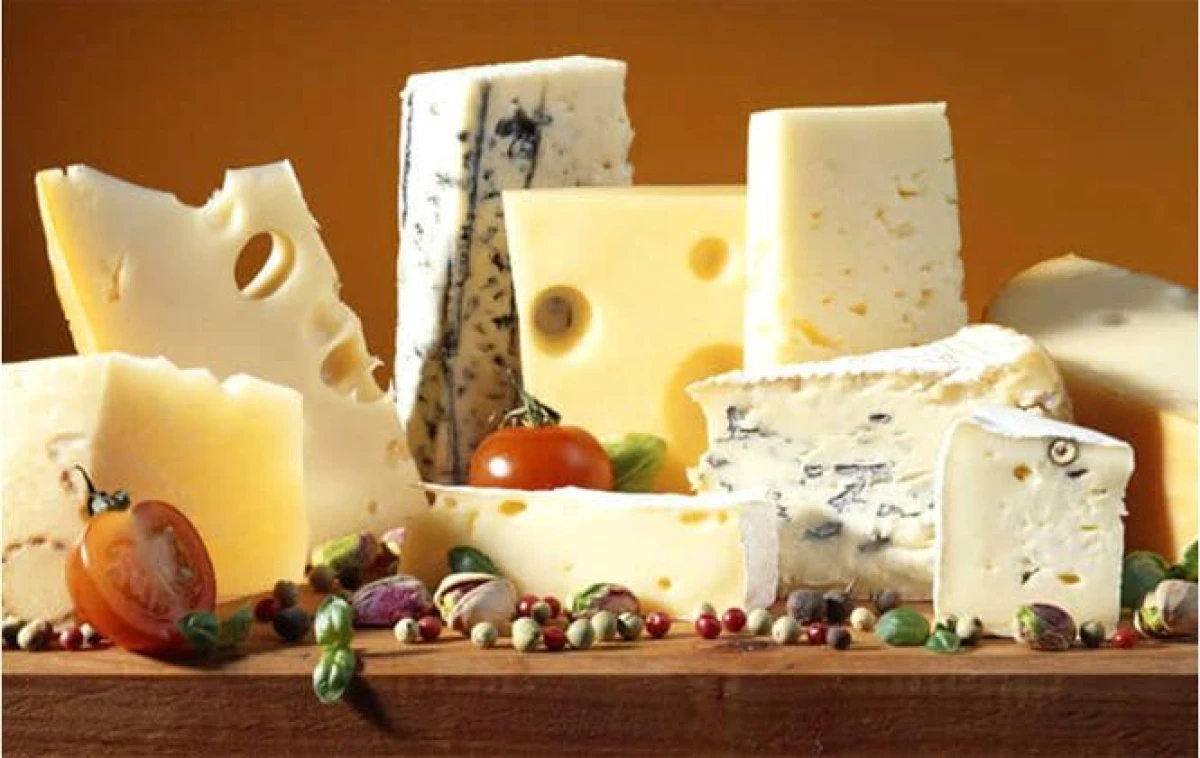
Your body will tell you when to stop with cheese, but are there specific recommendations for its consumption?
Cheese is always good, isn’t it?
Cheese is a source of beneficial proteins and calcium; however, it also contains a significant amount of saturated fats and salt. According to the British Heart Foundation, a 30-gram portion of cheddar can contain more salt than a packet of chips, which is certainly harmful to health.
A high level of saturated fats can contribute to increased cholesterol and raises the risk of cardiovascular diseases. Nevertheless, new studies are emerging indicating the so-called “matrix effect” of cheese, which may partially protect us from the negative impact of saturated fats.
The matrix effect is a phenomenon where certain elements influence the analysis results of other chemical components.
How cheese can be both harmful and beneficial
Most cheeses are made using the enzyme rennet, which is necessary for curdling milk. Some fresh cheeses, such as cottage cheese, are created using acid. In others, such as paneer (a fresh cheese popular in Asia), a combination of heating and acid is used. The method of cheese preparation affects its digestibility by the body.
A Canadian study from 2017, conducted on 43 healthy volunteers, showed that the fat from cream cheese is absorbed faster than from cheddar. Scientists suggested that the small fat droplets in cream cheese are more accessible to the enzymes that break down fat in the body.
Additional research has demonstrated that cheese consumption leads to a significant reduction in cholesterol levels compared to the consumption of individual components such as butter, protein, and calcium. This indicates that, despite its composition, cheese can lower cholesterol levels due to its “combination” of ingredients.
Overall, specialists and doctors agree that cheese is a healthy product; however, its consumption should be moderate, as it is calorie-dense and contains salt!
“If your diet lacks saturated fats and sodium, consuming 50-85 grams of cheese per day may be safe. If you are monitoring your diet or have heart issues, I would recommend limiting yourself to 30 grams of high-quality cheese per day, or possibly even less, a few times a week,” advises Dr. Alexis Supan, MD, dietitian.














Leave a comment