
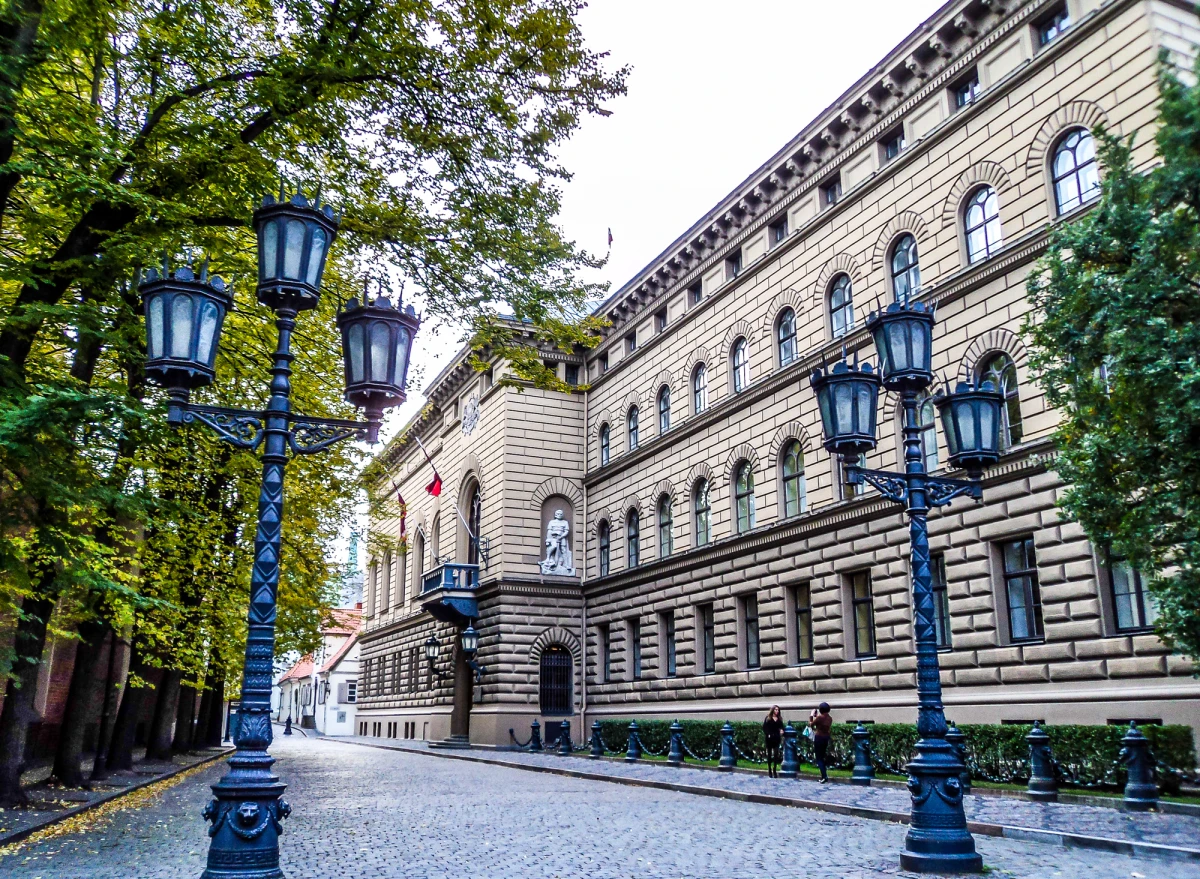
Many legislative initiatives gather dust in the Saeima committees for years and... are quietly thrown into the trash.
The fate of the opposition in the Saeima is usually unenviable: parliamentary sessions change, but the "rule" remains – at least 80 percent of opposition bills are rejected outright. This means that coalition deputies do not even agree to start discussions on these bills – in parliamentary committees.
Put on the Back Burner
But even if a pleasant surprise occurs for the opposition and a bill is supported in its zero reading (referral to committee), this still does not guarantee its acceptance in the final reading.
Moreover, there is not even a guarantee that the committee will consider it at all! The agenda, that is, which bills to consider in the first reading, is solely determined by the committee chair. And since most committees are headed by representatives of the ruling coalition, they can "marinate" the "wrong" bills for months, and sometimes even years.
In each session of the Saeima, a kind of "brotherly grave" of bills is formed, which have not even been considered in the first reading during this session, although deputies supported the consideration of these bills in substance at the plenary session.
The Gender Question: Two or More?
The current Saeima is no exception. Soon it will be a year since a constitutional amendment prepared by the "Latvia First" faction has been waiting for consideration.
The amendment states that the state recognizes only two genders – male and female. This addition to the Satversme was supported in the zero reading thanks to votes from the ruling coalition's "green farmers" alongside the opposition. But let us venture to assume that the amendment will be buried in the current Saeima, as the parliament has less than 4 months left to work in total.
Back in 2024, the parliament supported the consideration of an initiative from the then "Stability!" faction regarding social guarantees for parents who were self-employed when taking parental leave. However, this bill has not made it onto the committee's agenda for almost two years.
Interestingly, a bill submitted in December 2022 by the "green farmers" while they were still in opposition is gathering dust on the budget committee's shelf. They proposed, as during the COVID times, not to collect advance tax payments from individuals engaged in economic activities.
The initiative from the National Alliance regarding property tax discounts for low-income and large families is already beginning to gather mold.
Without Declarations and Provocations
Often, committee chairs do not want to consider bills or various types of declaration projects that either smell of populism or have a clearly pre-election character.
For example, a year ago, a couple of weeks before the municipal elections, the National Alliance came out with a draft Declaration that effectively calls for banning the use of the Russian language in public places. It is clear that the Saeima's education, science, and culture committee will not rush to consider this provocative initiative.
This year, the Saeima agreed to consider the "Latvia First" bill on reviving the Road Fund. The essence of the initiative is that the funds received by the state as a vehicle operation tax (road tax) should primarily go towards repairs and construction of roads, rather than simply being credited to the treasury and used for other needs. But it is not a fact that this bill will even be included in the agenda of the relevant committee.
Notably, just at the last plenary session, deputies agreed to send two similar bills – from the National Alliance and "Latvia First" – regarding automatic inheritance of savings in the second pension level to the committee. At the same time, there is a high likelihood that the matter may not even reach discussion in the committee...
The Situation Has Changed
To be fair, it should be noted that sometimes the consideration of initiatives from the ruling coalition also gets delayed in committees – but usually this happens when the political situation changes and it is no longer advantageous for the rulers to adopt this bill. Or there is a split within the coalition regarding a specific bill.
A fresh example – it seems that the consideration of the bill on the solidarity payment for fuel traders will be prolonged. The bill was developed by the Ministry of Economics, which is controlled by the "green farmers", but coalition partners are not very keen on supporting this controversial bill...
Interestingly, even a presidential legislative initiative has stalled in the Saeima, which is a clear precedent! Until now, all proposals from Rinkēvičs have been unconditionally approved by the parliament, and the corresponding law was adopted quite quickly. However, with the adoption of the president's proposal to liberalize the procedure for launching a referendum, deputies are in no hurry. The rulers do not want to make it easier for voters to conduct a referendum...
Rules and Exceptions
So, it can be concluded that if the parliament, as is currently commonly said, has political will, then a law can be adopted... even in one day and even in a matter of hours! If such political will is absent, then a bill may wait for its consideration for years and ultimately may never see the light of day.
Although sometimes there are exceptions – thus, the new immigration bill, which was prepared by the Ministry of the Interior back in early 2022 and submitted to the Saeima of the previous session, has finally come to its time. The previous parliament managed to approve it only conceptually.
The new Saeima took it on for further work in November 2022 and... only at the end of last year did the parliament begin to consider it in the second reading. It is not surprising that by the time of the third reading, 177 amendments had been submitted to this already considerably outdated bill! It is expected that by the end of this month, the law – four years after its writing – will finally be adopted!









Leave a comment