
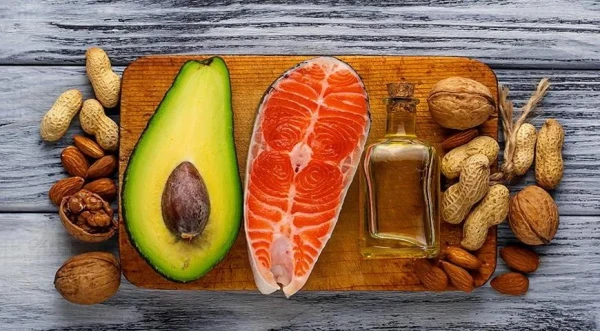
With the rise in popularity of low-calorie diets and calorie counting methods, many have begun to view fats as dangerous to health. Although some types can indeed be harmful, in general, fats do not deserve such negative attitudes.
Why is it important to include fats in your diet and which ones are beneficial?
The first thing to remember when planning your diet is that fats are our allies, not enemies. Excluding fats from your diet can lead to serious health consequences.
“Fat is a key macronutrient that performs many functions in the body,” explains Doctor of Medical Sciences, dietitian Amanda Holzer. “This means that avoiding dietary fats can disrupt bodily functions and cause serious harm to your health.”
The recommended daily intake of fats is between 20% and 35% of the total calories consumed from food.
“Thus, if a person consumes 2000 kilocalories a day, 400 to 700 kcal should come from fats, which corresponds to 44-77 grams of fat,” adds dietitian Amanda Holzer.
However, not all fats are beneficial for the body. Trans fats pose health risks and should be excluded from the diet. These fats are often found in fast food and processed products. It is also important to monitor saturated fat intake.
“We should aim for saturated fats to make up no more than 10% of total fat intake. The majority of calories from fats should come from monounsaturated and polyunsaturated fatty acids,” emphasizes dietitian Amanda Holzer.
Note! Monounsaturated and polyunsaturated fats are considered beneficial. Studies show that they positively affect the nervous and cardiovascular systems, help maintain a healthy weight, and prevent the development of many diseases.
Sources of such fats include natural vegetable oils, seeds and nuts, fatty fish, avocados, and eggs.
Signs of Fat Deficiency in Your Diet
Considering the importance of healthy fats for health and beauty, their deficiency immediately affects well-being.
What can indicate a fat deficiency in your diet?
Sign 1: Constant Hunger
Frequent hunger pangs are a clear signal that you are heading in the wrong direction. The fact is that fats play an important role in maintaining a feeling of fullness. The body takes longer to digest them, so a person feels hungry for a longer time.
Excluding fats from the diet or sharply limiting them will lead to feelings of hunger almost immediately after eating.
Sign 2: Constant Fatigue
If by the end of the workday you feel like you have no strength even to get home, the reason may lie in poor nutrition.
Fats provide the body with long-lasting energy. “One gram of fat contains 9 kilocalories. For comparison: this is more than twice the number of calories obtained from one gram of proteins and carbohydrates,” explains dietitian Amanda Holzer.
People who exclude fats from their diet significantly reduce their total calorie intake, leading to a lack of energy and fatigue in the middle of the day.
Sign 3: Joint Creaking
If your joints creak when walking or even with slight movements, it may be related to a lack of fats in your diet.
“This occurs due to inflammatory processes in the body, which are one of the main causes of joint pain,” says dietitian Amanda Holzer. “Certain types of fats, such as Omega-3, can reduce inflammation and improve joint health.”
Note! Rich sources of beneficial Omega-3 fatty acids include walnuts, hemp seeds, fish oil, salmon, trout, herring, cod liver, as well as canola and olive oils.
Sign 4: Frequent Illnesses
If you have started to complain more often about nausea or respiratory diseases, it is worth reviewing your menu. Perhaps your diet lacks fatty foods.
Fats are necessary for the absorption of fat-soluble vitamins. When they are lacking, the body cannot fully absorb important substances, which can lead to deficiencies. And without sufficient vitamins and minerals, the body becomes more vulnerable to viruses and bacteria, leading to increased illness.
Sign 5: Concentration Problems
The human brain is made up of 60% fat. Therefore, it is not surprising that it needs fats for normal functioning.
If there are not enough fats in the diet, it can lead to difficulties with attention, concentration, and memory. Studies have also shown that the consumption of Omega-3-rich foods is associated with a reduced risk of mental disorders, including depression and bipolar disorder.
Sign 6: Dry and Flaky Skin
Some fats play an important role in maintaining skin health. Their deficiency can lead to a feeling of dryness and reduced elasticity. Additionally, a lack of fats can contribute to increased inflammation levels in the body, which in turn can cause acne.
Therefore, those who want to maintain smoothness, radiance, and clarity of skin should pay attention to the level of beneficial fats in their body.
Did you know? Three types of fats are essential for skin health — Omega-3, -6, and -9 fatty acids. They support the skin's lipid barrier, promote cell renewal, and help slow down aging. Omega can be found in dietary supplements or present in cosmetic products.
Sign 7: Hair Loss
Dryness and brittleness of hair, as well as thinning of the mane, can indicate a lack of fats. Like the entire body, hair and scalp need certain nutrients to maintain health. If they do not receive the necessary substances, their condition worsens — the scalp becomes inflamed, and strands become thinner.
Adding healthy fats to the diet can help solve this problem.
Sign 8: Irregular Periods
Fats are necessary for the body to produce hormones. If there is insufficient fat mass, which often occurs when fats are avoided, this can lead to hormonal imbalances.
“Hormonal imbalances can cause menstrual cycle disruptions,” warns dietitian Amanda Holzer.
Note! Scientists have determined the minimum percentage of fat in the body necessary for health. For men, it is 3-5%, and for women, it is 8-13%.
How to Properly Introduce Fats into Your Diet
Those who follow a balanced diet need not worry about fats in their diet. They come in the right amounts along with healthy foods, as many of them contain beneficial fats.
Those who do not follow such a diet should adjust their menu by following these recommendations:
* Consume fatty fish 1-2 times a week.
* Avoid mayonnaise. Prepare healthy dressings based on vegetable oils.
* Snack on nuts or seeds every day. Add them to smoothies, cereals, and morning yogurt.
* Include avocado in your diet. Its puree can be used instead of mayonnaise.
* Do not be afraid to eat healthy fats.
Source: medaboutme















Leave a comment