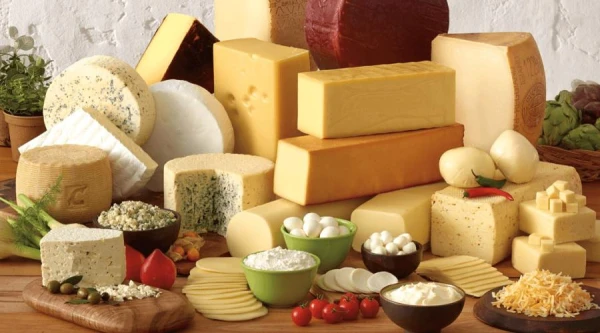
High cholesterol is often associated with the consumption of saturated fats found in dairy products such as cheese. If you are concerned about the risk of cardiovascular disease or stroke, should you include cheese in your diet?
The British Heart Foundation (BHF) states that "cheese should not be completely excluded from your diet," but it is recommended to consume it "in moderation."
Different types of cheese contain varying amounts of saturated fats. Do you know which cheeses are preferable if you have high cholesterol? The cheeses with the lowest saturated fat content (per 100 g) include:
Fat-free cottage cheese (1 g)
Cottage cheese (2 g)
Ricotta (5 g)
Among cheeses with high saturated fat content are:
Mascarpone (29 g)
Cheddar, Double Gloucester, and other hard cheeses (22 g)
Parmesan (19 g)
Brie, paneer, and soft goat cheese contain 18 g of saturated fat per 100 g.
Edam has 16 g of saturated fat, while Camembert, feta, and mozzarella contain 14 g of saturated fat per 100 g.
Additionally, cheese can contain a significant amount of salt, which contributes to increased blood pressure and raises the risk of cardiovascular diseases and stroke.
BHF added:
"Reducing fat content does not always mean no cholesterol; it simply indicates 25 percent less fat compared to the original. Be sure to check the label to determine whether the fat content is high (more than 17.5 g / 100 g), medium (3.1–17.5 g / 100 g), or low (3 g or less / 100 g).