
What is at stake in the global game?
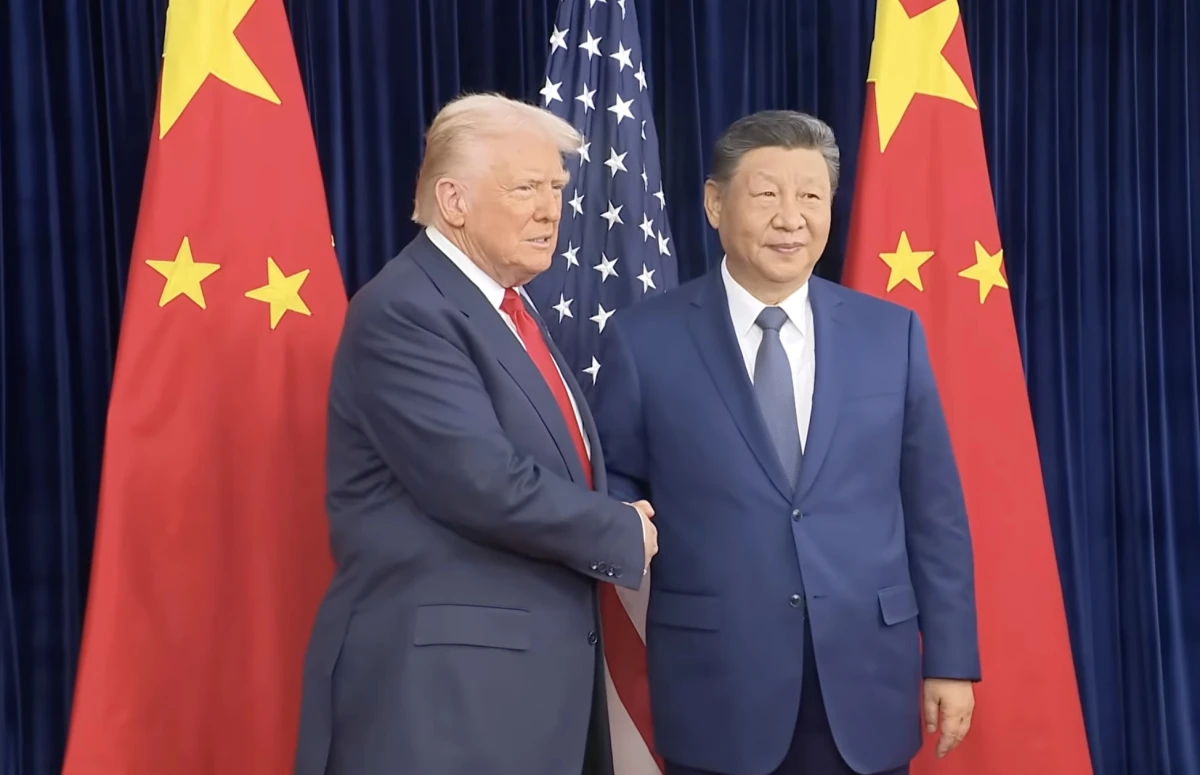
From May 13 to 15, U.S. President Donald Trump will travel to Beijing for talks with Chinese President Xi Jinping. DW reports on the key topics of the summit, which has been postponed by a month, and its possible consequences for global politics.
All good things take time, goes the Eastern wisdom. After canceling his visit to China in April, U.S. President Donald Trump will visit Beijing from May 13 to 15. Today, global issues such as economic growth or climate change can only be resolved with the participation of both of the world's strongest powers. The United States is the largest economy on the planet, while China is the second largest. At the same time, Beijing is the largest, and the U.S. is the second largest emitter of greenhouse gases.
Against this backdrop, the upcoming negotiations between Trump and Xi Jinping cannot fail — this is the belief of authorities in both Beijing and Washington. The expected agreements are believed to have global significance. At the same time, both ambitious leaders want to present results to their fellow citizens, and in the case of the U.S., to voters, that will portray them in a favorable light. No one wants to lose face; both want to appear as "strong leaders."
Expert: Trump Needs Positive News on the Foreign Policy Front
In this, Trump is relying on communist China. The White House occupant understands well that the media eagerly reports on his successes whenever the Chinese make promising statements. This is because Beijing does not want to put Xi in an awkward position due to a possible summit failure, as he has firmly held power in the country for 13 years. However, Trump must also have compromise options in reserve, which, although unpleasant for him, can be presented to the American public if necessary.
"Trump desperately needs positive news on the foreign policy front," explains Chu Yin, a political scientist from the Pangoal think tank and former professor at the Beijing University of International Relations. "Trump's approval ratings are at their lowest ahead of the midterm elections scheduled for November. Apparently, his plan to quickly bring China's ally Iran to its knees through preemptive military strikes, celebrate his victory in Beijing, and use this success as leverage in negotiations has not worked."
Now, the political scientist continues, Trump must hope to achieve at least a partial agreement in the trade war that has flared up due to the tariffs he imposed on imports. Even before the negotiations in Beijing, representatives of both sides plan to align positions during meetings in Seoul on May 12-13. Resolving the trade conflict, observers believe, would be a successful start to the Republican election campaign, which currently holds a slim majority in both chambers of Congress.
Taiwan as a 'Red Line' for China
From China's perspective, the "red line" that cannot be crossed in relations with the U.S. is the issue of Taiwan's legal status. This island is considered a rebellious province of the People's Republic of China (PRC) in Beijing, a state proclaimed by Mao Zedong in 1949. However, the democratically self-governing island still operates under the Constitution of the Republic of China, adopted in 1911.
Beijing is convinced that such a constitution should not exist at all, just as the designation of Taiwan as an independent state should not. Taiwan is an integral part of China, and the People's Republic of China is its only legitimate government, Beijing emphasizes. Collectively, these three postulates express the "One China principle," which serves as the foundation for diplomatic relations with the PRC for all states.
In the Shanghai Communiqué of February 1972, which laid the groundwork for establishing diplomatic relations between the U.S. and the People's Republic of China, U.S. authorities merely acknowledged the "One China principle."
At the same time, the Taiwan Relations Act of 1979 empowers U.S. authorities to "provide Taiwan with defensive arms" and "to resist any use of force or other forms of coercion that might jeopardize the security or social-economic system of the people of Taiwan."
During Donald Trump's second presidential term, Taipei has already ordered weapons from U.S. companies worth a record $11.1 billion by 2025. On May 8, the Taiwanese parliament passed a law allowing for large military equipment purchases, primarily from the United States. By 2033, these are planned to be conducted for up to $25 billion.
Beijing understands that Trump has significant leeway under existing legislation. Therefore, it is expected that he will make every effort to persuade the American president to express a favorable stance on Taiwan.
Wars Against Iran and Ukraine
At the same time, the Chinese may use their influence in the current global situation to distract the White House occupant from possible billion-dollar contracts with Taiwan. "The U.S. needs China's support in the war against Iran," believes Peter Chiu, head and founder of the Hong Kong Center for Globalization. The PRC also plays a key role in ending Russia's war against Ukraine.
After Trump's arrival, a visit to Beijing by Russian President Vladimir Putin is expected by the end of May. China is not a party to either of these wars, claiming to strictly adhere to all UN sanctions. However, it is diplomatically active and is conducting intensive negotiations with Tehran and Moscow behind closed doors.
In particular, Iranian Foreign Minister Abbas Araghchi visited Beijing in early May and met with his Chinese counterpart Wang Yi. The latter expressed concern that the U.S. and Israel's war against Iran is causing immense damage to the region and the entire planet. At the same time, the PRC supports Tehran's right to peaceful nuclear energy use, emphasizing that this is ultimately the right of any sovereign state.
Additionally, Wang expressed hope that all parties involved in the war in the Middle East would "positively respond to the expectations of the international community regarding ensuring safe navigation through the Strait of Hormuz." Beijing also holds the U.S. partially responsible for the situation, as they temporarily blocked passage to and from the Persian Gulf. A fragile truce between Iran, the United States, and Israel has been in place for three weeks.
"I hope the Chinese will convey this message to Iran. Whether this happens behind closed doors or not, I hope it does happen," U.S. Secretary of State Marco Rubio stated last week at a press conference at the White House, referring to the unacceptability of Iran blocking the Strait of Hormuz. It is in China's interest, as an "export-oriented economy," for the Iranians to lift the blockade. "Iran should not lay (naval) mines. It should not hold the global economy hostage," Rubio is convinced.
Will There Be a Partial Agreement on Resolving the Trade War?
Donald Trump's message to the leadership of the PRC in the economic sphere is crystal clear: the world must buy not only Chinese products. And China must also purchase American goods to offset the multibillion-dollar surplus in bilateral trade. Citing this, Trump imposed high import tariffs on goods from China a year ago. The enforcement of some of these tariffs is currently suspended. However, negotiators from both countries have yet to announce any significant agreement in this area.
Meanwhile, despite the tariffs, according to estimates by the U.S. Census Bureau under the Department of Commerce, China's trade surplus with the United States is expected to reach nearly $202 billion by 2025. "China is ready to buy American products. But it also wants to see reciprocal concessions, such as easing the ban on the export of certain American semiconductors for artificial intelligence (AI) technology," Peter Chiu, who earned his PhD at the University of Tübingen, shares with DW.
Washington has imposed strict export controls on the sale of advanced microchips used for AI. Although the Chinese are in the process of mastering the technology for their production, the U.S. authorities' decision appears to significantly slow this process. "Ultimately, I expect some sort of 'big deal' that will take into account the national interests of both countries," Chiu predicts. He adds that, in addition, China may discuss the conditions for ending the war in Ukraine during Russian President Putin's visit to Beijing. This is another of Trump's demands to China.







Leave a comment