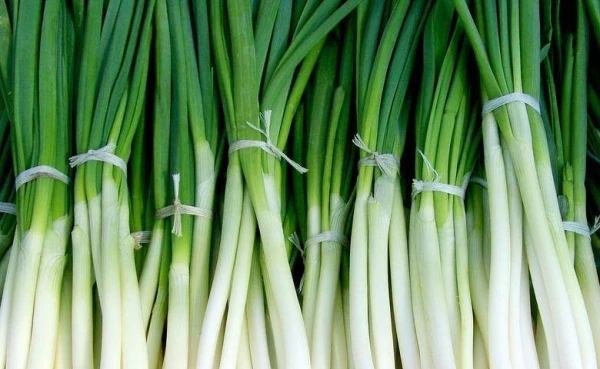
Green onions add bright notes to dishes, are available year-round in stores, and can easily be grown on a windowsill. But this is not just ordinary greenery.
Onions have been consumed for nearly four thousand years. It is known that in Ancient Egypt, slaves building the Great Pyramid of Giza were given onions to sustain their strength. We cannot assess how effective this was, but the pyramids still stand today.
Today, green onions are added to salads and ready-made dishes, used as a filling for pies and an important ingredient in okroshka, and are also eaten simply when one craves fresh greens. In spring, the desire to indulge in this greenery becomes particularly acute, as noted by kuban24.tv. The only thing that might stop us from “devouring” a bunch of fresh green onions is its specific aroma, which lingers on the breath for a long time. But gum is always at hand — we take a bunch of green onions, enjoy them, and reap the benefits.
Benefits of Green Onions
Interestingly, green onions (or, as they are also called, “feathers”) have a richer composition than the juicy bulb itself. The green part of the onion contains many vitamins from groups B, A, E, K, and C, as well as potassium, magnesium, phosphorus, zinc, chromium, cobalt, and silicon. Additionally, it is rich in essential oils and flavonoids. So why do we need this “Periodic Table”?
Firstly, green onions, thanks to essential oils and flavonoids, effectively combat viruses and bacteria, while vitamin C supports the immune system, preventing already infiltrated enemies from causing serious harm. Green onions also contain the natural antibiotic quercetin, which helps the body deal with infections more quickly. According to doctors, green onions are much more effective in fighting colds than regular onions.
Consuming green onions positively affects digestion — it improves appetite, stimulates the production of gastric juice, and promotes intestinal peristalsis. Fiber, which is abundant in green onions, is responsible for gut health.
Vitamins from group B and magnesium support the normal functioning of the nervous system, vitamin A is beneficial for vision, and potassium helps lower blood pressure.
Equally important is that green onions contain zinc and silicon, which care for our beauty — the former supports skin health, while the latter is beneficial for nails and hair.
Vitamin K helps normalize blood clotting, while the antioxidant vitamin E, in addition to maintaining youthful skin, aids in the prevention of many serious diseases. Furthermore, consuming green onions helps lower cholesterol levels in the blood, thereby protecting blood vessels from atherosclerosis.
Additionally, green onions contain the carotenoids lutein and zeaxanthin. These substances are extremely beneficial for the eyes, as they protect them from harmful ultraviolet radiation.
Harm and Contraindications
Green onions are not recommended during exacerbations of gastrointestinal diseases. In cases of gastritis, ulcers, colitis, and pancreatitis, it is better to avoid this product.
Those with high stomach acidity should also be cautious. Green onions are not a strong allergen, but they can cause individual intolerance, manifesting as rashes and stomach upset.
People with kidney and liver diseases, as well as those suffering from asthma, should not overindulge in green onions. Additionally, it should be noted that green onions are rich in vitamin K, which can increase blood clotting. In cases of thrombosis risk, it is better to refrain from this product.