
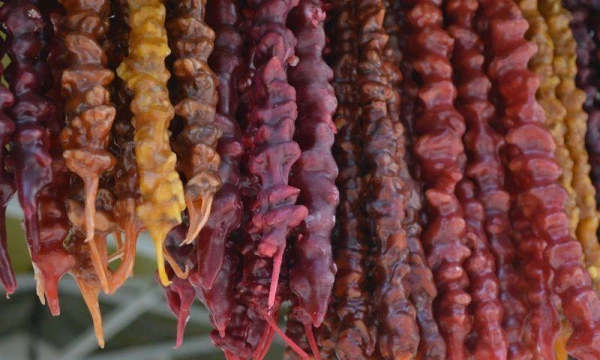
Bright "sausages" made from fruit juice with nuts and candied fruits are an integral part of summer vacations on the Black Sea. What is churchkhela, what are its health benefits, and who should avoid this treat?
You probably remember the times when "vendors" wandered along the beaches, loudly shouting: "Hot corn! Churchkhela! Honey baklava!" They moved along the coast, stumbling over sunbathing vacationers, and if the corn was in a more or less comfortable packaging, the churchkhela usually hung on their shoulder. And how unpleasant it landed on the sweaty back of the seller… It’s amazing that anyone dared to buy such a treat. Fortunately, those times are in the past. Now you can purchase churchkhela and enjoy it in more civilized conditions. So what is this product and what are its benefits?
Churchkhela has Georgian roots. It was in Georgia that the idea of threading nuts onto a string, dipping them in boiled grape juice thickened with flour, and then drying them was first conceived. This product became not only a sweet treat for tea but also an excellent high-calorie snack for those embarking on a long journey.
Today, churchkhela is made from various nuts and juices. They have even started adding candied fruits to it. However, the classic version remains walnuts wrapped in a burgundy-brown "shell" of grape juice with a unique, slightly rubbery texture. The traditional recipe does not include sugar. But when buying churchkhela at the market, you can only hope for the honesty of the seller who claims that his grandmother made it just like for her grandchildren.
Benefits of Churchkhela
All the beneficial substances contained in nuts and juice are also present in churchkhela. Nuts are rich in protein, potassium, magnesium, vitamins B and E, fiber, while juices contain vitamins C and A, pectin, and numerous minerals that accumulate in fruits and berries during their short but rich life.
Typically, a piece of classic churchkhela provides you, in addition to the aforementioned, with phosphorus, calcium, iron, and unsaturated fatty acids. And, of course, a portion of joy — like any sweet, churchkhela fills you with energy and promotes the production of serotonin and endorphins.
Pectin from the juice and fiber from the nuts provide a lasting feeling of fullness. They help improve digestion and "nourish" beneficial bacteria in the intestines, creating a powerful defense for the immune system. Moderate consumption of churchkhela positively affects cardiovascular health, normalizes cholesterol levels, lowers blood pressure, and strengthens blood vessel walls. Churchkhela is also beneficial for brain function, thanks to the nuts and glucose.
Classic churchkhela made from grape juice contains numerous antioxidants. They protect cells from damage by free radicals and help in the prevention of various serious diseases, including cancer.
Harm and Contraindications
However, one should not forget about the downsides. Firstly, the calorie content of churchkhela can reach 500 kcal per 100 g depending on the composition. Goodbye, slim figure, hello, extra weight. One should also not forget about the presence of flour and the possible addition of sugar to the juice — churchkhela is absolutely not recommended for people with diabetes.
People with gastrointestinal diseases should also exercise caution — nuts can be difficult to digest.
Churchkhela should not be consumed in cases of liver and kidney diseases. Additionally, this product contains many allergens — nuts, juices, and gluten-containing flour can cause allergic reactions. If you have any doubts about your health, it’s better not to take risks.
And, of course, it is important to pay attention to where you buy churchkhela. A product that has been prepared and stored in violation of sanitary standards can lead to food poisoning or intestinal infection.











Leave a comment