
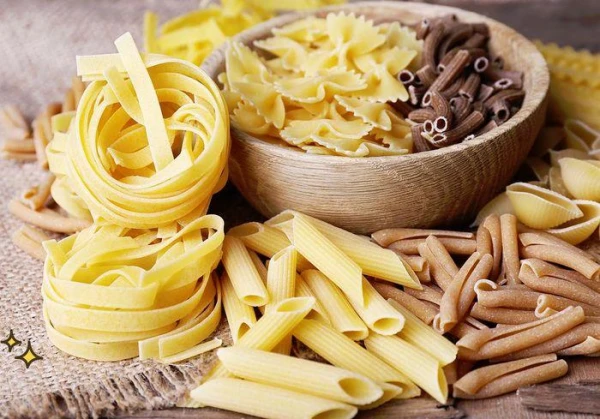
When choosing a diet, many aiming for weight loss first refuse sweets and flour products. We have already discussed the choice of sweets; now let's talk about flour and its varieties.
Pasta
The most harmful flour products are considered to be pastries and products containing a large amount of margarine and high-grade wheat flour. Such products contain trans fats, which are harmful to the heart, and easily digestible carbohydrates that have an effect similar to sugar. In contrast, whole grain bread and pasta made from durum wheat are more beneficial. Flour made from whole grains (coarse or whole grain; it may also be specified as “made from durum wheat”) retains most of the vitamins and fiber, and provides slow carbohydrates that are gradually absorbed by the body, not contributing to weight gain and reducing the risk of diabetes.
Moreover, whole grain bread and pasta made from durum wheat should be a staple in your diet. They provide the body with B vitamins, improve digestive system function, and, according to a study from the University of London, prevent the accumulation of fat deposits in the waist area.
Important! The “newly discovered” benefits of pasta do not justify a feast at an Italian restaurant. Although pasta itself is healthy, various sauces made with oil, fatty cream, and bacon can increase the calorie content of a pasta dish by 2-3 times. These extra calories will not disappear on their own.
Full-Fat Cheese and Milk
These products are not recommended not only for those looking to lose weight. Dairy and other animal fats can raise cholesterol levels, which in turn leads to atherosclerosis and heart attacks. However, this is only true for those who already have cardiovascular problems, especially high cholesterol. If you are confident in the health of your “engine,” full-fat cheese and milk will only benefit you. They are rich in calcium and vitamin B, which are better absorbed in the presence of fat.

Additionally, last year scientists discovered that milk fat contains a substance called CLA, which paradoxically prevents the formation of fat deposits. Thus, the more caloric the product, the less it affects your figure.
By the way. One of the well-known diet theorists, Robert Atkins (author of the popular weight loss system named after him), recommended that his patients focus on high-fat cheeses and yogurts. The Atkins diet is based on minimal carbohydrate intake, while fats and proteins are allowed in large quantities, which has already been confirmed by millions of followers. Hollywood stars such as Geri Halliwell, Jennifer Aniston, and Renée Zellweger have quickly lost weight “the Atkins way.”
Potatoes
This root vegetable has long been considered forbidden for those who fear gaining weight. It was believed that the high starch content (which is a glucose compound, i.e., sugar) makes potatoes equivalent to a chocolate bar. It contains a lot of carbohydrates, and blood sugar levels rise quickly after eating, increasing the chances of weight gain and the risk of diabetes.
However, recently nutritionists have increasingly justified potatoes. There is an opinion that the starch in potatoes is slowly processed by the body, preventing its accumulation as fat and being used as energy. Blood sugar levels rise and fall gradually, creating a feeling of satiety and protecting against unnecessary snacking and calories.
By the way. The calorie content of potatoes is relatively low: only 80 kcal per 100 grams. Based on this product, a mono-diet has already been developed.
Important! To avoid weight gain, it is advisable to consume the freshest potatoes possible. With prolonged storage (especially at low temperatures), the starch in potatoes breaks down into glucose, which no longer provides benefits.
Wine
As with coffee, moderation is key here. Several studies have confirmed the benefits of regular but moderate alcohol consumption for both health and body shape. For instance, 1-1.5 glasses of red wine a day strengthen tooth enamel and protect against cavities. This drink also reduces the risk of cardiovascular diseases, degenerative brain diseases (dementia), and even breast cancer. Recently, British physiologists found that women who regularly and moderately drink wine tend to lose more weight on average than those who do not consume alcohol.
By the way. Vodka is recognized as the most “hangover-free” alcoholic beverage. This is not due to its strength, but rather the production technology, as withdrawal symptoms arise from flavorings and additives, not the alcohol itself.
Chocolate
Sweets come in various forms, and chocolate is no exception. On one hand, it contains a lot of sugar and fat; on the other hand, these are plant fats that are not harmful and can even be beneficial for the heart.
However, these are not the only arguments in favor of chocolate. The raw material for this product—cocoa butter—contains many substances that positively affect various organs and systems of the body. For example, theobromine calms and improves the nervous system; special antioxidants protect the skin from premature aging; and hormones serotonin and dopamine, which are also influenced by chocolate, regulate mood and enhance brain performance. Some doctors even recommend chocolate as an antidepressant, and scientists from the University of Copenhagen claim that chocolate can help you lose weight. According to their research, this product slows down digestion—if you eat a piece before lunch, you will ultimately consume fewer calories and maintain a feeling of fullness longer.
Important! Since the main benefits of chocolate lie in cocoa beans, it is worth choosing a product with the highest cocoa content. Look for dark chocolate (65% cocoa and above—this should be indicated on the packaging), as well as products that list cocoa mass in the ingredients. Milk chocolate contains only 20-35% cocoa, while white chocolate contains none at all.
Coffee
The debate between coffee lovers and caffeine opponents resembles a fairy tale battle between good and evil: the balance of power occasionally tips to one side or the other, but a definitive conclusion is unlikely to ever be reached.
However, recently it seems that both sides are reaching a compromise. Some have acknowledged that in certain cases, coffee can indeed be harmful, while others have agreed that it is not the drink itself that is harmful, but its excessive consumption. If one adheres to the norm (no more than 4 medium cups a day), one can: a) strengthen the cardiovascular system and prevent the development of hypertension and atherosclerosis, b) improve memory and concentration, as well as protect against senile dementia and Alzheimer’s disease, and c) lose weight! Coffee speeds up metabolism and slightly suppresses appetite, which ultimately creates an excellent dietary formula.
Important! When visiting a café, many think that a cup of coffee instead of a full breakfast or dessert will save them from extra calories. This is not always the case. The minimum calories are found only in regular black coffee without sugar (espresso or Americano), while in lattes, glaces, or popular cappuccinos, due to the addition of milk, syrups, sugar, and ice cream, there can be from 300 to 600 kcal per serving.
Popcorn
Air-popped corn has long ceased to be just a treat and has become an essential attribute of any movie screening. This, in turn, has negatively affected its reputation. To increase sales, cinemas prepare popcorn with a lot of sugar and fat, significantly increasing its calorie content. And have you seen the portion sizes? One large bucket can contain up to 1200 kilocalories (!), which is close to the daily consumption norm for women. In reality, popcorn in its original, unspoiled marketing form is quite a healthy product. It is rich in fiber, which improves digestion, lowers blood sugar levels, and ultimately helps avoid weight gain. According to the American Health Association, popcorn lovers are 28% less likely to suffer from various gastrointestinal diseases, and it has recently been found that corn also contains many antioxidants. Thus, this seemingly harmful product not only cleanses the body but also protects against cancer.
By the way. You will never find information about the composition and nutritional value of popcorn on a “movie theater” bucket. However, such information is always provided on packages of popcorn for home preparation. The cost of this pleasure is 8-10 times lower, it can be prepared in 3-7 minutes in the microwave or on the stove, and you will know exactly how much salt, sugar, and food additives you are getting.
Source: mygazeta















Leave a comment