
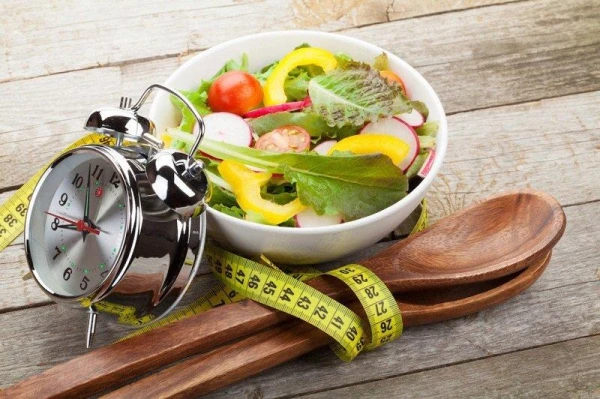
Counting calories is one of the most effective methods for weight control. It is especially actively used by those who aim to lose weight. They choose lower-calorie foods, increase physical activity to compensate for excessive calorie intake, and sometimes even consume foods with negative calories. But is this really the case?
Many are convinced that foods with negative calories do not exist. Technically, this is true; however, there is an opinion that the body expends more energy digesting certain foods than it receives from them. To understand this issue, it is necessary to comprehend what exactly our body uses energy for.
Let’s start with the basics — the chewing process. Limited studies show that chewing gum can increase the body’s energy expenditure by about 11 calories per hour. However, even a piece of celery, which contains 14 calories per 100 grams, cannot be 'burned' in just a few seconds while you chew it.
However, this is not so important, as the main issue is that our body is a complex mechanism with already established 'factory settings.' This is why the body always uses fewer calories to digest than it receives from food. Additionally, different nutrients require varying amounts of energy for processing. For example, processing carbohydrates requires only 5–10% of the calories from the total caloric content of the food, for fats this figure is 0–5%, and for proteins — 20–30%.
Most foods that are thought to have negative calories are primarily composed of water and carbohydrates, with minimal amounts of fats or proteins. Therefore, even if we consider the small number of calories burned while chewing, such food will still be 'positively caloric.'
Thus, discussing negative caloric content is difficult even in theory. Nevertheless, experts note that there are low-calorie foods with high nutritional value that can aid in weight loss. The secret lies in the fact that such food contains a lot of water, and by consuming, for example, a serving of cabbage, you will feel full while consuming a minimal number of calories.
Here are some specific examples of such foods (amounts are per serving):
Celery: 14 calories per 100 grams, 95% water;
Carrot: 52 calories per 130 grams, 88% water;
Lettuce: 5 calories per 35 grams, 95% water;
Broccoli: 31 calories per 90 grams, 89% water;
Grapefruit: 69 calories per 230 grams, 92% water;
Tomatoes: 32 calories per 180 grams, 94% water;
Cucumbers: 8 calories per 50 grams, 95% water;
Watermelon: 46 calories per 150 grams, 91% water.














Leave a comment