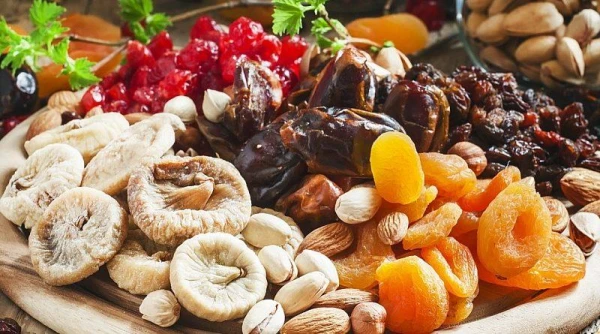
Sharing his experience is agronomist and gardener Alexander KHOROBROVETS:
- When storing dried fruits, they can be damaged by the larvae of moths, as well as the larvae and adult beetles, mites, and rodents.
All these pests are polyphagous. They thrive in places where there are food supplies and suitable living conditions, such as warehouses and livestock facilities, pantries, attics of residential buildings, bird nests, rodent burrows, as well as hay and straw stacks, tree trunks, and soil.
The flight of many pests, including moths, begins in May and continues until autumn when the drying of fruits and berries occurs.
During the drying process, fruits become accessible to moths, beetles, and mites. Thus, primary contamination of dried fruits can occur during this period, and secondary contamination can happen during storage if proper control is not ensured.
Fresh fruits or berries, just put out for drying, are not susceptible to contamination due to high humidity. However, as they dry, the dried fruits become vulnerable to pests.
The larvae of moths and firebrats, while feeding on dried fruits, bore tunnels in them, which are then filled with webs, droppings, casings, and molted skins that accumulate during their growth and development. Such dried fruits become completely unfit for consumption. Even multiple and thorough rinsing with water does not yield the desired result.
Infestation of dried fruits by beetles and mites can be easily identified by the presence of droppings that accumulate at the bottom of bags or other containers.