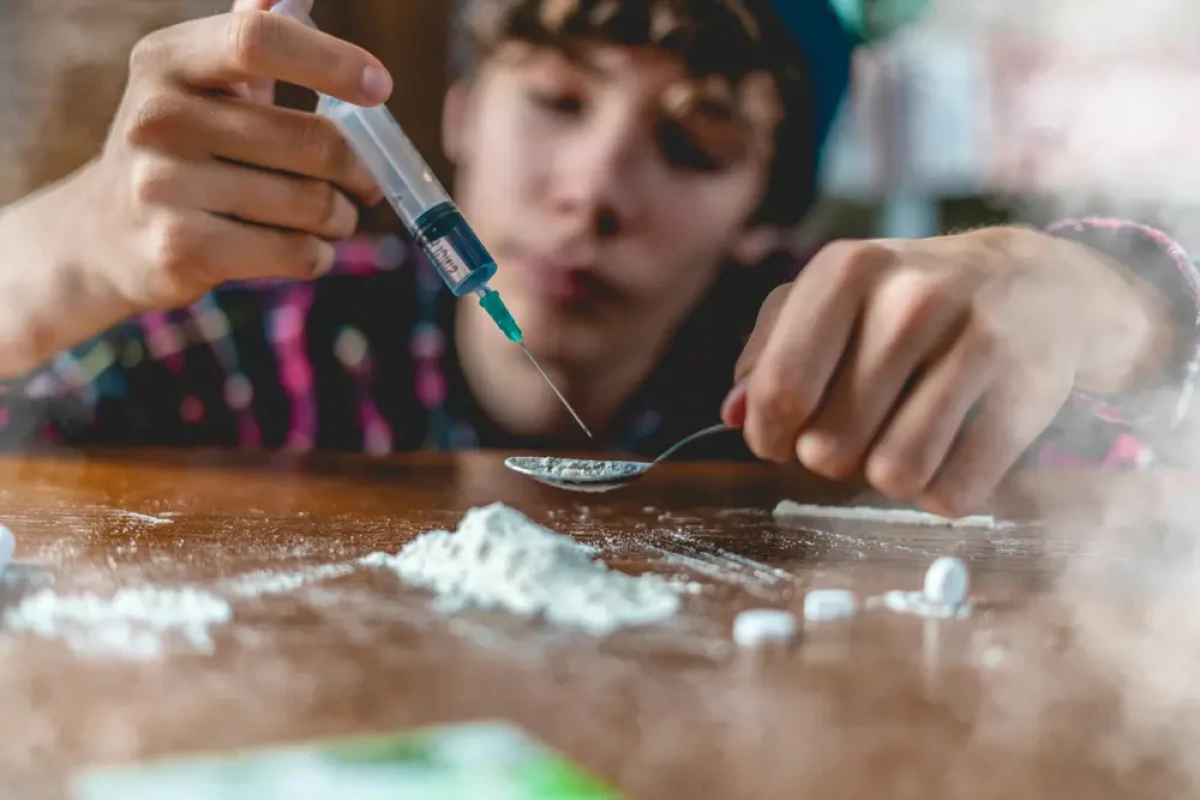
In Latvia, forced treatment for drug and other dependencies for minors has been introduced in cases of threats to their life and health. A detox center for young drug addicts is being prepared in Riga. But are all these measures too late?
Difficult Patients
Rimma Belikova, an expert from the Ministry of Health, stated at the Saeima Human Rights and Public Affairs Commission that by the end of last year, 21 institutions were already providing outpatient services in the field of narcology in Latvia. However, the quantity did not translate into quality – these services were characterized by low accessibility and a lack of psychological support. Risk reduction programs for addiction did not work in cases where a teenager had already become a drug addict. The motivational program for 30 days at the Gintermuiža Psychiatric Hospital was available for only 5-6 children.
The World Health Organization, evaluating our system, noted that Latvia focuses on medical treatment rather than psychological and social factors.
According to the Ministry of Health, assistance for drug addicts is now concentrated in the Children's Clinical University Hospital, with the aforementioned Gintermuiža and the hospital in Ainaži also participating, as well as the Methodological Management Center. Treatment can last up to 2 months. Dr. Belikova emphasized that specialists assess the "social indications" of young patients.
Fighting Fire with Fire, and Opioids with Opioids
Starting in 2026, medication therapy using buprenorphine has been allowed for minors in Latvia – this is a semi-synthetic opioid analgesic of strong action used for treating acute pain and opioid dependence. It is 25–35 times stronger than morphine, but due to its partial agonism (the ability of a chemical substance to bind to cellular receptors and activate them, causing a biological reaction in the body), it has a "ceiling effect" and depresses respiration less. However, the drug is addictive and requires strict medical supervision.
The scale of the problem is illustrated by statistics: from September 1, 2025, to May 11, 2026, 279 minors with intoxication were delivered in acute condition through the Emergency Medical Center. That is, on average, one per day.
Of these, 202 were examined by a narcologist within 24 hours, 51 were admitted to a treatment program, and 27 are waiting for their turn.
High-Risk Patients
Child psychiatrist Anna Semenova stated that "each patient's case is assessed individually."
– There are patients who repeatedly end up in the hospital, – the doctor noted. However, the focus is now on keeping young people in their environment and helping them overcome their addiction. There are, of course, "high-risk patients" – users of heavy opioid drugs who use them intravenously (with a syringe). "Home visits, greater support from us, and communication with parents or educational institutions where these children live and study are necessary," acknowledged A. Semenova.
For example, one patient has been delivered seven times since September 1 due to drug overdoses, attended 10 consultations – twice as many were missed. As a result, he left the motivational program voluntarily. Now, through the court, he is subjected to forced treatment...
– The main thing for such a patient is the environment, – the doctor believes. At the moment, of course, Latvia still lacks narcologists, and therefore it is important to start with identifying behavioral disorders in children who have not yet started using but have a tendency to do so as they age.
"Early intervention at the child's place of residence and study is necessary," noted Rimma Belikova.
Vicious Circle
"Without motivation, it is difficult to achieve results," added Sven Henkuzens, Deputy State Secretary of the Ministry of Health. Among drug-addicted patients, unfortunately, there are those who suffer from mental illnesses.
Legal advisor to the Latvian Ombudsman Bureau, Laila Henzele, noted the "very difficult and challenging" situation with underage drug addicts.
– We receive daily applications from parents, from social institutions...
The curator of children's rights described the interaction of various institutions aimed at protecting children as "difficult and sometimes impossible."
– The trends are constantly bad, with "ambulance" being called to children using substances an average of three times a day.
An additional aspect causing concern is the trend of sexual violence under the influence of drugs. Those who have experienced such incidents then turn to substances to forget – thus forming a vicious circle.
Escape from the Hospital
Aneta Masalska, a representative of the Child and Adolescent Resource Center, noted that she does not see any significant changes in the situation with abusing teenagers. The situation in the regions raises concerns, with a "huge shortage of specialists, no one to provide help."
Zane Zarina, a representative of the State Police Order Police, reported that since last autumn, 25 protocols have been drawn up regarding the voluntary departure of drug-dependent patients from the Children's Clinical University Hospital.
In total, 336 episodes related to the illegal circulation of narcotic substances among minors were registered in the country in 2025. "This number remains unchanged compared to previous years," law enforcement agencies report. Together with alcohol abuse and other intoxicating substances, it amounts to almost five times more – 1545 cases.
Police Rushes to Help
The Riga municipal police also believes that amendments to the legislation have not fundamentally changed the situation. The problem with minors is that they do not recognize themselves as drug addicts when they do not experience withdrawal or overdose – and only then do they seek help... To obtain money for a new dose, minors resort to crimes.
During the last week, 78 cases of offenses were considered at the municipal commission, which includes the municipal police – and of these, 28 concerned drug abuse by minors.
Liga Tetere, head of the social assistance department for families and children of the Riga municipality, spoke about "unmotivated children" who are at risk.
– They do not use any of the services, and we have no mechanism...
In general, in the capital, free help for children with behavioral disorders is available from the age of 4!
"I am very grateful to the Riga municipality for updating the cooperation," noted doctor Rimma Belikova. The Ministry of Health is ready to work together with the municipal police, but primarily believes that treatment programs, rather than punitive measures, are important.