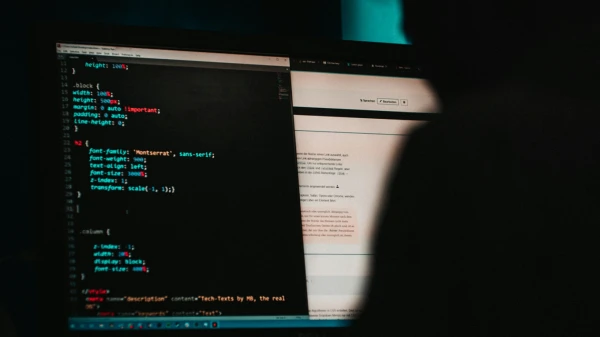
According to intelligence services, the attackers often disguise themselves as a chat support bot.
Hackers linked to Russian intelligence services gained access to thousands of accounts in commercial messengers, including Signal. This was reported by FBI Director Kesh Patel on the social network X. According to him, the campaign targeted users representing a "high intelligence value" — current and former U.S. officials, military personnel, politicians, and journalists.
As Patel noted, as a result of the attacks, the perpetrators were able to gain unauthorized access to accounts, allowing them to read messages and contact lists, send messages on behalf of victims, and conduct further phishing attacks. He emphasized that the vulnerability is not related to the applications themselves but to user actions, and urged for security measures to be taken.
Earlier, Dutch intelligence services MIVD and AIVD reported that Russian hackers allegedly gained access to the correspondence of high-ranking European officials and military personnel through hacking accounts in WhatsApp and Signal. According to the report, journalists and other individuals of interest to the Russian government may also have been targeted by the campaign.
According to Dutch intelligence, the attackers often disguise themselves as Signal support chatbots to extract confidential data and gain access to group chats, which are widely used in government institutions due to the platform's reliability. Another method involves using the "linked devices" feature. The report noted that the cyber campaign is global in nature.
Russian officials are planned to be legally required to use the state messenger Max while performing official duties and for interaction with citizens. The relevant amendment is included in the new version of the second package of anti-fraud measures, which Forbes has reviewed. Exceptions are only provided for specific cases related to informing about the work of government agencies or inquiries through state information systems. If the initiative is adopted, it could come into effect as early as September of this year.
At the same time, as informed sources told Faridaily earlier, Russian officials are in no hurry to switch to Max. According to the channel's sources, representatives of the authorities and state companies are buying separate SIM cards and smartphones to install the messenger, considering it a "source of surveillance." "Everyone thinks that if you install Max on your phone, it’s like you handed it over to the FSB," noted a source close to the government. The most cautious officials do not synchronize contacts from personal devices with "maxphones." "No one wants to leave Telegram. Everyone hopes that [Pavel] Durov will come up with something to bypass the blocks," said a source in a federal agency.
Meanwhile, a source close to the Ministry of Digital Development told Forbes that officials simply will not comply with the requirement, especially since there is no responsibility for this, "at least for now."
Experts, in turn, call Max a spy program. The head of the "Internet Protection Society," Mikhail Klimarev, points out that the messenger's privacy policy explicitly states the transfer of data upon request to the FSB, Ministry of Internal Affairs, Federal Tax Service, and the Bank of Russia. Researchers on GitHub, analyzing the application, found that it tracks geolocation, the list of installed programs, and can also record sound, video, and typed text.
Against this background, it became known in January that Russians began to buy budget smartphones — to avoid installing the state messenger on their main phone.