

23.7 million euros — this is how much fraudsters managed to swindle from the residents of Latvia last year. In January of this year, the haul of criminal groups has already reached three million euros. However, the real figures may be even higher, as some victims do not report the incident at all.
"These numbers look terrifying, but this is not just a problem for Latvia," noted Roman Yashin, head of the Cybercrime Unit of the Criminal Police Department of the State Police, in a conversation with the portal tv3.lv.
The growth in the number of victims is also indicative of the 'flourishing business' of criminal groups. Over the past two years, the number of deceived individuals in Latvia has doubled — from about 1,500 victims in 2023 to three thousand last year.
How do fraudsters deceive the residents of Latvia? There is no single scheme; however, fraudsters have several psychological scenarios prepared. Potential victims are rushed and intimidated. In everyday police practice, there have been cases where a person has already gone to the bank to withdraw money and hand it over to the fraudsters. In such situations, the police respond preventively and arrive at the bank to warn the person that they are being deceived, but the victim does not believe them.
There have also been cases where police officers in uniform arrived at a potential fraud victim's location in official vehicles with appropriate insignia, presented their IDs, and explained that the person was being deceived — they are being contacted by fraudsters posing as police officers, utility service providers, or other fictional characters. However, even in such situations, the person does not always believe the real police officers. Often, they continue to trust the fraudster on the other end of the line, who has been communicating with the victim for a long time and has deliberately built trust. Unfortunately, in such cases, it is especially difficult for the police to convince the person of what is happening and prevent them from handing over money to the fraudsters.
A troubling trend in recent times is that fraudsters have managed to leave victims without apartments, and bold criminals have begun to demand gold from residents and force them to exchange currency.
Very well-organized groups operate almost like a business
One explanation for the grim statistics is that organized crime is regrouping, meaning it is changing its area of activity and focusing on fraud, as it is easier to cover up traces and the 'profit' is quite high.
"We have noticed that organized crime is regrouping. And it is precisely in this type of crime because it is easy to cover up traces; you do not need to be in the country where the crime is committed. Call centers are mainly located outside of Latvia. You do not need to be in the country where the crime is committed. The profit is much easier and faster than in other types of crimes," Yashin explains.
The infrastructure created by the fraudsters is professional and operates almost like a business, with a manager, a set of employees, and dismissals for poor performance.
"Staff are trained in their work — psychological impact. If an employee does not bring in profit, they are fired. It is not so easy to get in; they have their own selection, training, and checks. We see that these are highly qualified and well-prepared structures," says Yashin.
Over the past two years, the State Police has managed to stop the activities of five call centers and detained 40 people. The size of one fraudulent call center is approximately five to 15 people. However, it is important to understand that a call center is just one element of a fraudulent scheme. In reality, it is a broad network that interacts, buys 'services' from each other, and includes data theft, call centers, and so-called money mules.
Among the recruited are Latvian youth
Residents of Latvia are also recruited into organized crime schemes. The roles vary; often, young people become so-called 'money mules,' helping to transfer funds obtained illegally through their bank accounts. However, such actions not only entail criminal liability but also consequences that can affect their entire future life.
There have been cases where the desire or need to earn extra money deprived students of career opportunities in the future, as having a criminal record makes it impossible to hold certain positions.
"Young people who are just studying at universities are also involved in committing crimes. Sometimes out of ignorance or a desire to earn money quickly, they agree to the offer. There are consequences! Careers are over," emphasizes Yashin.
How to eradicate fraudsters?
To limit fraud, broader cooperation and changes in legislation are necessary. Yashin notes that banks and telecommunications operators should be involved in the fight against fraud. It should be possible to legally block suspicious transactions or calls. Currently, the legislation does not allow this completely, so amendments are necessary.
One solution could be mandatory registration of SIM cards — this is also proposed by the Ministry of the Interior. This would not eradicate fraud completely but would complicate the anonymous purchase of SIM cards and facilitate investigations, helping to identify the guilty parties more quickly.
Yashin also points to the need to revise certain articles of the Criminal Code, providing for stricter liability in cases where fraudsters use the image of the State Police or other government institutions. Such actions undermine public trust in institutions.
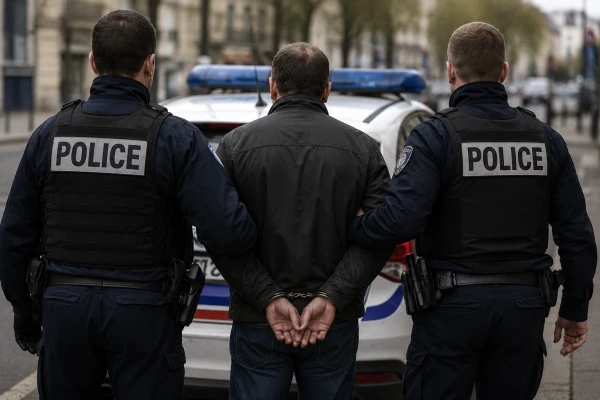
Another proposal — following the example of the practice already implemented in Belgium — is to require a person detained on suspicion of a crime to disclose PIN codes or passwords for devices. This would allow the police to access information on devices more effectively and not waste additional resources. Yashin emphasizes that this would not violate human rights and the presumption of innocence, as it remains until a court decision is made. In his opinion, if a person has nothing to hide, such regulation would not limit their rights but would help the investigation.













Leave a comment