
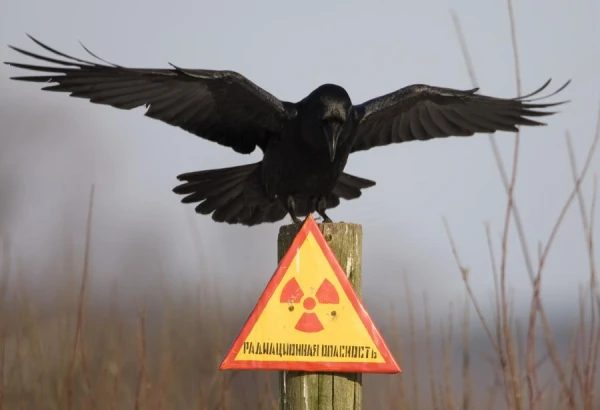
The Environmental Department of Estonia found extremely low levels of radioactive substances in air samples analyzed in January. Their concentration was very low and does not pose a danger to people or the environment, reports Postimees.
The advisor of the Environmental Department for crisis regulation, Teet Koytjarv, explained that isotopes of radioactive manganese (Mn-54), iron (Fe-59), cobalt (Co-60), and niobium (Nb-95) were found in air samples taken between January 6 and 12. The highest concentration of various isotopes was recorded at the monitoring station in Narva-Jõesuu.
"The radioactive substances detected in January are formed, in particular, during the operation of nuclear power plants and can enter the air, for example, during maintenance work. In such cases, it is often impossible to determine the source of the radioactive substances," Koytjarv noted.
This week, the Finnish Radiation Safety Authority (STUK) also reported the discovery of radioactive particles, confirming that their source is not related to Finnish nuclear power plants.
The Environmental Department has three monitoring stations that track the content of radioactive substances in the air using filters. Atmospheric air is pumped through these filters over the course of a week, allowing for the measurement of the concentration of radioactive substances and the identification of their type.
"This method allows for the detection of even very low concentrations of radioactive substances, which is what happened in this case," Koytjarv added.
The Estonian monitoring and early warning network for radiation hazards consists of 15 automatic stations that continuously measure the level of gamma radiation in the air across the country. These stations are necessary to detect potential cross-border radiological impacts in the event of incidents in neighboring countries. To detect even minor changes in the atmosphere, the Environmental Department also monitors the radioactivity of airborne particles in Harku, Narva-Jõesuu, and Türi.










Leave a comment