
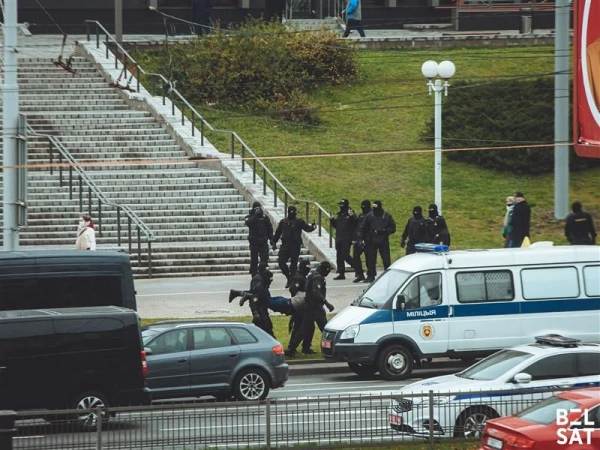
Large-scale construction cannot lead to a decrease in crime or an increase in public safety.
The government has approved the state program "Ensuring Law and Order" for 2026–2030. The program is a large-scale infrastructure project aimed at the construction and reconstruction of facilities for the Ministry of Internal Affairs, internal troops, and the penal enforcement system funded by the budget. A representative of the BELPOL association, Vladimir Zhigar, stated in a comment to "Belsat" that such a program has no direct relation to public safety.
The Priority is Internal Troops
A total of Br 571.1 million is planned to be allocated for the implementation of the program. All funds will be provided from the republican budget, with the largest volumes of funding expected at the end of the five-year period. In 2029, expenditures will exceed Br 129 million, and in 2030, Br 151 million.
Funding is distributed among three structures of the Ministry of Internal Affairs system, each of which has its own list of construction projects.
Br 223.7 million is allocated for law enforcement agencies, Br 250.4 million for internal troops, and Br 97 million for the Department of Penal Enforcement. As a result, internal troops receive the largest amount of funds, exceeding the funding for the entire infrastructure of the "civilian" police.
Detention Centers, Barracks, and Departmental Complexes
The construction of a temporary detention center for the Pinsk City Police Department, new building complexes for the Petrikov, Smorgon, and Klimovichi District Police Departments, as well as a building complex for the traffic police department in Bobruisk is planned.
In Minsk, the construction of a training building and dormitories for the Academy of the Ministry of Internal Affairs, an administrative and educational complex, and dormitories for the Ministry of Internal Affairs training center in the village of Gorani, as well as an administrative and household building with residential premises, a shooting range, and an assembly hall is planned. Some projects, including the building of the Moscow District Police Department in Minsk and a vehicle registration and driving test center, are currently limited to the development of project documentation, with the main construction postponed beyond 2030.
The most extensive and costly block of the program is related to the internal troops of the Ministry of Internal Affairs. It includes the construction of new facilities and the reconstruction of existing infrastructure. In Minsk and the Minsk region, the construction of buildings and structures of various purposes is planned, including on Independence Avenue and in the area of the settlement of Okolica, as well as the reconstruction of military towns of the "Volovshchina" training center and several military units. Similar projects are planned in Vitebsk, Polotsk, and Baranovichi. Additionally, the program includes the reconstruction of the internal troops' vehicle fleet facilities in Gomel and the construction of infrastructure for specialized vehicles in Minsk. These facilities account for the largest share of budget funds within the entire program.
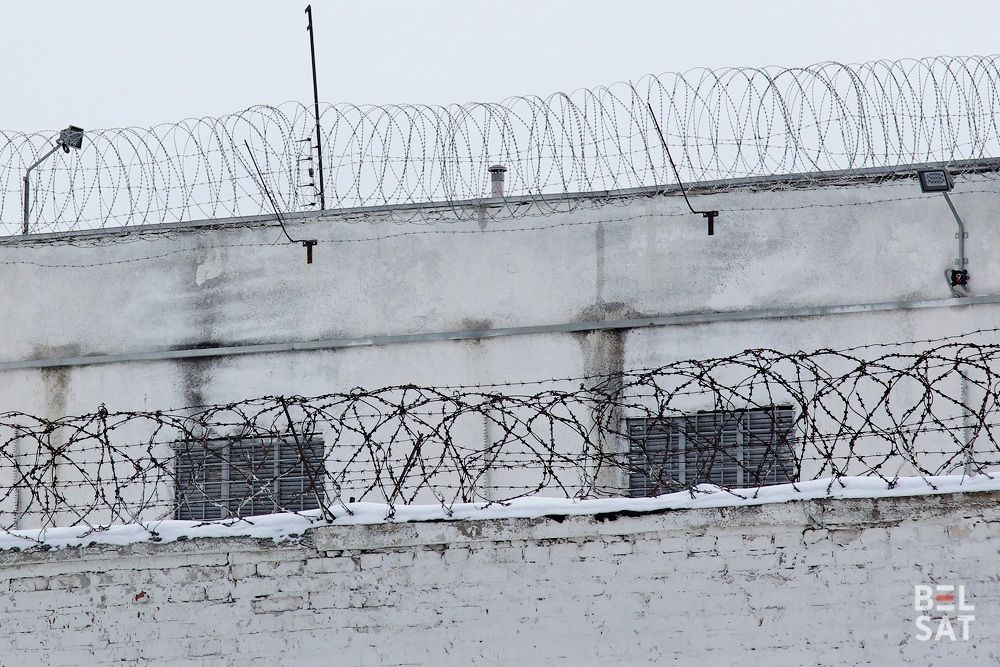
In the penal enforcement system, the program provides for specific construction and reconstruction projects. This includes the construction and reconstruction of utility facilities on the territory of correctional colony IK-3 in the settlement of Vitba in the Vitebsk region, including a production building, as well as the reconstruction of security engineering systems in restricted zones of this colony. Furthermore, the reconstruction of the medical unit building at LTP No. 8 in Ivacevichy, the reconstruction of a complex of buildings and structures with the conversion of a school building into a specialized dormitory at LTP No. 9 in Vitebsk, and the reconstruction of a complex of buildings with the construction of a specialized dormitory at LTP No. 5 in the Novogrudok district are planned.
The key performance indicator of the program is formulated as the degree of bringing the material and technical base of the Ministry of Internal Affairs in line with established requirements. It is measured by the number of completed construction projects and the level of fund utilization, rather than by crime dynamics, public safety levels, or citizens' rights compliance. The methodology for evaluating effectiveness details financial and construction parameters but does not include social or human rights indicators.
In fact, the program "Ensuring Law and Order" reduces the very concept of law and order to the presence of buildings, barracks, detention centers, and secured facilities. The document does not contain measures aimed at preventing offenses, changing the practices of law enforcement agencies, or restoring public trust. Essentially, it is not about law and order in a public sense, but about further strengthening and expanding the state's coercive infrastructure.
"People Will Be Subjected to Unbearable Conditions in Any, Even New or Renovated Detention Center"
BELPOL representative Vladimir Zhigar believes that it is incorrect to call the approved document the "Ensuring Law and Order" program.
According to him, the content of the program has no direct relation to public safety or the prevention of offenses.
"This is not even close to ensuring public order. What they call it is their right, but such measures have no real impact on law and order and cannot have any," he notes.
Zhigar emphasizes that the main focus is on repairs, the construction of temporary detention centers, barracks, and other departmental infrastructure, which relates more to the "internal kitchen" of law enforcement agencies rather than to working with society.
When discussing modern law and order programs, the expert explains that they usually include entirely different elements: training and retraining of personnel, the implementation of modern technologies, video surveillance systems, and preventive work with the population.
Zhigar pays special attention to the distribution of funds, where internal troops receive more funding than the entire infrastructure of law enforcement agencies. In his opinion, this reflects the real priorities of the state. Formally, such expenditures can be justified by the fact that internal troops and units like OMON are involved in maintaining public order, but in practice, this looks questionable.
"You can write as much as you want in reports that good barracks make employees more focused and prepared. This sounds, to put it mildly, strange, but knowing the Belarusian police, I am not surprised," he says.
Large-scale construction itself, the expert emphasizes, cannot lead to a decrease in crime or an increase in public safety.
"It is important to understand what situation Belarus is in: the emphasis is precisely on the coercive infrastructure, and this is where the focus is," he notes.
According to him, even possible improvements in the conditions of detention in new or renovated detention centers do not change the essence of what is happening.
"When it comes to temporary detention centers, in theory, this may affect the living conditions. But if we are talking about politically motivated cases, then if necessary, people will be subjected to unbearable conditions in any, even new or renovated detention center," Zhigar concludes.









Leave a comment