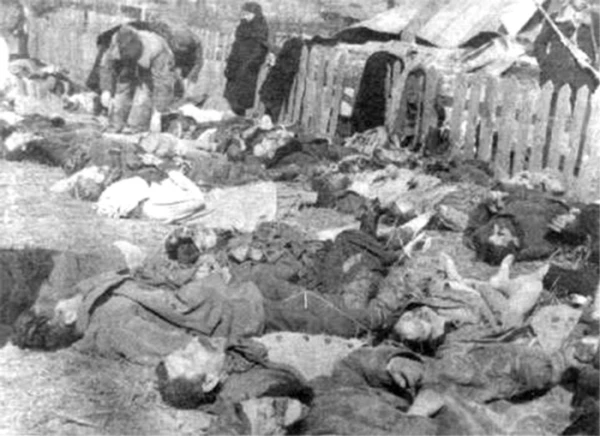
This region was characterized by a linguistic, cultural, and demographic patchwork and became the target of ethnic cleansing.
Ukraine and Poland continue to collaborate to commemorate the victims of the Volhynian tragedy of 1943 (and events of subsequent years) in the western regions of Ukraine, as well as the victims of Operation Vistula in the eastern regions of Poland in 1947. At that time, the Polish population suffered in Volhynia and the surrounding territories, while the Ukrainian population suffered in Poland. The entire region was characterized by a Polish-Ukrainian linguistic, cultural, and demographic patchwork and ultimately became the target of ethnic cleansing initiated by the extreme political forces that influenced the course of events.
Ukraine and Poland have begun preparations for search and exhumation work in the village of Uhly in the Rivne region, scheduled for March–April 2026. This was reported by the Ministry of Culture of Ukraine. The ministry noted that on December 19, an introductory trip took place for Ukrainian and Polish specialists to discuss future research. During the visit, they inspected the site of the proposed work, agreed on possible timelines, discussed logistics, immediate needs, methodologies, and safety issues considering the war.
The Ministry of Culture of Ukraine also summarized the activities of the Polish-Ukrainian working group on dignified burials for 2025. The work of the group will continue in 2026. In Ukraine, work is planned to continue in the territory of the former village of Puzhnyky in the Ivano-Frankivsk region, in Lviv on the territory of the former Golosko tract, as well as in the former village of Huta Peniatska in the Lviv region and in the Islands of the Lutsk district of the Rivne region. In Poland, similar work is planned in the villages of Yurechkova in the Subcarpathian Voivodeship, Sakhryn (Sahrin) and Laskuv in the Lublin Voivodeship. The necessary permits have already been issued.
At the end of November 2024, at a joint press conference of the foreign ministers of Poland and Ukraine, the Ukrainian side stated that there were no obstacles for Polish state and private entities to conduct search and exhumation work in cooperation with Ukrainian institutions and in accordance with Ukrainian legislation, as well as a readiness to positively consider relevant applications.
The Volhynian massacre was the mass extermination of the ethnic Polish civilian population by the Ukrainian Insurgent Army—OUN and, to a lesser extent, civilians of other nationalities living in Western Ukraine and in the territory of Volhynia (Rivne, Volyn, and the northern part of the Ternopil region of modern Ukraine). It began in March 1943 and peaked in July of the same year. The retaliatory actions by the Polish side, which began in late summer 1943, led to significant casualties among the Ukrainian civilian population.
From the second half of 1943, Ukrainian nationalists began to exterminate the Polish population already in the territory of Eastern Galicia (now Lviv, Ivano-Frankivsk, and Ternopil regions). The first mass killings in this region were carried out as early as October 1943, with an escalation occurring in February 1944. By the summer of 1944, anti-Polish actions spread throughout Eastern Galicia and even began in Zakerzonia. The Volhynian massacre is the bloodiest episode of the Polish-Ukrainian conflict in the mid-20th century, which many historians (primarily Polish) distinguish from the overall picture of Polish-Ukrainian confrontation in the western Ukrainian lands.
Polish historians often interpret these events solely as an anti-Polish action by the UPA, downplaying the crimes committed by Polish authorities against civilians during the policy of Polonization in the 1930s, while Ukrainians emphasize the motives that led the UPA to carry out this action and also pay significant attention to the retaliatory actions of the Home Army against the civilian Ukrainian population, including in Poland. The Polish Sejm considers the Volhynian massacre to be genocide against the Polish population.