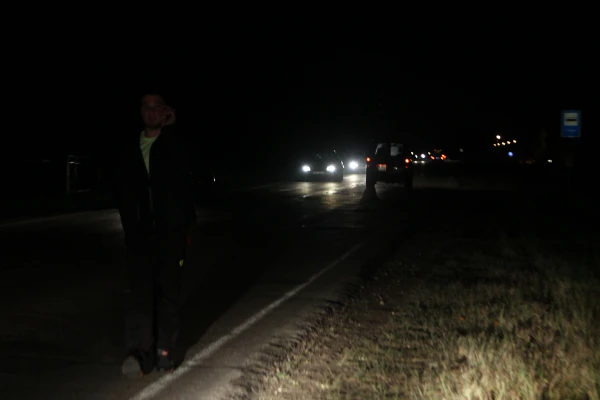
After the clocks are set back for winter time, darkness falls by the end of the workday. And no matter how many awareness campaigns the Road Safety Directorate conducts, there will still be people on the roads without reflective elements, which means bad news will continue to come in, writes Latvijas Avīze.
According to the expert from the Road Safety Directorate, Oskars Irbitis, the highest risk of pedestrian fatalities occurs from October to January. Last year, 33 pedestrians died on the roads, and this year, by the end of October, there have already been 30. The most tragic months last winter were December and January, during which 18 people died, mostly aged 50-60 years.
Every week, one pedestrian dies in the dark, and one or two pedestrians and cyclists are injured daily. Therefore, the Road Safety Directorate does not tire of repeating the basic rules of behavior on the roads during the dark season. Pedestrians should walk on the left side of the road, where they can see the trajectory of the vehicle, and if it is approaching them, they can jump into the ditch or bushes.
It is best to move in the dark wearing a reflective vest, but even a small reflector can be useful, especially if used correctly. It is pointless to attach a reflector to a backpack – it should be in front, not on the hat, but lower, because the low beam of a car's headlights illuminates the lower part of someone walking on the road.
If you often have to walk on the road at night, you should choose light-colored clothing – white pants are visible much farther than black or gray ones.
The low beam of headlights illuminates no more than 50 meters even in clear weather, and even with an excellent reaction from the driver and on dry asphalt, this is insufficient to stop at a speed of 90 km/h. Therefore, drivers should move slower with low beams. When high beams can be turned on without disturbing others, the driver can see not 50 but 150 meters ahead, which provides enough distance for maneuvering if a pedestrian appears on the road ahead.