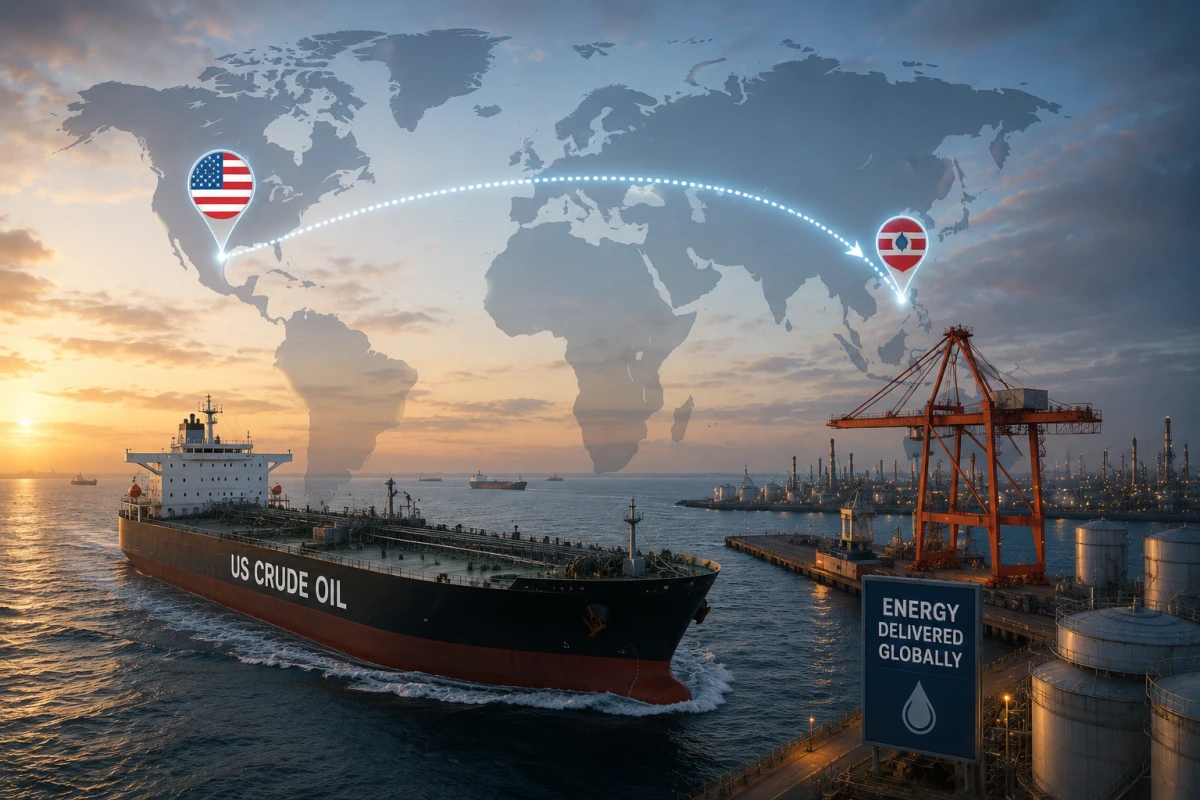
Amid ongoing supply disruptions through the Strait of Hormuz, Asian countries are sharply increasing purchases of American oil. However, even the record growth of exports from the U.S. is currently unable to compensate for the lost volumes of Middle Eastern raw materials, which heightens risks for the global economy and fuel market.
In May, the United States supplied over 63 million barrels of oil to Asian countries. This became a record monthly figure. The average export volume was 2.05 million barrels per day, just slightly below the historical high of June 2023.
At the same time, supplies continue to increase. According to the analytical company Kpler, in June, the volume of American oil arriving in Asia is expected to reach 2.32 million barrels per day, and in July it may rise to 3.07 million barrels. This is more than double the average figures at the beginning of the year.
The increase in purchases is linked to serious disruptions in the Middle Eastern direction. Following the escalation of the conflict around Iran, supplies through the Strait of Hormuz have sharply decreased. Before the crisis, about 20% of global oil and petroleum product supplies passed through this strategically important route.
Some exporters, including Saudi Arabia and the United Arab Emirates, have managed to redirect some volumes through alternative ports. However, about 10 million barrels of oil per day are still unavailable to the global market.
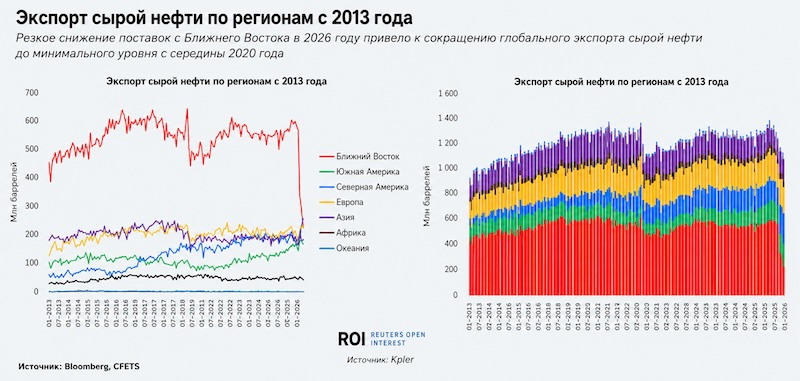
If in winter, over 13.5 million barrels of oil were delivered daily through the Strait of Hormuz to Asian countries, in May this figure dropped to about 1.2 million barrels per day. As a result, global oil exports fell to their lowest levels since mid-2020.
Despite active supplies from the U.S., South America, and Africa, it has not yet been possible to fully compensate for the lost volumes. In May, maritime oil imports to Asia rose to 19.47 million barrels per day, but this is still about 22% lower than pre-crisis levels.
Experts note that Asian oil refineries are currently maintaining operations due to accumulated commercial and strategic reserves. However, reserves are not infinite, and if the crisis drags on, companies will have to reduce processing volumes.
Analysts believe that the situation may lead to further increases in oil and petroleum product prices. Developing countries in Asia, which heavily depend on fuel imports, remain particularly vulnerable. Bangladesh, Pakistan, and the Philippines are among the most sensitive to shortages.
Additional pressure is also building within the U.S. Some American politicians are already advocating for restrictions on oil exports, believing that this will help lower gasoline prices in the domestic market.
The global oil market remains in a highly tense state. Even record supplies from the U.S. are unable to fully replace the volumes that previously passed through the Strait of Hormuz. If the situation does not stabilize soon, shortages of raw materials and rising prices may become one of the main economic problems in the second half of the year.