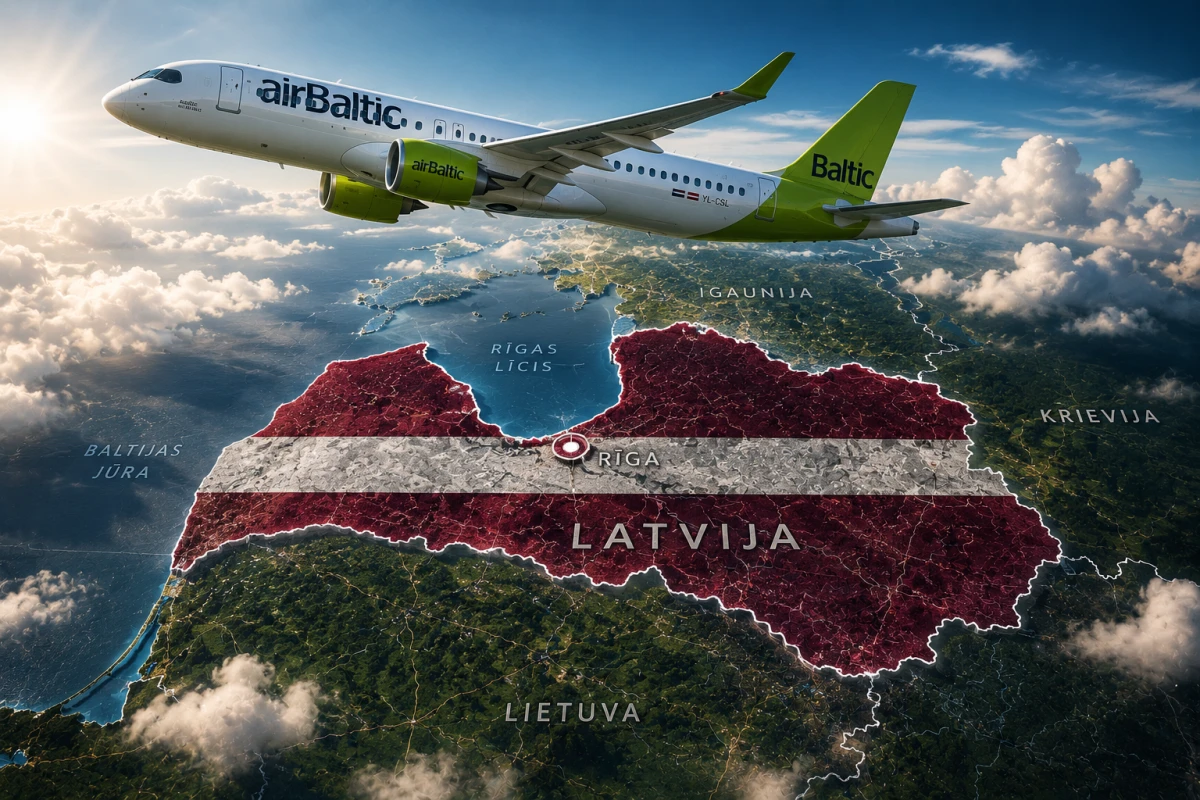
The Latvian airline airBaltic has started repaying the state loan of 30 million euros, transferring the first payment of 6.4 million euros. However, the company still faces financial difficulties and does not rule out the need for additional financing in the coming years.
The national airline airBaltic made the first payment on the state loan that was provided this spring to maintain liquidity and ensure the continuous operation of the carrier. As reported by the Ministry of Transport, the company has already repaid 6.4 million euros to the state, fulfilling another stage of its obligations under the loan agreement.
The state loan of 30 million euros was approved by the Saeima in April. The funds were provided to support the airline's operations until the implementation of its business plan and must be fully repaid along with interest by August 31 of this year. The use of the loan is monitored by the State Treasury and a special working group from the Ministry of Transport.
The ministry emphasizes that thanks to the additional financing, airBaltic continues to operate flights according to the approved program and maintains the stability of its route network. The company also continues to optimize costs, analyze route profitability, and manage its fleet flexibly. One of the important sources of income remains the ACMI business — leasing aircraft along with crew to other airlines.
What is important to know: the repayment of the first part of the loan shows that the company is fulfilling the terms of the loan agreement. However, this does not mean that airBaltic's financial problems are fully resolved.
Despite the increase in revenue, the airline's financial results remain challenging. In the first quarter of this year, the group's losses reached 70 million euros, more than double the figure for the same period last year. The company itself explains this by the impact of currency fluctuations, rising financial expenses, reduced commercial support, and ongoing increases in costs.
At the same time, the volume of business continues to grow. In the first three months of the year, the group's turnover increased by more than 12% and reached 149 million euros.
The Ministry of Transport emphasizes the strategic importance of airBaltic for the Latvian economy. The company directly provides about 3,000 jobs and thousands more through related industries, including tourism, logistics, and airport services. Today, the carrier operates more than 130 direct routes and provides flights to over 300 destinations through partner networks.
However, long-term financial challenges remain. Preparations for an initial public offering (IPO), which was previously considered one of the ways to raise capital, are effectively on hold.
According to the company's annual report, in 2026 airBaltic expects a negative free cash flow and may face the need for additional financing ranging from 100 to 150 million euros to operate in the winter season of 2026/2027.
Thus, despite the beginning of the repayment of the state loan, the issue of further financing and the financial sustainability of airBaltic remains one of the key concerns for the future of the airline.