The blockade by the U.S. Central Command will extend to all Iranian ports in the Persian Gulf and the Gulf of Oman. CENTCOM will not impede the freedom of navigation in the Strait of Hormuz and non-Iranian ports.
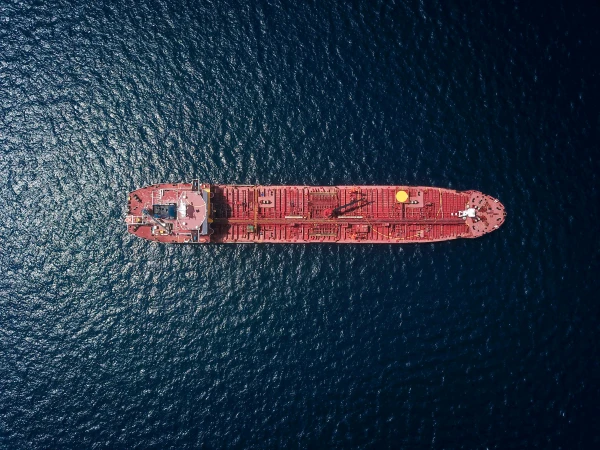
The U.S. Central Command (CENTCOM) will start enforcing a blockade on all vessels entering and exiting Iranian ports and coastal areas on April 13 at 10:00 AM Eastern Time (5:00 PM Latvian Time) in accordance with an order from U.S. President Donald Trump. This was reported on Sunday, April 12, by the CENTCOM press service, according to DW.
The blockade will apply to vessels from all countries and will affect all Iranian ports in the Persian Gulf and the Gulf of Oman. CENTCOM will not impede the freedom of navigation in the Strait of Hormuz and non-Iranian ports.
Trump Announced the Blockade
After a failed round of negotiations between the U.S. and Iran in Islamabad, Trump announced the maritime blockade on April 12 but did not specify exact timelines. Thus, the head of the White House aims to prevent Iran from charging shipping companies fees for passage through the Strait of Hormuz and to deprive Tehran of revenue from oil sales, noted the dpa agency.
Iran Rejected Trump's Statements as "Laughable"
Meanwhile, the commander of the Navy of the Islamic Republic, Shahram Irani, dismissed Trump's statements as "laughable." "The threats from the U.S. president to block Iran at sea are ridiculous and absurd," the AFP agency quoted him. The Iranian fleet "monitors and controls all actions of the aggressive U.S. military in the region," added Shahram Irani.
Oil Prices Rose Again
In the meantime, oil prices rose again after the negotiations failed, dpa reported. According to its data, the price for a barrel of Brent crude oil for June delivery opened at $102.50 (87.74 euros). Before the negotiations began on April 11, it was $95.20 (81.49 euros).
The U.S. President Accused Tehran of "Global Blackmail"
The head of the White House stated that during the negotiations between U.S. and Iranian representatives in Pakistan, no agreement was reached regarding Tehran's nuclear program. The American leader also called the alleged violation of Iran's promise to open the strait due to supposedly left mines "global blackmail." In this regard, Trump reiterated his statement from April 11 about the start of "clearing" the waterway of mines. "Any Iranian who opens fire on us or on civilian vessels will be blown to smithereens!" he asserted.
Negotiations in Islamabad Failed Due to Nuclear Weapons and the Strait
"The bad news is that we did not reach an agreement. And I think for Iran, this is much worse news than for the U.S.," said U.S. Vice President James David Vance, who led the American delegation in the Pakistani capital, following lengthy negotiations. The spokesman for the Iranian Foreign Ministry, Ismail Baghaei, commenting on the results of the discussions, said that the parties "reached mutual understanding on a number of issues," but disagreed on "two or three important" points.
One of these problematic issues, besides nuclear weapons, was the Strait of Hormuz. Iran insisted on controlling the strait and the right to charge fees from vessels passing through it during the negotiations, reported the British newspaper The Financial Times. The country's delegation also rejected the U.S. proposals for "joint control" over the strait.
Additionally, as indicated by the Iranian state agency Fars, Tehran perceives Washington's demands regarding this waterway and several other issues as "excessive" and "unacceptable." The authorities of the country also refuse to unblock the Strait of Hormuz until a final agreement with the U.S. is reached, CNN points out.