
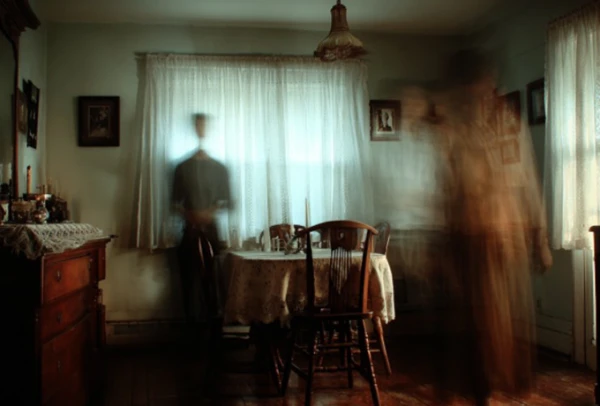
Our home is a living organism that absorbs our joys, sorrows, arguments, and moments of peace every day. Over time, this energetic "sponge" can become saturated, turning a cozy nest into a source of tension and discomfort.
Our home is much more than just a set of walls, furniture, and familiar objects. It is a living space that absorbs everything day by day: our emotions, the sounds of conversations, flashes of conflict, moments of joy, and the accumulated fatigue of everyone who lives in it. Gradually, all of this forms a unique atmosphere — the very "energy of the home" that we intuitively feel, even if we cannot find the words to describe it. Ideally, a home should be our refuge, where we restore ourselves and draw strength. But sometimes the opposite happens: tension builds up inside the dwelling, an inexplicable fatigue arises, and it feels like you are constantly "out of resources," even if you have not physically done anything. We present to you 8 in-depth signs that may indicate that your home has accumulated heavy, emotionally overloaded energy.
1. Inexplicable Fatigue Right After Returning Home
One of the most vivid indicators is a sharp change in your state as soon as you step over the threshold of your home. You may have felt quite lively and even energetic outside. But as soon as you enter, a heaviness weighs down on you, an overwhelming desire to lie down arises, irritation or an internal "tightness" occurs. Ideally, the home should have the opposite effect: relaxation and full restoration. If this does not happen, it means that your personal space has ceased to be a source of energy for your psyche. Sometimes this is not so much related to the dwelling itself, but to the overall emotional background that has accumulated inside — unspoken words, stress, chronic fatigue, and constant internal tension.
2. Frequent Conflicts and Emotional Outbursts at Home
Arguments are not just unpleasant moments. They are powerful emotional outbursts that literally "fill" the entire space. If mutual complaints, irritation, sharp criticism, or passive aggression often echo in your home, the atmosphere becomes dense and oppressive. Even after a conflict is resolved, the feeling of tension does not disappear instantly. It is especially alarming when disputes arise "out of nowhere," over trivial matters. This is a clear sign that all participants have accumulated deep internal fatigue. Over time, the home begins to be associated not with safety and tranquility, but with constant emotional instability.
3. Inability to Relax Even in Complete Solitude
Even when no one is home, you do not feel complete calm. You may sit in silence, but anxiety does not subside inside, tension remains, or an endless stream of thoughts continues. Rest does not bring the desired recovery, and silence begins to feel oppressive. This is a common symptom that your psyche does not perceive this space as absolutely safe. It is "overloaded" with someone else's or your own emotions, memories, or internal associations. As a result, even the attempt to relax turns into a tense anticipation of something unpleasant.
4. Chaos in Daily Life: Constant Minor Breakdowns and Disorder
When an emotionally heavy atmosphere prevails in the home, it often manifests at the everyday level. Annoying little things start to happen: suddenly, appliances break down, things are constantly lost, and unexpected problems arise. At the same time, disorder accumulates — not because no one wants to clean, but because there is simply not enough internal resource to maintain cleanliness and order. Chaos in the space only amplifies the internal chaos, creating a vicious circle: the worse the overall atmosphere, the harder it is to restore order, and vice versa.
5. Chronic Fatigue in Everyone Living in the House
If the home is emotionally overloaded, it inevitably begins to affect the overall well-being of all its inhabitants. Chronic fatigue appears, noticeable energy decreases, and apathy sets in. People become less motivated, get irritated more quickly, and find it harder to concentrate. It is particularly telling if the state noticeably improves outside the home — a surge of energy, clarity of thought, and inner calm emerge. This directly indicates that the problem lies not only in physical fatigue but in the surrounding environment itself.
6. Sleep Problems and Anxious Nights
Sleep is one of the most sensitive indicators of both a person's internal state and the overall atmosphere in the home. If you have difficulty falling asleep, often wake up in the middle of the night, or have anxious dreams, this may signal accumulated tension. The body is unable to fully relax because the psyche remains in a state of internal readiness for stress. This exhausts the nervous system and intensifies the feeling of fatigue throughout the day.
7. Desire to Spend as Little Time at Home as Possible
If the home ceases to be a place for rest and recovery, a person instinctively begins to avoid it. You may stay at work longer than usual, leave home more often without urgent need, or seek any reason to spend time outside the apartment. This is a very important psychological signal: the space has ceased to be associated with safety and comfort. It begins to be perceived as a source of tension and discomfort.
8. Subjective Feeling of "Heavy Air" and Pressure
Sometimes people describe this feeling with striking accuracy: "as if there is heavy air in the house," "as if something is pressing down," "I can't breathe calmly here." This is not always related to physical factors such as stuffiness or mustiness. Most often, it is the perception of the emotional background that has accumulated in the space. Such a feeling can arise even in a perfectly clean and beautiful home — after all, it is not about external order, but about the deep internal atmosphere.
How to Restore the Vital Force of Your Home
A negative atmosphere in the home almost never appears suddenly. It is always a gradual process of accumulating emotions, fatigue, unresolved conflicts, and a lack of full restoration. It is important to realize: the space itself is not "bad." It merely reflects the internal state of the people who inhabit it. The good news is that the atmosphere can and should be changed. This is achieved through open conversations, consciously reducing the level of tension, caring for oneself and loved ones, restoring daily routines, maintaining order, and creating calm, pleasant rituals. The home should be a place where it becomes easier to breathe — both physically and emotionally. And if this is not the case now, then it is high time to start restoring its primary, vital function.














Leave a comment