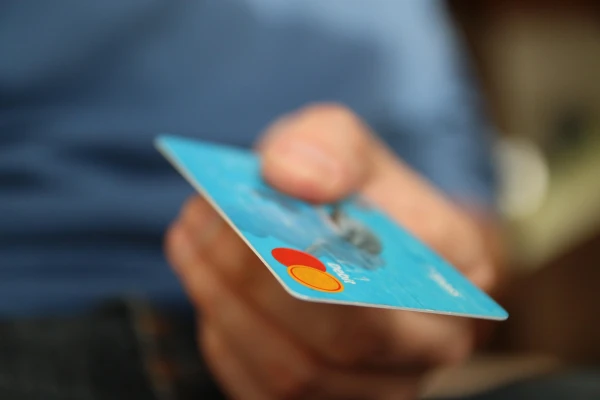
The share of cashless payments in Latvia reached a historically high level of 79% in February of this year, while the share of cash payments decreased to 21%, according to the spring "Payment Radar" report from the Bank of Latvia for 2026, reports LETA.
Compared to August 2025, the share of cashless payments increased by five percentage points, and compared to February 2025 — by one percentage point.
The Bank of Latvia reminds that for the first time the ratio of cash and cashless payments was measured in February 2017 — at that time, cashless payments accounted for 58%, while cash payments accounted for 42%.
In February of this year, one resident made an average of 15.1 payments per week, while in August 2025 — 17.9, and in February 2025 — 14.1. Of these, 11.9 payments were cashless, and 3.2 were cash payments.
A deeper analysis of the data conducted by "Latvijas fakti" shows that one adult resident of Latvia makes an average of seven card payments, five online payments, and three cash payments per week.
Data from the "Payment Radar" indicate a gradual change in the use of modern technologies in the payment sector. More people are replacing contactless cards with smartphones. Thus, the share of daily payments made with a contactless card decreased from 58% in August 2025 to 55% in February 2026, while the share of payments made using a smartphone increased from 21% to 32%. This method is particularly popular among young people — it is used by the majority of respondents aged under 34.
Public awareness of the digital euro has also increased. The Bank of Latvia notes that work on this project continues, and the digital euro is not expected to appear in residents' digital wallets in the coming years. Nevertheless, 29% of respondents in February 2026 stated that they would use the digital euro if it were introduced (up from 20% in August 2025). At the same time, the share of those who do not plan to use the digital euro increased from 45% to 50%, while the number of those who found it difficult to answer decreased from 35% to 21%.
Member of the Board of the Bank of Latvia Ilze Posuma reported that public awareness of the availability of financial services in crisis situations is gradually increasing.
A public opinion survey conducted by "Latvijas fakti" in February 2026 showed that 29% of residents are aware of a solution developed at the initiative of the Bank of Latvia that allows payments by bank card at certain retail outlets, gas stations, and pharmacies even in the absence of connectivity. In August 2025, 23% of residents were aware of this.
Awareness is expected to grow as merchants who have implemented this solution plan to inform customers. The Bank of Latvia also intends to update its informational brochure on critical financial services in the second half of the year, adding information about such retail outlets. This solution provides the possibility of cashless payments in cases of internet and telecommunications outages.
Regarding the availability of cash, the network of ATMs plays a key role, including so-called critical ATMs, which are specially provided with accessibility, power supply, and connectivity to data processing centers. In Latvia, 96% of residents know about the nearest ATMs (up from 93% in August 2025), however, awareness of the network of critical ATMs remains low — only 9% of residents are aware of them.
Information about money usage habits in the "Payment Radar" is based on the results of a survey conducted by the research company SIA "Latvijas fakti". The report is published every six months and is available on the Bank of Latvia's website.