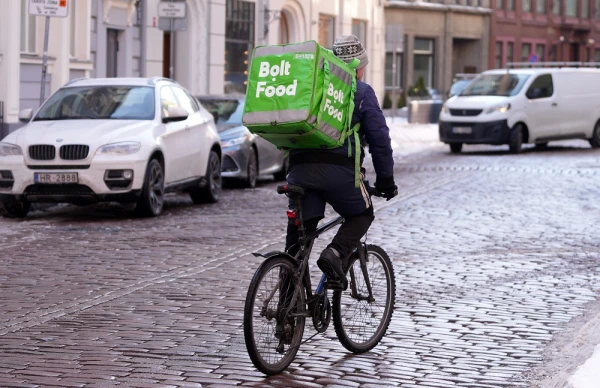
Collaboration with delivery services promises restaurants growth and new customers — but what if it hides a loss of control, dependency, and a game of discounts? Latvian chef Roy Puke explains why this synergy is a double-edged sword, writes Otkrito.lv.
Collaboration with delivery services promises restaurants growth and new customers — but what if it hides a loss of control, dependency, and a game of discounts? Latvian chef Roy Puke explains why this synergy is a double-edged sword.
Culinary blogger Roy Puke candidly shared his experience in the food service industry and his ambivalent attitude towards delivery services. He emphasizes that he closely monitors the industry and cares about his colleagues: “I not only cook but also keep an eye on the food service sector… I rejoice in the achievements and worry about the failures of my friends and acquaintances.”
He himself also went through a difficult phase: his bakery Laba maize closed due to a combination of factors — competition and staff shortages. “The only logical decision at that moment was to close the bakery,” he writes. However, it was during this time that he began working with delivery services and over time noticed not only the obvious advantages but also serious disadvantages.
At first, the collaboration seems ideal: “You suddenly reach a much wider audience… the number of orders increases, turnover grows, everything looks great.”
But, according to Puke, there is an important nuance: “The moment you start working with these platforms, you somewhat give away your customer.” The restaurateur laments that he loses direct contact with the audience:
“You no longer see your customer’s habits, you don’t know what they like… a middleman appears between you and the customer, who, to be honest, doesn’t care at all about the well-being of your business.”
At first, this doesn’t seem dangerous, but over time the rules change. Puke describes typical user behavior: “A customer opens the app. They don’t think about your brand. They look at the offers.” And at this moment, it’s not quality or reputation that decides: “Very often, it’s not the best who wins, but the one who looks more advantageous at that moment.”
Thus, the market turns into a race for discounts: “This is already a different game — not about quality or relationships, but about promotions.”
What to do? Puke doesn’t provide a universal answer but suggests a direction. If possible — develop your own delivery: “This means control.” If that’s difficult, he advises motivating customers to order directly: “Offer a better price, bonuses… or simply a more human experience.” And the main emphasis is on relationships: “Social media is not just advertising. It’s a place where you can talk to your customers… that’s where loyalty arises.”
In the end, his conclusion sounds almost like a warning: “In the end, it’s not the one who is in the app that wins. It’s the one you want to return to even without a discount.”