It would require too large investments. And they would not pay off.
Estonia has recorded a new historical high in fuel prices: diesel has risen at some Circle K and Olerex gas stations to €2.169 per liter, while 98-octane gasoline has reached €1.949. The previous record of €2.079 lasted only a few days (the previous high was recorded in March 2022). Prices are rising against the backdrop of military actions in the Middle East and Iran's closure of the Strait of Hormuz.
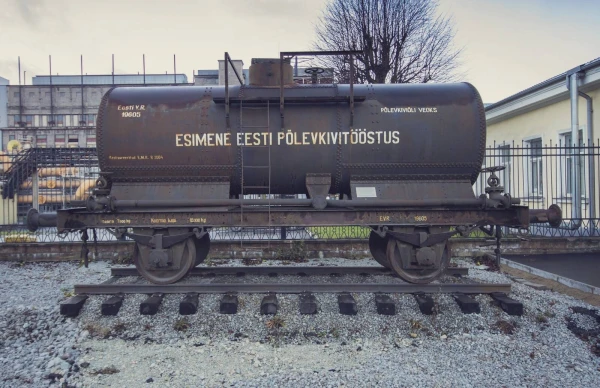
A hundred years ago, Estonia had a proven method for combating extreme fuel price increases. Until the beginning of World War II, Estonia sold not only imported gasoline from foreign plants at gas stations but also its own domestic fuel produced from shale.
When, in the fall of 1928, gasoline importers raised prices at gas stations by 7-8 cents per liter (to 28 cents per liter), shale gasoline was sold at the previous price: 21 cents per liter, at cost. The price of shale fuel always remained unchanged (and even sometimes decreased), regardless of how large the fluctuations in the fuel market were. This became possible due to the commissioning of new oil plants in Ida-Viru County. By the early 1930s, state oil plants reported their ability to supply gasoline for all of Tallinn, independent of fluctuations in global oil prices.
However, shale gasoline repelled consumers with its sharp unpleasant odor and left a lot of soot that damaged engines. As a result, the most popular product at gas stations was a mixture of expensive imported and cheap Estonian gasoline – "automotive gasoline." During the Soviet era, local gasoline was replaced by imported fuel.
According to Hannes Reinula, a board member of Enefit Industry, it will not be possible to repeat the trick of a century ago: the quality characteristics of shale fuel will not allow it to reappear at Estonian gas stations.
"Shale has a high sulfur content. During production, some of it is removed; however, compared to other types of automotive fuel, there is still a lot left. For this fuel to be realistically usable in passenger cars, additional processing is required," Reinula explains.
"Eesti Energia, along with our partners, studied the possibilities of improving the quality of fuel obtained from shale, but all our research showed that it would require too large investments. And they would not pay off," he added. According to Reinula, this conclusion applies to both the production of motor fuel and chemical products from shale.
Today, Enefit Industry uses pyrolysis technology at the Enefit-140 and Enefit-280 plants to produce liquid fuels from shale. At high temperatures without access to air, solid shale is converted into heavier (fuel oil) and lighter (shale gasoline) liquids, as well as generator gas.
About 85% of the products of Enefit's enterprises consist of low-sulfur shale oil, which is used in marine fuel blends, with 95% of this product being exported. The remaining part is the so-called lighter fraction, which is easier to refer to as shale gasoline.
<iframe width="560" height="315" src="https://www.youtube.com/embed/uzS0EMTyZ54?si=swCPE5WyxoEa8ESa" title="YouTube video player" frameborder="0" allow="accelerometer; autoplay; clipboard-write; encrypted-media; gyroscope; picture-in-picture; web-share" referrerpolicy="strict-origin-when-cross-origin" allowfullscreen></iframe>